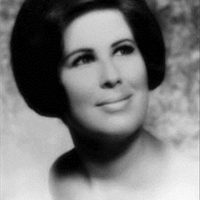
Gundula Janowitz

Classical
Opera
 Viberate Rank: 117147
 Viberate Rank: 117147
 Monthly ListenersFollowers
 Subscribers
 Followers
 Followers
 FansTop Spotify SongsTop YouTube VideosMonthly ListenersFeatured in Playlists
| Playlist | Followers | |
|---|---|---|
1 |  Opera Classics Decca Records US | 376.27K |
2 |  Mozart - Best of Deutsche Grammophon (DG) | 166.89K |
3 |  This Is Wagner Spotify | 113.02K |
4 |  Opera Arias: Best of Udiscovermusic classical | 42.80K |
5 |  Wagner - Best of Deutsche Grammophon (DG) | 30.07K |
Audience| City | Monthly Listeners | |
|---|---|---|
1 |  | 2.87K |
2 |  | 2.03K |
3 |  | 1.60K |
4 |  | 1.53K |
5 | | 1.43K |
See full performance history, audience data, playlist activity, rankings, comparisons, and more in Viberate music analytics. Start with a free trial, then continue with a paid plan.
Gundula Janowitz’s Spotify BioThe voice of soprano Gundula Janowitz is regarded as one of the most beautiful among those of singers in her later 20th century generation. Janowitz had an unusually durable career, extending from the '50s to the late '90s. Her repertory was broad, stretching from Handel to Richard Strauss and often including Italian as well as German-language works. Reissues of Janowitz's recordings and performances have appeared well into the 21st century; she appeared in 2024 on the album Karajan A-Z: Wagner, Wolf-Ferrari.
Janowitz was born in Berlin on August 2, 1937, but grew up in Graz, Austria. She is an Austrian citizen. Janowitz's career began in the late '50s with a 1959 performance as Barbarina in Mozart's Le nozze di Figaro at the Vienna State Opera under conductor Herbert von Karajan. The following year, she made her debut at the Bayreuth Festival in Germany as a flower maiden in Wagner's Parsifal. She became a permanent member of the cast at the Vienna State Opera in 1962. Janowitz worked… closely with Karajan in the '60s at the Vienna State Opera, singing weightier roles like that of the Empress in Richard Strauss' Die Frau ohne Schatten, often at Karajan's urging, in addition to Mozart; it was in Mozart's Die Zauberflöte that she made a major early recording in 1964 for EMI, under conductor Otto Klemperer with the Philharmonia Orchestra and Chorus in England. In addition to Karajan and Klemperer, Janowitz worked with many of the other major conductors of the second half of the century, including Eugen Jochum, Georg Solti, Karl Böhm, and Leonard Bernstein.
Janowitz made her debuts at New York's Metropolitan Opera in 1967 as Sieglinde in Wagner's Die Walküre and at London's Covent Garden in 1976 as Donna Anna in Mozart's Don Giovanni. Her repertory extended to Italian opera, including several Verdi roles, such as the lead in Aida. Janowitz appeared on many of the world's major opera stages, including those at La Scala in Milan, the Paris Opera, the Royal Opera House in London, and the Salzburg Easter Festival. In Salzburg, she began to develop a lieder-singing career that would outlast her operatic one, extending into the late '90s. Her final operatic performance came on May 18, 1990, at the Vienna State Opera in Strauss' Ariadne auf Naxos. She remained active as a teacher in her later years. Janowitz's recording catalog is vast, encompassing more than 200 items; many of her albums remain standard readings of German operas. Her album The Last Recital: In Memoriam Maria Callas, recorded in 1999, was issued in 2017. ~ James Manheim, Rovi
Viberate is a music analytics platform built for A&Rs, artist managers, labels, booking agents, marketers, and artists.
It helps music professionals track artist growth, analyze audience data, monitor playlist activity, compare artists, follow song performance, and identify opportunities across the music market.
Public artist pages provide a free preview of selected artist data. Paid plans provide access to deeper analytics, historical data, charts, comparisons, playlist tools, exports, alerts, reports, and additional professional features.
Yes. Public Viberate artist pages provide selected artist analytics and music data for free.
Viberate also offers a 7-day free trial of the full platform. A credit card is required to start the trial. The trial includes access to the complete product so users can test deeper artist analytics, historical views, playlist insights, comparisons, charts, exports, alerts, and reporting features before choosing a paid plan.
Viberate provides artist analytics across streaming, playlists, social media, video, radio airplay, songs, and audience markets.
Users can analyze Spotify performance, Spotify and Apple Music playlists, YouTube activity, TikTok and Instagram growth, radio spins, song performance, audience locations, demographics, rankings, and overall artist momentum.
Artist profiles also connect to music charts, similar artists, and comparison tools, helping users benchmark performance and evaluate artists in context.
Viberate updates key artist and track data daily.
For followed artists and tracks, selected data is refreshed multiple times per day. This helps teams monitor playlist changes, streaming movement, audience growth, releases, and campaign performance with more current data.
Update frequency can vary depending on the metric and data source.
Yes. Viberate lets users compare up to five artists side by side across streaming, social media, audience, and engagement metrics.
Users can compare fanbase growth, audience demographics, locations, Spotify performance, social metrics, and other artist data over selected time periods.
Artist comparison can be used for A&R scouting, benchmarking, booking decisions, campaign planning, and evaluating artists with similar audiences or market positions.