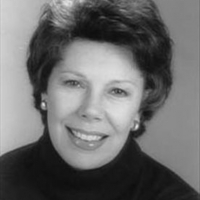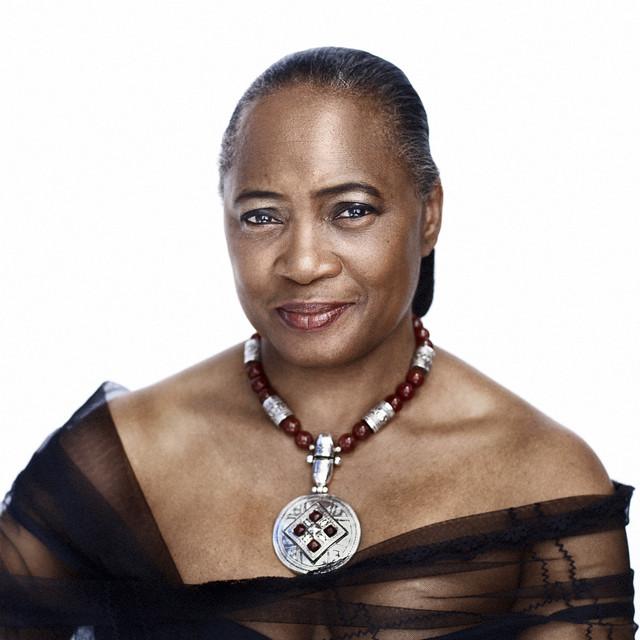
Barbara Hendricks

Classical
Opera
 Viberate Rank: 136832
 Viberate Rank: 136832
 Monthly ListenersFollowers
 Subscribers
 Followers
 Followers
 FansTop Spotify SongsTop YouTube VideosMonthly ListenersFeatured in Playlists
| Playlist | Followers | |
|---|---|---|
1 |  Classical Essentials Spotify | 3.82M |
2 |  Opera Classics Spotify | 605.55K |
3 |  Música Clásica Que Sí Es Clásica José Gonzales | 339.69K |
4 |  dark classical music edendawni | 101.68K |
5 |  Gregorian Chants & Hymns for Sleep, Study & Solitude Joseph Santiago | 82.71K |
Audience| City | Monthly Listeners | |
|---|---|---|
1 |  | 2.43K |
2 |  | 2.09K |
3 |  | 1.83K |
4 |  | 1.56K |
5 |  | 1.25K |
See full performance history, audience data, playlist activity, rankings, comparisons, and more in Viberate music analytics. Start with a free trial, then continue with a paid plan.
Barbara Hendricks’ Spotify BioOne of the top singers of her generation, soprano Barbara Hendricks has excelled both on the operatic stage and in concert halls. Noted for her humanitarian work, Hendricks has had an exceptionally long career as a performer and recording artist.
Hendricks was born on November 20, 1948, in Stephens, Arkansas. As a girl, she took voice lessons and sang many solos. She attended Horace Mann High School in Little Rock, graduating with honors, and earned a bachelor's degree in mathematics and chemistry at the University of Nebraska-Lincoln. After a stint at the Aspen Music Festival's summer school, she was accepted at the Juilliard School of Music in New York, studying there with Jennie Tourel. Hendricks won several major awards over the next several years, including the Grand Prize and the Mozart Prize at the Concours International de Paris in 1972. In 1973, she earned a bachelor's degree in voice from Juilliard.
The year 1974 saw Hendricks make several major breakthroughs, including a… recital debut at New York's Town Hall, operatic debuts with the San Francisco Symphony (as Erisbe in Cavalli's Ormindo), and the Glyndebourne Opera in Britain, a debut with the Chicago Symphony under conductor Georg Solti, and a recording of Gershwin's Porgy and Bess with the Cleveland Orchestra under Lorin Maazel. In 1977, she moved to Europe and has lived there ever since; she married producer Martin Engström in 1981, and the couple has three children, one named Jennie. Hendricks is a Swedish citizen.
Hendricks has appeared at most of the world's major operatic venues, including New York's Metropolitan Opera, the Paris Opéra, La Scala in Milan, Italy, and Covent Garden in London. She has a large repertory of German lieder and has extensive experience as a recitalist with such famed accompanists as András Schiff, Peter Serkin, Radu Lupu, and increasingly often in her later career, Love Derwinger, with whom she has often recorded on her own Arte Verum label.
Hendricks gave peace concerts in Sarajevo and Dubrovnik during the Bosnian war in the 1990s, and in 1998, she formed the Barbara Hendricks Foundation For Peace and Reconciliation. She has championed contemporary music, premiering works by such composers as David Del Tredici, Bruno Mantovani, Krzysztof Penderecki, and Arvo Pärt. She also performs jazz, and in 1981, she recorded an album of Gershwin songs with the piano duo Katia & Marielle Labèque. Hendricks has made more than 80 recordings, releasing them mostly on Arte Verum since its formation. She has remained quite active as a senior citizen, and in 2023, she issued an album of orchestral songs by Berlioz with the Pori Sinfonietta. Hendricks has been widely honored in later life; French president François Mitterand made her a Chevalier of the Legion of Honor in 1993. ~ James Manheim, Rovi
Viberate is a music analytics platform built for A&Rs, artist managers, labels, booking agents, marketers, and artists.
It helps music professionals track artist growth, analyze audience data, monitor playlist activity, compare artists, follow song performance, and identify opportunities across the music market.
Public artist pages provide a free preview of selected artist data. Paid plans provide access to deeper analytics, historical data, charts, comparisons, playlist tools, exports, alerts, reports, and additional professional features.
Yes. Public Viberate artist pages provide selected artist analytics and music data for free.
Viberate also offers a 7-day free trial of the full platform. A credit card is required to start the trial. The trial includes access to the complete product so users can test deeper artist analytics, historical views, playlist insights, comparisons, charts, exports, alerts, and reporting features before choosing a paid plan.
Viberate provides artist analytics across streaming, playlists, social media, video, radio airplay, songs, and audience markets.
Users can analyze Spotify performance, Spotify and Apple Music playlists, YouTube activity, TikTok and Instagram growth, radio spins, song performance, audience locations, demographics, rankings, and overall artist momentum.
Artist profiles also connect to music charts, similar artists, and comparison tools, helping users benchmark performance and evaluate artists in context.
Viberate updates key artist and track data daily.
For followed artists and tracks, selected data is refreshed multiple times per day. This helps teams monitor playlist changes, streaming movement, audience growth, releases, and campaign performance with more current data.
Update frequency can vary depending on the metric and data source.
Yes. Viberate lets users compare up to five artists side by side across streaming, social media, audience, and engagement metrics.
Users can compare fanbase growth, audience demographics, locations, Spotify performance, social metrics, and other artist data over selected time periods.
Artist comparison can be used for A&R scouting, benchmarking, booking decisions, campaign planning, and evaluating artists with similar audiences or market positions.