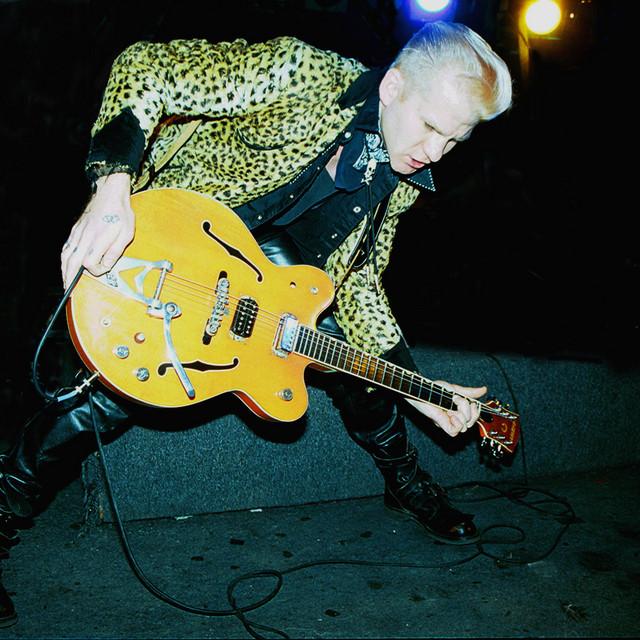
Guana Batz

Punk
Punk Rock
Psychobilly
 Viberate Rank: 169328
 Viberate Rank: 169328
 Monthly ListenersFollowers
 Subscribers
 Followers
 Followers
 FansTop Spotify Songs
| Track | 7-Day Streams | |
|---|---|---|
1 | 2.00K | |
2 | 1.75K | |
3 | 1.44K | |
4 | 839 | |
5 | 792 |
Top YouTube VideosMonthly ListenersFeatured in Playlists| Playlist | Followers | |
|---|---|---|
1 |  #Frankymostro frankymostro | 17.16K |
2 | Old-School Psychobilly Wreck_a_Hula_Rock | 13.17K |
3 |  The John Peel Sessions Sebastien Vanblaere | 12.11K |
4 | Rich Angel Santillan | 9.87K |
5 |  El Sótano de Radio 3 Groovyfamily | 9.84K |
Audience| City | Monthly Listeners | |
|---|---|---|
1 |  | 460 |
2 | | 284 |
3 |  | 247 |
4 |  | 218 |
5 |  | 160 |
See full performance history, audience data, playlist activity, rankings, comparisons, and more in Viberate music analytics. Start with a free trial, then continue with a paid plan.
Guana Batz’s Spotify BioThe Guana Batz were part of a British wave of psychobilly that sprang up in the early '80s, around the same time that bands like the Cramps were gaining underground prominence in America, and more straightforward rockabilly revivalists like the Stray Cats and the Polecats were hitting the charts on both sides of the Atlantic. The group was formed in the English town of Feltham, in Middlesex, in 1983, with a lineup featuring vocalist Pip Hancox, guitarist Stuart Osbourne, bassist Mick White (also of the similar Meteors), and drummer Dave Turner; White, an electric bassist, was soon replaced by stand-up acoustic player Sam Sardi. Playing hopped-up rockabilly with the speed and aggression of punk rock, the Guana Batz fit nicely into the British psychobilly scene epitomized by the Meteors, the Stingrays, the Caravans, and other bands who played at the good-naturedly rough Klub Foot in London. As such, the Batz landed a deal relatively quickly, releasing their debut EP, You're So Fine, on… Big Beat Records by the end of 1983. An appearance on the Stompin' at the Klub Foot compilation netted them a better deal with ABC/ID, which released their full-length debut, Held Down...At Last! (aka Held Down to Vinyl...At Last!), in 1985. A follow-up, Loan Sharks, appeared a year later, and proved an even bigger underground hit (at least in the U.K.) than its predecessor. Live in London (recorded at the Klub Foot) followed in 1987, and Rough Edges continued the group's annual release schedule in 1988. Following that album, drummer Turner was replaced by Johnny Bowler, who debuted on 1990's Electra Glide in Blue (recorded for new label World Service). While the band continued to tour the U.K. and Europe (with new bassist Mark Pennington), their initial recording career ended there, and they disbanded during the '90s. Hancox and Bowler both moved to California, where they settled and started families. The Guana Batz reunited in late 1998, however, and recorded the all-covers album Undercover the following year. The compilation Can't Take the Pressure was released in 2000, with a competing best-of, The Very Best of the Guana Batz, appearing in 2001. ~ Steve Huey, Rovi
Viberate is a music analytics platform built for A&Rs, artist managers, labels, booking agents, marketers, and artists.
It helps music professionals track artist growth, analyze audience data, monitor playlist activity, compare artists, follow song performance, and identify opportunities across the music market.
Public artist pages provide a free preview of selected artist data. Paid plans provide access to deeper analytics, historical data, charts, comparisons, playlist tools, exports, alerts, reports, and additional professional features.
Yes. Public Viberate artist pages provide selected artist analytics and music data for free.
Viberate also offers a 7-day free trial of the full platform. A credit card is required to start the trial. The trial includes access to the complete product so users can test deeper artist analytics, historical views, playlist insights, comparisons, charts, exports, alerts, and reporting features before choosing a paid plan.
Viberate provides artist analytics across streaming, playlists, social media, video, radio airplay, songs, and audience markets.
Users can analyze Spotify performance, Spotify and Apple Music playlists, YouTube activity, TikTok and Instagram growth, radio spins, song performance, audience locations, demographics, rankings, and overall artist momentum.
Artist profiles also connect to music charts, similar artists, and comparison tools, helping users benchmark performance and evaluate artists in context.
Viberate updates key artist and track data daily.
For followed artists and tracks, selected data is refreshed multiple times per day. This helps teams monitor playlist changes, streaming movement, audience growth, releases, and campaign performance with more current data.
Update frequency can vary depending on the metric and data source.
Yes. Viberate lets users compare up to five artists side by side across streaming, social media, audience, and engagement metrics.
Users can compare fanbase growth, audience demographics, locations, Spotify performance, social metrics, and other artist data over selected time periods.
Artist comparison can be used for A&R scouting, benchmarking, booking decisions, campaign planning, and evaluating artists with similar audiences or market positions.