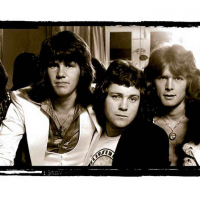
Graham Bonnet

Rock
Pop Rock
Hard Rock
 Viberate Rank: 118872
 Viberate Rank: 118872
 Monthly ListenersFollowers
 Subscribers
 Followers
 Followers
 FansTop Spotify Songs
| Track | 7-Day Streams | |
|---|---|---|
1 | 14.41K | |
2 | 7.01K | |
3 | 798 | |
4 | 705 | |
5 | 455 |
Top YouTube VideosMonthly ListenersFeatured in Playlists| Playlist | Followers | |
|---|---|---|
1 |  Dad’s shed Greta Gercovich | 24.44K |
2 |  orange is the new black (OITNB) soundtrack 1-7 Bárbara Bazilio | 23.96K |
3 |  Orange is the New Bl@ck ALL 7 Seasons Carolyn Hall | 11.80K |
4 | AOR 80's Orkun Ersin | 7.61K |
5 |  This Is Michael Schenker Group Spotify | 7.15K |
Audience| City | Monthly Listeners | |
|---|---|---|
1 |  | 7.01K |
2 | | 6.73K |
3 | | 6.13K |
4 | | 3.76K |
5 | | 2.10K |
See full performance history, audience data, playlist activity, rankings, comparisons, and more in Viberate music analytics. Start with a free trial, then continue with a paid plan.
Graham Bonnet’s Spotify BioIn the 1980s, hard rock and heavy metal were all about the way you looked. If you didn't have long hair and dress in studs, spikes, leather, or spandex, you stuck out like a sore thumb. Singer Graham Bonnet -- who sported a look that was equal parts James Dean and Miami Vice-era Don Johnson -- was a prime example of this, despite fronting (albeit briefly) such renowned acts as Rainbow, the Michael Schenker Group, and Alcatrazz. Born December 23, 1947 in Skegness, Lincolnshire, England, Bonnet had his first taste of success in the music biz in the late '60s, when he scored a hit with his band, the Marbles -- "Only One Woman." Bonnet supposedly spent most of the '70s doing commercial jingles before issuing a self-titled solo debut in 1977, which became a hit in Australia due to a cover of Bob Dylan's "It's All Over Now, Baby Blue," and scoring another cover hit a year later with the Bee Gees' "Warm Ride." Just before the close of the decade, Bonnet was chosen to replace Ronnie James Dio …in Rainbow, which saw the group transform into a more melodic and radio-friendly act with 1980's Down to Earth.
But Bonnet's tenure with Rainbow was short-lived, as he then returned to a solo career, scoring a U.K. hit single with "Night Games" off of 1981's Line Up. Up next was another brief association, with the Michael Schenker Group, which also lasted for a single album -- 1982's Assault Attack. A year later, Bonnet co-formed an all new band, Alcatrazz, which featured two of the biggest rock guitar heroes of the '80s -- Yngwie Malmsteen (on 1984's No Parole from Rock 'n' Roll and Live Sentence) and Steve Vai (on 1985's Disturbing the Peace). However, after a third studio album, 1986's Dangerous Games, Alcatrazz were kaput. Subsequently, Bonnet has appeared on numerous albums by others -- including Pretty Maids, Impellitteri, Blackthorne, Anthem, Stardust Reverie, and Eddie Hardin -- and has also sporadically issued further solo sets (1991's Here Comes the Night, 1997's Underground, and 1999's The Day I Went Mad). Having made the move, permanently, to tour and record, both on his own and with his many serial collaborators. ~ Greg Prato, Rovi
Viberate is a music analytics platform built for A&Rs, artist managers, labels, booking agents, marketers, and artists.
It helps music professionals track artist growth, analyze audience data, monitor playlist activity, compare artists, follow song performance, and identify opportunities across the music market.
Public artist pages provide a free preview of selected artist data. Paid plans provide access to deeper analytics, historical data, charts, comparisons, playlist tools, exports, alerts, reports, and additional professional features.
Yes. Public Viberate artist pages provide selected artist analytics and music data for free.
Viberate also offers a 7-day free trial of the full platform. A credit card is required to start the trial. The trial includes access to the complete product so users can test deeper artist analytics, historical views, playlist insights, comparisons, charts, exports, alerts, and reporting features before choosing a paid plan.
Viberate provides artist analytics across streaming, playlists, social media, video, radio airplay, songs, and audience markets.
Users can analyze Spotify performance, Spotify and Apple Music playlists, YouTube activity, TikTok and Instagram growth, radio spins, song performance, audience locations, demographics, rankings, and overall artist momentum.
Artist profiles also connect to music charts, similar artists, and comparison tools, helping users benchmark performance and evaluate artists in context.
Viberate updates key artist and track data daily.
For followed artists and tracks, selected data is refreshed multiple times per day. This helps teams monitor playlist changes, streaming movement, audience growth, releases, and campaign performance with more current data.
Update frequency can vary depending on the metric and data source.
Yes. Viberate lets users compare up to five artists side by side across streaming, social media, audience, and engagement metrics.
Users can compare fanbase growth, audience demographics, locations, Spotify performance, social metrics, and other artist data over selected time periods.
Artist comparison can be used for A&R scouting, benchmarking, booking decisions, campaign planning, and evaluating artists with similar audiences or market positions.