Gary Numan

Rock
Alternative Rock
Pop Rock
 Viberate Rank: 12709
 Viberate Rank: 12709
 Monthly ListenersFollowers
 Subscribers
 Followers
 Followers
 FansTop Spotify Songs
| Track | 7-Day Streams | |
|---|---|---|
1 | 488.92K | |
2 | 236.21K | |
3 | 28.80K | |
4 | 19.42K | |
5 | 15.36K |
Top YouTube VideosMonthly ListenersFeatured in Playlists| Playlist | Followers | |
|---|---|---|
1 |  Best of British Spotify | 769.77K |
2 |  Alternative 70s Spotify | 451.41K |
3 | Classic Rock Greatest Hits Scott Pruden | 341.40K |
4 |  Synthpop Classics Spotify | 226.01K |
5 |  80s New Wave & Alternative Troy @ TavernTails | 194.42K |
Audience| City | Monthly Listeners | |
|---|---|---|
1 |  | 34.92K |
2 | | 22.76K |
3 |  | 18.64K |
4 | | 18.22K |
5 | | 18.02K |
See full performance history, audience data, playlist activity, rankings, comparisons, and more in Viberate music analytics. Start with a free trial, then continue with a paid plan.
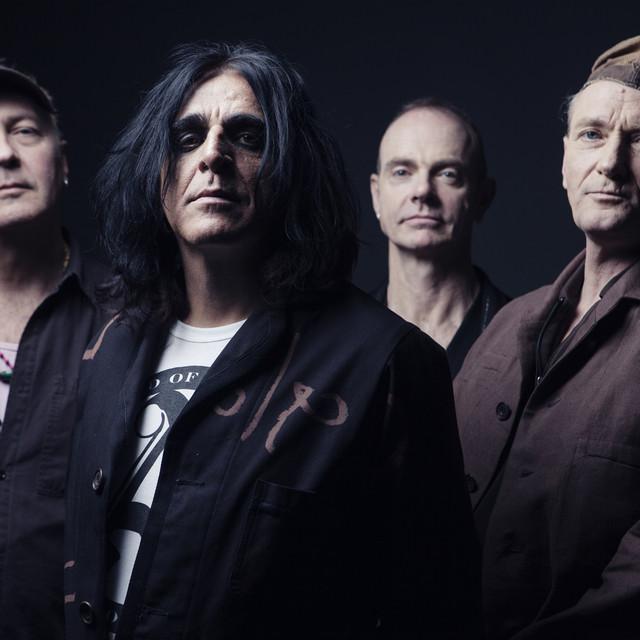
Gary Numan’s Spotify BioOne of the founding fathers of synth pop, Gary Numan has influenced countless artists with his constantly evolving form of dystopian electronic rock music since the late 1970s. Establishing a lonely, android-like persona, he rose to fame leading Tubeway Army, a pioneering new wave band whose second album, 1979's Replicas, became the first of Numan's three consecutive gold-selling, chart-topping full-lengths in the U.K. The same year's The Pleasure Principle, his first solo effort, included the perennial favorite "Cars," which remains his biggest worldwide hit. He continued refining his sound, incorporating elements of jazz and funk into more sophisticated efforts like 1982's I, Assassin, and remained a consistent presence in the U.K. charts throughout the following decades. His impact continued to make itself felt; his dark, paranoid vision, theatrically icy alien persona, and clinical, robotic sound were echoed strongly in the work of many goth rock and (especially) industrial artists… to come. His own work took a turn towards industrial and darkwave with releases like 1994's Sacrifice and 2000's Pure, and the release of a tribute album, in addition to numerous dance artists sampling or reworking his past hits, helped revive his popularity. Frequently working with producer Ade Fenton since the late 2000s, Numan released some of his most acclaimed and well-received work in decades during the 2010s, with 2017's Savage (Songs from a Broken World) reaching number two in the U.K., his highest charting album since 1980. He continued exploring post-apocalyptic themes with 2021's Intruder.
Numan was born Gary Anthony James Webb on March 8, 1958, in the West London section of Hammersmith. A shy child, music brought him out of his shell; he began playing guitar in his early teens and played in several short-lived bands. Inspired by the amateurism of the punk movement, he joined a punk group called the Lasers in 1976. The following year, he and bassist Paul Gardiner split off to form a new group, dubbed Tubeway Army, with drummer Bob Simmonds. They recorded a couple of singles under futuristic pseudonyms (Valerium [or Valerian], Scarlett, and Rael, respectively) that attempted to match their new interest in synthesizers. Scrapping that idea, Webb rechristened himself Gary Numan and replaced Simmonds with his uncle Jess Lidyard. Thus constituted, Tubeway Army cut a set of punk-meets-Kraftwerk demos for Beggars Banquet in early 1978, which were released several years later as The Plan. That summer, Numan sang a TV commercial jingle for jeans, and toward the end of the year the group's debut album, Tubeway Army, appeared. Chiefly influenced by Kraftwerk and David Bowie's Berlin-era collaborations with Brian Eno, the album also displayed Numan's fascination with the electronic, experimental side of glam (Roxy Music, Ultravox) and Krautrock (Can), as well as science fiction writer Philip K. Dick.
The group's second album, Replicas, credited to Gary Numan & Tubeway Army, was released in early 1979. Its accompanying single, "Are 'Friends' Electric?," was a left-field smash, topping the U.K. charts and sending Replicas to number one on the album listings as well. (The record also included "Down in the Park," an oft-covered song that stands as one of Numan's most gothic outings.) Numan had become a star overnight, despite critical distaste for any music so heavily reliant on synthesizers, and he formed a larger backing band that replaced Tubeway Army, keeping Gardiner on bass. The Pleasure Principle was released in the fall of 1979 and spawned Numan's international hit "Cars," which reached the American Top Ten and hit number one in the U.K.; the album also became his second straight British number one. He put together a hugely elaborate, futuristic stage show and went on a money-losing tour, and also began to indulge his hobby as an amateur pilot with his newfound wealth.
Numan returned in the fall of 1980 with Telekon, his third straight chart-topping album in Britain, and scored two Top Five hits with "We Are Glass" and "I Die: You Die"; "This Wreckage" later reached the Top 20. In 1981, Numan announced his retirement from live performance, playing several farewell concerts just prior to the release of Dance. While Dance and its lead single, "She's Got Claws," were both climbing into the British Top Five, Numan attempted to fly around the world, but in a bizarre twist was arrested in India on suspicion of spying and smuggling. The charges were dropped, although authorities confiscated his plane. His retirement proved short-lived, but when he returned in 1982 with I, Assassin, some of his popularity had dissipated -- perhaps because of the retirement announcement, perhaps because the charts were overflowing with synth pop, much of which was already expanding on Numan's early innovations. I, Assassin was another Top Ten album, and "We Take Mystery (To Bed)" another hit, but in general Numan's singles were starting to slip on the charts; the title track of 1983's Warriors became his last British Top Ten hit.
Numan and Beggars Banquet subsequently parted ways, and he formed his own Numa label, kicking things off with Berserker in late 1984. (Sadly, longtime collaborator Paul Gardiner died earlier that year from a drug overdose.) Released in 1985, The Fury became the final Numan album to reach the British Top 20. Over the next few years, he collaborated occasionally with Shakatak's Bill Sharpe, releasing four singles from 1985-1989. Following 1986's Strange Charm, Numan signed with IRS, but the relationship was fraught with discord from the start. The label forced Numan to change the title of 1988's Metal Rhythm to New Anger for his first North American release since 1981 (and also remixed several tracks), refused to release his soundtrack for the film The Unborn, and would not fund any supporting tours for New Anger or 1991's Outland. When his contract expired, Numan returned to Numa for 1992's Machine + Soul.
The industrial-tinged Sacrifice, the first glimmering of Numan's return to critical favor and underground hipness, was released in 1994. Over the next few years, bands like Hole, the Foo Fighters, and Smashing Pumpkins covered Numan songs in concert, and Marilyn Manson recorded "Down in the Park" for the B-side of the "Lunchbox" single; moreover, Nine Inch Nails cited Numan as an important influence. With his fan base refreshed and expectations raised, he delved deeper into gothic, metal-tinged industrial dance on 1997's Exile. However, he didn't truly hit his stride in this newly adopted style until 2000's Pure, which was acclaimed as his best work in years and expanded his cult following into new territory.
Into the new millennium, a number of Gary Numan compilations hit the shelves, as well as 2003's Hybrid, which found him reworking and modernizing his earlier pop hits. Jagged was released in 2005, and incorporated more of an industrial goth sound. The album was co-produced and co-written with Ade Fenton, who returned for 2011's Dead Son Rising. Numan also appeared that year on Gloss Drop from post-rock group Battles, lending his vocals to the album's "My Machines" single. In 2013, he released his 20th studio album, Splinter (Songs from a Broken Mind).
The album reached the U.K. Top 20 and Numan embarked on a worldwide tour to support the release throughout 2014. The following year he started writing his next studio album and set about funding the record via fan pledges, with the fund amount exceeding its target. Focusing on the album and his personal life in 2016, Numan also found time to collaborate with Jean-Michel Jarre on his album Electronica 2: The Heart of Noise. That same year, he was awarded the Moog Innovation award as well as the Ivor Novello award for inspiration. 2017 saw the release of Numan's 21st album, Savage (Songs from a Broken World). Working once again with producer Ade Fenton, Numan used a post-apocalyptic Earth as the setting for the release, charting humanity's struggle for survival and its inevitable downfall. A companion piece of sorts, Intruder arrived in 2021. Like Savage before it, the project focused on mapping the effects of human destruction and climate change, this time from the perspective of the Earth itself. ~ Steve Huey, Rovi
Viberate is a music analytics platform built for A&Rs, artist managers, labels, booking agents, marketers, and artists.
It helps music professionals track artist growth, analyze audience data, monitor playlist activity, compare artists, follow song performance, and identify opportunities across the music market.
Public artist pages provide a free preview of selected artist data. Paid plans provide access to deeper analytics, historical data, charts, comparisons, playlist tools, exports, alerts, reports, and additional professional features.
Yes. Public Viberate artist pages provide selected artist analytics and music data for free.
Viberate also offers a 7-day free trial of the full platform. A credit card is required to start the trial. The trial includes access to the complete product so users can test deeper artist analytics, historical views, playlist insights, comparisons, charts, exports, alerts, and reporting features before choosing a paid plan.
Viberate provides artist analytics across streaming, playlists, social media, video, radio airplay, songs, and audience markets.
Users can analyze Spotify performance, Spotify and Apple Music playlists, YouTube activity, TikTok and Instagram growth, radio spins, song performance, audience locations, demographics, rankings, and overall artist momentum.
Artist profiles also connect to music charts, similar artists, and comparison tools, helping users benchmark performance and evaluate artists in context.
Viberate updates key artist and track data daily.
For followed artists and tracks, selected data is refreshed multiple times per day. This helps teams monitor playlist changes, streaming movement, audience growth, releases, and campaign performance with more current data.
Update frequency can vary depending on the metric and data source.
Yes. Viberate lets users compare up to five artists side by side across streaming, social media, audience, and engagement metrics.
Users can compare fanbase growth, audience demographics, locations, Spotify performance, social metrics, and other artist data over selected time periods.
Artist comparison can be used for A&R scouting, benchmarking, booking decisions, campaign planning, and evaluating artists with similar audiences or market positions.