Fruteland Jackson

Country
Americana/Alt Country
Contemporary Blues
 Viberate Rank: 471598
 Viberate Rank: 471598
 Monthly ListenersFollowers
 Subscribers
 Followers
 Followers
 FansTop Spotify Songs
| Track | 7-Day Streams | |
|---|---|---|
1 | 104 | |
2 | 35 | |
3 | 9 | |
4 | 9 | |
5 | 6 |
Top YouTube VideosMonthly ListenersFeatured in Playlists| Playlist | Followers | |
|---|---|---|
1 |  Slow Blues & Blues Rock | Don's Tunes Don's Tunes | 19.74K |
2 |  Relaxing Blues Music Relaxing Blues Music | 10.26K |
3 | BEST BLUES DANCE Playlist 2014-2023 John Firth | 5.10K |
4 |  Midnight Blues Helmut Neubauer | 3.81K |
5 |  Dirty Blues to Assist You in Mischief K.K. Hammond | 3.50K |
Audience| City | Monthly Listeners | |
|---|---|---|
1 |  | 6 |
2 | | 6 |
3 | | 6 |
4 | | 6 |
5 | | 5 |
See full performance history, audience data, playlist activity, rankings, comparisons, and more in Viberate music analytics. Start with a free trial, then continue with a paid plan.
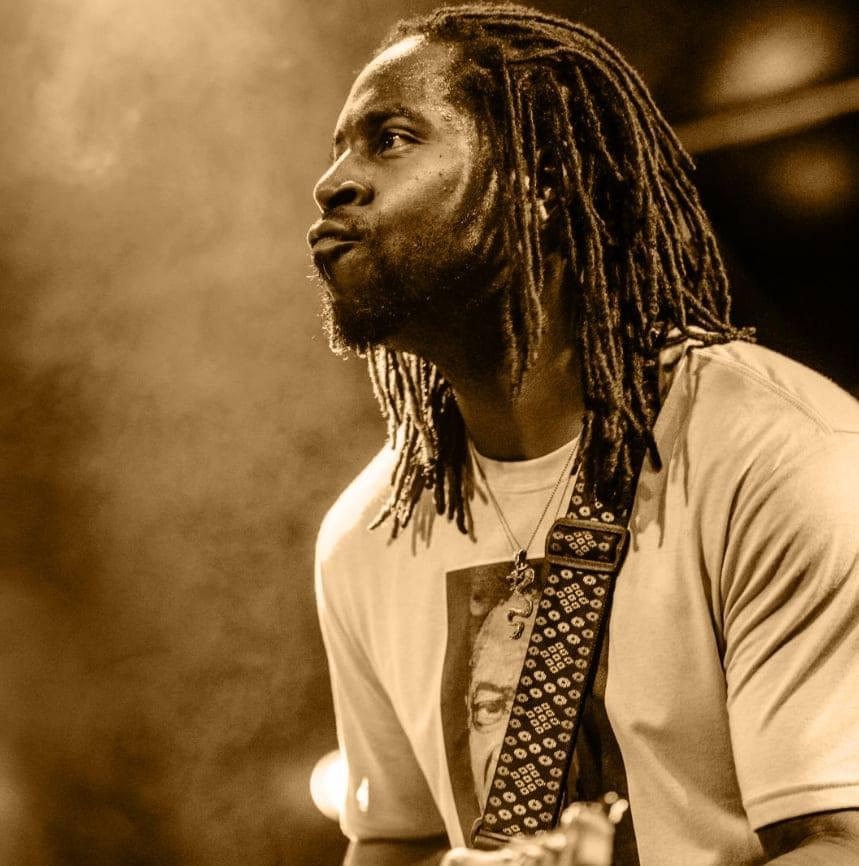
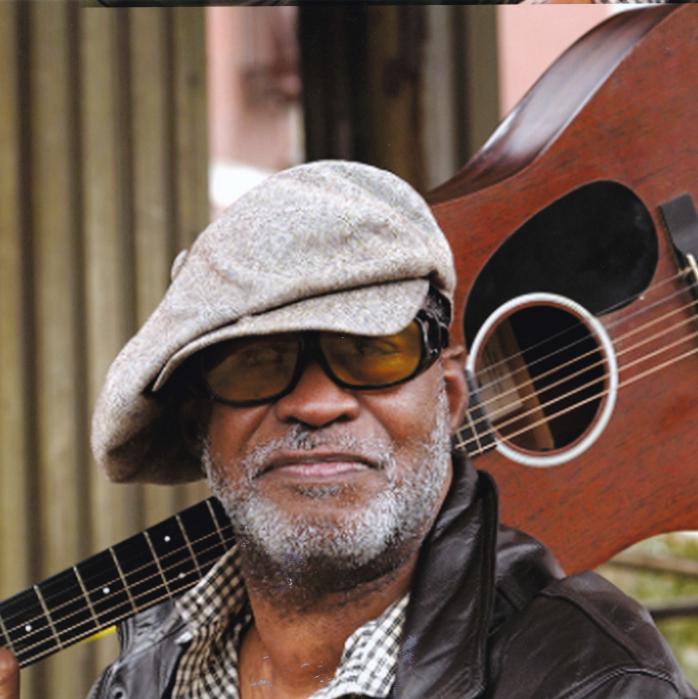
Fruteland Jackson’s Spotify BioChicago-based acoustic guitarist and singer Fruteland Jackson has nearly single-handedly kept "Blues in the Schools" programs alive in and around Chicago and throughout much of the Midwest. A powerful example of his work can be found on Blues 2.0 on the Electro-Fi label, which is based in Toronto. As much a student, historian, and teacher of blues as he is a performer, Jackson performs classic Delta blues and traditional Piedmont blues from Virginia and the Carolinas, as well as his own original compositions. A self-described blues activist, Jackson has taken his own highly stylized blues presentation to classrooms all over America, where students know him as "Mr. Fruteland." Jackson created and perfected two presentations for schools, "Bluz in the Hood," and "Trading Handguns for Harmonicas."
Born June 9, 1953, in Sunflower County, MS, Jackson was the fourth of six children, and was raised in a musical, churchgoing family. Jackson's grandparents Willie and Anne Bradley founded a church… in Doddsville, MS, the New Jericho M.B. Church, and early in Jackson's life, his grandmother predicted he would become a preacher. Growing up in the 1950s and '60s, Jackson moved north with his parents and siblings to Chicago in search of better employment and education opportunities. Jackson's father worked as an insurance underwriter for the North Carolina Mutual Insurance Company, and his mother worked as a nurse at Chicago's Cook County Hospital. Jackson's childhood was filled with frequent trips to and from the Mississippi Delta from the family's home base in Chicago. When he was 12, he received his first guitar from an uncle, Woodrow "Dick" Chandler, who played piano and guitar at parties and jukes in and around Inverness, MS. Raised in 1960s Chicago, Jackson became caught up with the sounds of Motown and continued to play guitar while listening to both folk songs and Motown music. In high school, he began playing bugle and trombone and attended Columbia College and Roosevelt University, both in Chicago.
After getting married and becoming a father, Jackson worked as a licensed private investigator and later with the Illinois Department of Human Rights. He "discovered" the simple yet complex beauty of the blues again upon a mid-'80s move back to Mississippi, when he settled in Biloxi and opened a wholesale seafood company specializing in shrimp and oysters. He began digging through his father's old 78-rpm collection, inspired by the performances of historian/arts administrator and professor William Ferris. After a hurricane wiped out his seafood business in Biloxi, Jackson began to immerse himself in blues music, from field hollers and work songs to the contemporary sounds of B.B. King and his orchestra. Realizing this music was long a part of his family's heritage, he knew the best thing he could do would be to master it and use his gifts as an educator to take it to children in classrooms around the U.S. Listening to his father's 78s, he taught himself the songs of Robert Johnson, Johnny Shines, Little Walter, Howlin' Wolf, and Muddy Waters. He embraced his new career path with gusto and has made several performances at the Chicago Blues Festival and other large blues festivals around the U.S. and Canada.
On Blues 2.0, Jackson is accompanied by Alec Fraser on bass and boom drum, Chris Whiteley on trumpet, harmonica, and guitar, Ken Whiteley on mandolin, banjo, and washboard, and Mel Brown on guitar and piano. Jackson's other release for Electro-Fi is I Claim Nothing But the Blues. Jackson is in fine voice and fine form on guitar and banjo on both his recordings, and the clarity of his singing and quality of his enunciation is reminiscent of people like Len Chandler, Josh White Sr., and Paul Robeson. Since he was able to make his love for the blues his vocation in the mid-'80s, Jackson has accomplished a lot as an educator, performer, and activist. He created an award-winning "All About the Blues" series for the Blues Foundation's Blues in the Schools program, and was awarded the 1996 Illinois Arts Council Folk/Ethnic Heritage Award. He is also the recipient of the Blues Foundation's 1997 Keeping the Blues Alive award for blues in education. ~ Richard Skelly, Rovi
Viberate is a music analytics platform built for A&Rs, artist managers, labels, booking agents, marketers, and artists.
It helps music professionals track artist growth, analyze audience data, monitor playlist activity, compare artists, follow song performance, and identify opportunities across the music market.
Public artist pages provide a free preview of selected artist data. Paid plans provide access to deeper analytics, historical data, charts, comparisons, playlist tools, exports, alerts, reports, and additional professional features.
Yes. Public Viberate artist pages provide selected artist analytics and music data for free.
Viberate also offers a 7-day free trial of the full platform. A credit card is required to start the trial. The trial includes access to the complete product so users can test deeper artist analytics, historical views, playlist insights, comparisons, charts, exports, alerts, and reporting features before choosing a paid plan.
Viberate provides artist analytics across streaming, playlists, social media, video, radio airplay, songs, and audience markets.
Users can analyze Spotify performance, Spotify and Apple Music playlists, YouTube activity, TikTok and Instagram growth, radio spins, song performance, audience locations, demographics, rankings, and overall artist momentum.
Artist profiles also connect to music charts, similar artists, and comparison tools, helping users benchmark performance and evaluate artists in context.
Viberate updates key artist and track data daily.
For followed artists and tracks, selected data is refreshed multiple times per day. This helps teams monitor playlist changes, streaming movement, audience growth, releases, and campaign performance with more current data.
Update frequency can vary depending on the metric and data source.
Yes. Viberate lets users compare up to five artists side by side across streaming, social media, audience, and engagement metrics.
Users can compare fanbase growth, audience demographics, locations, Spotify performance, social metrics, and other artist data over selected time periods.
Artist comparison can be used for A&R scouting, benchmarking, booking decisions, campaign planning, and evaluating artists with similar audiences or market positions.