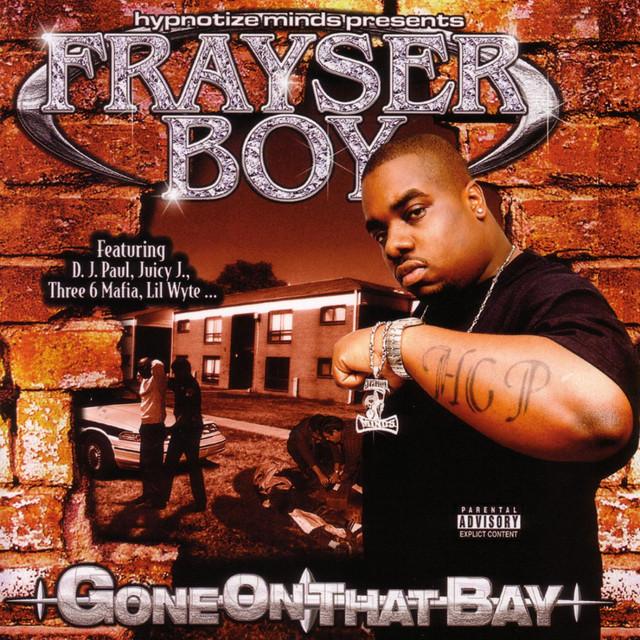
Frayser Boy

Hip Hop
Phonk
Underground Hip Hop
 Viberate Rank: 93409
 Viberate Rank: 93409
 Monthly ListenersFollowers
 Subscribers
 Followers
 Followers
 FansTop Spotify Songs
| Track | 7-Day Streams | |
|---|---|---|
1 | 121.88K | |
2 | 20.68K | |
3 | 7.76K | |
4 | 4.72K | |
5 | 3.98K |
Top YouTube Videos| Video | 7-Day Views | |
|---|---|---|
1 | 1.22K | |
2 | 847 | |
3 | 641 | |
4 | 492 | |
5 | 301 |
Monthly ListenersFeatured in Playlists| Playlist | Followers | |
|---|---|---|
1 | Mat Young | 67.68K |
2 | Memphis rap only mutchomambo | 31.50K |
3 |  Workout Hip Hop / Treino Hip Hop 💪🏻💪🏼💪🏽💪🏾💪🏿 Rafael | 30.09K |
4 | Chopped and Screwed Larry T.K. Rowan | 19.19K |
5 |  WRMFZY BEATS wrmfzy | 18.79K |
Audience| City | Monthly Listeners | |
|---|---|---|
1 | | 4.15K |
2 | | 3.80K |
3 | | 3.45K |
4 | | 2.64K |
5 | | 2.63K |
See full performance history, audience data, playlist activity, rankings, comparisons, and more in Viberate music analytics. Start with a free trial, then continue with a paid plan.
Frayser Boy’s Spotify BioThuggish and rough Dirty South rapper Frayser Boy was a late bloomer. The Memphis, TN, native came to the attention of Three 6 Mafia's Hypnotize Camp Posse through a friend who worked for the crew. Since his friend didn't have a car, Frayser Boy used to drive him to work and got to know the Posse. He eventually went to work for them in promotion, but in the background he was working on his lyrical skills. Three 6 were impressed and gave him a guest shot on La' Chat's 2001 album Murder She Spoke. Two years later the Hypnotize Minds label released his solo, full-length debut, Gone on That Bay. The title of the hard-hitting album caused some confusion. Some thought "Bay" was a reference to the Bay Area and that Frayser Boy was West Coast. "Bay" was actually a nickname for the highest cocaine-trafficking area of Memphis and the sound of the album was tough Dirty South. In 2005 he returned with Me Being Me, which included the party single "I Got Dat Drank" with special guests Mike Jones and… Paul Wall. ~ David Jeffries, Rovi
Viberate is a music analytics platform built for A&Rs, artist managers, labels, booking agents, marketers, and artists.
It helps music professionals track artist growth, analyze audience data, monitor playlist activity, compare artists, follow song performance, and identify opportunities across the music market.
Public artist pages provide a free preview of selected artist data. Paid plans provide access to deeper analytics, historical data, charts, comparisons, playlist tools, exports, alerts, reports, and additional professional features.
Yes. Public Viberate artist pages provide selected artist analytics and music data for free.
Viberate also offers a 7-day free trial of the full platform. A credit card is required to start the trial. The trial includes access to the complete product so users can test deeper artist analytics, historical views, playlist insights, comparisons, charts, exports, alerts, and reporting features before choosing a paid plan.
Viberate provides artist analytics across streaming, playlists, social media, video, radio airplay, songs, and audience markets.
Users can analyze Spotify performance, Spotify and Apple Music playlists, YouTube activity, TikTok and Instagram growth, radio spins, song performance, audience locations, demographics, rankings, and overall artist momentum.
Artist profiles also connect to music charts, similar artists, and comparison tools, helping users benchmark performance and evaluate artists in context.
Viberate updates key artist and track data daily.
For followed artists and tracks, selected data is refreshed multiple times per day. This helps teams monitor playlist changes, streaming movement, audience growth, releases, and campaign performance with more current data.
Update frequency can vary depending on the metric and data source.
Yes. Viberate lets users compare up to five artists side by side across streaming, social media, audience, and engagement metrics.
Users can compare fanbase growth, audience demographics, locations, Spotify performance, social metrics, and other artist data over selected time periods.
Artist comparison can be used for A&R scouting, benchmarking, booking decisions, campaign planning, and evaluating artists with similar audiences or market positions.