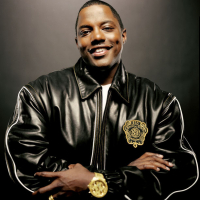
Fatman Scoop

Hip Hop
Alternative Hip Hop
Trap
 Viberate Rank: 11053
 Viberate Rank: 11053
 Monthly ListenersFollowers
 Subscribers
 Followers
 Followers
 FansTop Spotify Songs
| Track | 7-Day Streams | |
|---|---|---|
1 | 811.66K | |
2 | 503.54K | |
3 | 265.40K | |
4 | 114.08K | |
5 | 82.45K |
Top YouTube Videos| Video | 7-Day Views | |
|---|---|---|
1 | 264.30K | |
2 | 154.90K | |
3 | 22.16K | |
4 | 21.45K | |
5 | 15.66K |
Monthly ListenersFeatured in Playlists| Playlist | Followers | |
|---|---|---|
1 |  Party Hits 2000s Spotify | 1.55M |
2 |  clubbing like it's the 2000's kass !! | 981.58K |
3 |  Feeling Accomplished Spotify | 897.01K |
4 |  Summer Hits of the 00s Spotify | 652.07K |
5 |  Room 2: Classics Spotify | 599.78K |
Audience| City | Monthly Listeners | |
|---|---|---|
1 |  | 36.04K |
2 |  | 35.86K |
3 | | 31.16K |
4 | | 27.55K |
5 | | 19.61K |
See full performance history, audience data, playlist activity, rankings, comparisons, and more in Viberate music analytics. Start with a free trial, then continue with a paid plan.
Fatman Scoop’s Spotify BioIsaac Freeman III, better known under his Fatman Scoop moniker, was a hip-hop artist probably best known for the chart hit "Be Faithful." Freeman received the nickname after appearing as an ice cream man in the Fugees' video "Killing Me Softly." Stylistically, Fatman Scoop was loud, repetitive, and boisterous, like a hip-hop hype man. His first appearance as a solo artist was on Timbaland & Magoo's "Drop" in 2001, but it wasn't until 2003 that the single "Be Faithful" was a massive hit on the club circuit and topped the U.K. charts. The track was included on his album Party Breaks, Vol. 1, along with singles "It Takes Scoop" featuring DJ Kool and "In the Club" in 2004, neither as commercially successful as their predecessor. In 2006, Scoop returned with the singles "Dance" featuring Lum and "U Sexy Girl," but it was his appearance on hit singles such as Mariah Carey's "It’s Like That" and Missy Elliott's Grammy Award-winning "Lose Control" that had more chart success. Freeman released… "Talk to Me" in 2007 and "New Year's Anthem" in 2009; both failed to chart, but again it was his guest appearances that proved his most popular efforts, with features on tracks by the likes of Bob Sinclar ("Rock the Boat," 2012), LL Cool J ("We Came to Party," 2013), and Skrillex ("Recess," 2014). Coinciding with his music career, Scoop was also a presenter on the popular New York radio station WQHT and created a regular podcast entitled Man and Wife TV with his wife Shanda Freeman on which the couple talked openly about their relationship. Scoop had a brief appearance on British reality TV in 2015, and was featured on a string of singles, including Hardwell and W&W's "Don't Stop the Madness" (2015), Charlotte Devaney's "Bass Dunk" with Lady Leshurr and Skrillex and Jauz' "SQUAD OUT" (both 2016), and MAKJ and Michael Sparks' "Space Jam" (2017). He continued to perform live, shifted to other ventures during the COVD-19 pandemic, then returned to the stage once again. He died during a performance in Connecticut on August 30th, 2024. ~ James Pearce, Rovi
Viberate is a music analytics platform built for A&Rs, artist managers, labels, booking agents, marketers, and artists.
It helps music professionals track artist growth, analyze audience data, monitor playlist activity, compare artists, follow song performance, and identify opportunities across the music market.
Public artist pages provide a free preview of selected artist data. Paid plans provide access to deeper analytics, historical data, charts, comparisons, playlist tools, exports, alerts, reports, and additional professional features.
Yes. Public Viberate artist pages provide selected artist analytics and music data for free.
Viberate also offers a 7-day free trial of the full platform. A credit card is required to start the trial. The trial includes access to the complete product so users can test deeper artist analytics, historical views, playlist insights, comparisons, charts, exports, alerts, and reporting features before choosing a paid plan.
Viberate provides artist analytics across streaming, playlists, social media, video, radio airplay, songs, and audience markets.
Users can analyze Spotify performance, Spotify and Apple Music playlists, YouTube activity, TikTok and Instagram growth, radio spins, song performance, audience locations, demographics, rankings, and overall artist momentum.
Artist profiles also connect to music charts, similar artists, and comparison tools, helping users benchmark performance and evaluate artists in context.
Viberate updates key artist and track data daily.
For followed artists and tracks, selected data is refreshed multiple times per day. This helps teams monitor playlist changes, streaming movement, audience growth, releases, and campaign performance with more current data.
Update frequency can vary depending on the metric and data source.
Yes. Viberate lets users compare up to five artists side by side across streaming, social media, audience, and engagement metrics.
Users can compare fanbase growth, audience demographics, locations, Spotify performance, social metrics, and other artist data over selected time periods.
Artist comparison can be used for A&R scouting, benchmarking, booking decisions, campaign planning, and evaluating artists with similar audiences or market positions.