Eve

Hip Hop
Contemporary Hip Hop
Contemporary R&B
 Viberate Rank: 2128
 Viberate Rank: 2128
 Monthly ListenersFollowers
 Subscribers
 Followers
 Followers
 FansTop Spotify Songs
| Track | 7-Day Streams | |
|---|---|---|
1 | 2.48M | |
2 | 2.06M | |
3 | 851.38K | |
4 | 711.98K | |
5 | 477.22K |
Top YouTube Videos| Video | 7-Day Views | |
|---|---|---|
1 | 500.92K | |
2 | 331.37K | |
3 | 262.74K | |
4 | 252.19K | |
5 | 236.86K |
Monthly ListenersFeatured in Playlists| Playlist | Followers | |
|---|---|---|
1 |  Confidence Boost Spotify | 4.25M |
2 |  Gold School Spotify | 4.00M |
3 |  I Love My '90s R&B Spotify | 3.89M |
4 |  Throwback Jams Spotify | 2.82M |
5 |  Old School Hip-Hop House Party Spotify | 1.82M |
Audience| City | Monthly Listeners | |
|---|---|---|
1 |  | 158.91K |
2 |  | 142.92K |
3 |  | 136.04K |
4 | | 111.53K |
5 | | 110.10K |
See full performance history, audience data, playlist activity, rankings, comparisons, and more in Viberate music analytics. Start with a free trial, then continue with a paid plan.
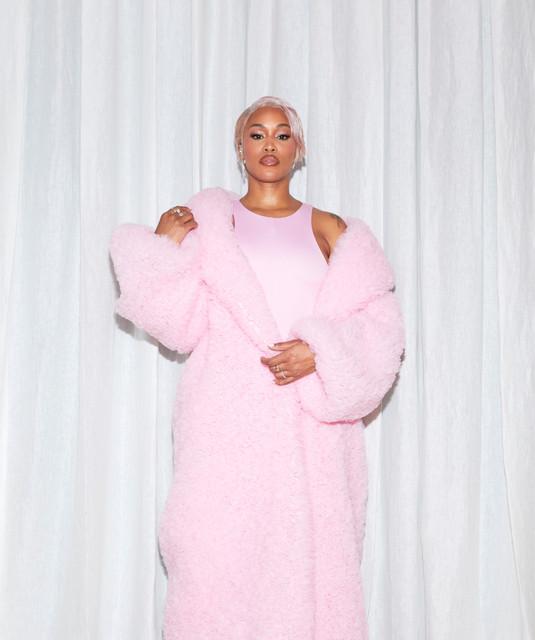
Eve’s Spotify BioEve emerged as one of a new breed of tough and talented female MCs to hit the rap scene during the late '90s, alongside contemporaries Foxy Brown and Lil Kim. As part of the Ruff Ryders posse, she was hard-edged and came off as a strong, no-nonsense street MC who could hold her own with anyone on the mic, finding success on her own terms in the process. Stepping into the spotlight as a solo artist, she issued her 1999 debut Let There Be Eve...Ruff Ryders' First Lady, which topped the Billboard 200. Her 2001 sophomore effort Scorpion peaked at number four and was certified platinum, breaking her on the international stage with hit singles "Who's That Girl" and "Let Me Blow Ya Mind" enduring as era-defining classics. The latter, featuring Gwen Stefani, won a Grammy for Best Rap/Sung Collaboration in 2002. That same year, her third album Eve-Olution and its respective singles occupied the upper reaches of the Billboard charts, and in 2005, a reciprocal collaboration with Stefani, "Rich… Girl," scored the pair another hit. However, a fourth LP would not appear for a decade as Eve was bogged down in label issues and constant setbacks. In 2013, she decided to just do it on her own, issuing Lip Lock.
Born Eve Jihan Jeffers in Philadelphia on November 10, 1978, she started out as a singer in her early teens, performing with an all-female vocal quintet. She was also honing her skills as a rapper in impromptu battles with friends, and before she left high school, she formed a female rap duo called EDGP (pronounced "Egypt"), adopting the name Gangsta. EDGP performed at local talent shows and club gigs, often to the detriment of Eve's dedication to school. When the group broke up, she went solo and changed her name to Eve of Destruction; she also moved to the Bronx in the wake of her mother's remarriage, and worked for a time as a table dancer at a strip club. Unhappy with this direction, she decided to give rap another shot after being encouraged by Mase.
Through some of her friends, Eve scored a meeting with Dr. Dre in Los Angeles, and surprised him by turning it into an audition. Dre liked what he heard and signed her to a one-year deal with his new label, Aftermath. Eve recorded a few tracks, including one, "Eve of Destruction," that ended up on the Bulworth soundtrack in 1998. However, Aftermath was searching for a direction at the time, and Eve wound up lost in the shuffle. Her contract expired without an album even in the works, but fortunately, she'd met DMX when the rising new star was in Los Angeles promoting his smash debut It's Dark and Hell Is Hot. Eve passed a battle-rap audition to join DMX's Ruff Ryders posse, and in 1999 she contributed to their label's Ryde or Die, Vol. 1 compilation. Thanks to DMX's star power, it entered the charts at number one, and Eve's track, "What Ya Want," was released as a single. It hit the R&B Top Ten and Eve built up anticipation for her debut album with high-profile guest spots on the Roots' "You Got Me" and the Blackstreet/Janet Jackson duet "Girlfriend/Boyfriend."
Eve's first full-length was titled Let There Be Eve...Ruff Ryders' First Lady and released in September 1999. With Ruff Ryders one of the biggest names in rap, the album was an instant smash; it entered the charts at number one -- the first time a female rapper had ever accomplished that feat -- and went on to sell over two-million copies. Eve also scored hits with the R&B Top Ten "Gotta Man" and the anti-domestic violence track "Love Is Blind," and guested on Missy "Misdemeanor" Elliott's hit "Hot Boyz." After touring in support of the record, Eve returned to the studio and delivered her follow-up, Scorpion, in early 2001. The album received strong reviews and topped the R&B charts while debuting at number four on the pop side. Lead single "Who's That Girl?" had some chart success, but it was the follow-up, a duet with No Doubt's Gwen Stefani called "Let Me Blow Ya Mind," that really broke Eve on the pop charts. The song rocketed to number two and went on to win a Grammy in the newly created category of Best Rap/Sung Collaboration; it also helped Scorpion go platinum.
Eve next set about establishing a movie career; she made her box-office debut in the Vin Diesel action blockbuster XXX, which was released in the summer of 2002. Not long afterward, she was also seen in a prominent supporting role in the Ice Cube comedy Barbershop. Amid all this activity, Eve released her third album, Eve-Olution, in August 2002. It debuted in the Top Ten and found Eve returning to the soul singing of her youth on a surprising number of tracks. The single "Gangsta Lovin'," which featured guest vocals from Alicia Keys, was a number two smash on both the pop and R&B charts, and the follow-up "Satisfaction" was nominated for a Grammy. In early 2003, Eve signed with the UPN network to produce and star in a multiracial sitcom about a fashion designer, and she continued acting in movies with roles in Barbershop 2, The Cookout, and The Woodsman. A full return to music was attempted in 2007 with Here I Am, an album featuring productions from Swizz Beatz, Timbaland, and Pharrell, but after a couple singles were serviced to radio, the album was shelved by Eve's label Interscope. A starring role in the film Whip It, and a recurring character on the television show Glee kept her busy until 2013 when Lip Lock landed. The album featured guest shots from Snoop Dogg, Missy Elliot, and Juicy J, and was released by Eve's label, From the Rib.
As she prepped a follow-up to Lip Lock, she involved herself with television (Sisterhood of Hip Hop and The Talk) and even toured with Stefani in 2016. Eve returned in 2019 with the single "Reload" with Konshens. ~ Steve Huey, Rovi
Viberate is a music analytics platform built for A&Rs, artist managers, labels, booking agents, marketers, and artists.
It helps music professionals track artist growth, analyze audience data, monitor playlist activity, compare artists, follow song performance, and identify opportunities across the music market.
Public artist pages provide a free preview of selected artist data. Paid plans provide access to deeper analytics, historical data, charts, comparisons, playlist tools, exports, alerts, reports, and additional professional features.
Yes. Public Viberate artist pages provide selected artist analytics and music data for free.
Viberate also offers a 7-day free trial of the full platform. A credit card is required to start the trial. The trial includes access to the complete product so users can test deeper artist analytics, historical views, playlist insights, comparisons, charts, exports, alerts, and reporting features before choosing a paid plan.
Viberate provides artist analytics across streaming, playlists, social media, video, radio airplay, songs, and audience markets.
Users can analyze Spotify performance, Spotify and Apple Music playlists, YouTube activity, TikTok and Instagram growth, radio spins, song performance, audience locations, demographics, rankings, and overall artist momentum.
Artist profiles also connect to music charts, similar artists, and comparison tools, helping users benchmark performance and evaluate artists in context.
Viberate updates key artist and track data daily.
For followed artists and tracks, selected data is refreshed multiple times per day. This helps teams monitor playlist changes, streaming movement, audience growth, releases, and campaign performance with more current data.
Update frequency can vary depending on the metric and data source.
Yes. Viberate lets users compare up to five artists side by side across streaming, social media, audience, and engagement metrics.
Users can compare fanbase growth, audience demographics, locations, Spotify performance, social metrics, and other artist data over selected time periods.
Artist comparison can be used for A&R scouting, benchmarking, booking decisions, campaign planning, and evaluating artists with similar audiences or market positions.