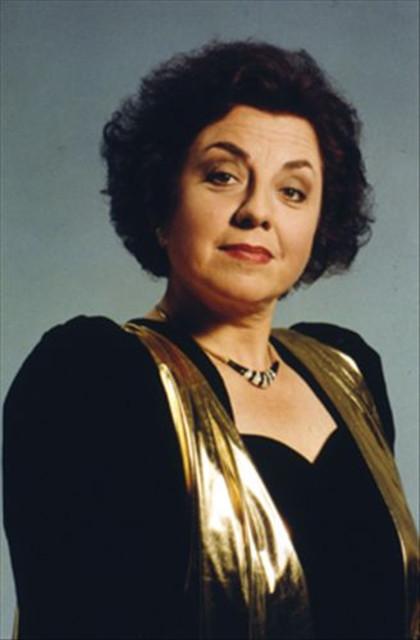
Ewa Podleś

Classical
Opera
 Viberate Rank: 363249
 Viberate Rank: 363249
 Monthly ListenersFollowers
 Subscribers
 Followers
 Followers
 FansTop Spotify SongsTop YouTube VideosMonthly ListenersFeatured in Playlists
| Playlist | Followers | |
|---|---|---|
1 |  This Is Mahler Spotify | 62.20K |
2 |  MGira Social Media Shares Jacob Morris | 6.19K |
3 | OPERA - HIGHLIGHTS Mie Opjordsmoen | 2.47K |
4 |  The Best Opera Playlist Ever Emilio José Gómez Rodríguez | 2.10K |
5 |  This Is Roberto Alagna Spotify | 1.68K |
Audience| City | Monthly Listeners | |
|---|---|---|
1 |  | 88 |
2 | | 76 |
3 |  | 59 |
4 |  | 54 |
5 |  | 54 |
See full performance history, audience data, playlist activity, rankings, comparisons, and more in Viberate music analytics. Start with a free trial, then continue with a paid plan.
Ewa Podleś’s Spotify BioWith her three-octaves-plus range and dark yet agile voice, contralto Ewa Podleś became famous for difficult bel canto roles and other major 19th century Italian parts. She easily made the transition to the increased frequency of Baroque opera performances, for she could perform the meaty castrato roles of Handel and other Baroque composers.
Although the year 1954 was sometimes reported, Podleś was born in Warsaw on April 26, 1952. Her mother was also a contralto. Podleś studied at the Warsaw Academy of Music with Alina Bolechowska. Podleś's career began during her student years; she made her debut at the Grand Theatre in Warsaw in 1975 as Dorabella in Mozart's Così fan tutte. After several major competition victories, including the top prize at the 1977 Tchaikovsky Competition in Moscow, she became a cast member at the Grand Theatre in 1984, but that year, she made a debut at the Metropolitan Opera in the title role of Handel's Rinaldo, and after that, she avoided performing in Poland… for some years. In 1994, Podleś made her recording debut in Gluck's Orphée et Eurydice on the Forlane label. She made her debut at Italy's La Scala in 1996 as the Marquise de Berkenfeld in Donizetti's La fille du Régiment. That year, she released the solo album Airs Célèbres on Forlane, as well as Rossini: Arias for Contralto on Naxos. By the turn of the century, she was a major international star, noted for a uniquely dark, smoky vocal timbre that did not foreclose great virtuosity.
Rossini's contralto roles, some of them male "pants" parts, were one of Podleś's specialties. Baroque opera seria was another, but her repertory was quite broad. She often performed Chopin's relatively rare songs and recorded a live album with pianist Garrick Ohlsson that contained some of those. Later in her career, she often appeared in Verdi's operas, and she issued an album of Russian arias on the Delos label in 2002. Her Italian repertory ran as far forward as the vocal music of Ottorino Respighi. Podleś generally avoided contemporary music but did record several large vocal and choral works of Krzysztof Penderecki and Witold Lutosławski. Her recording catalog was large, and by the time she issued the live album World Opera Stars: Ewa Podleś with the Poznán Philharmonic in 2015, it contained more than 50 items. Podleś made her final appearance at the Liceu in Barcelona in 2017. She died of lung cancer in Warsaw on January 19, 2024. ~ James Manheim, Rovi
Viberate is a music analytics platform built for A&Rs, artist managers, labels, booking agents, marketers, and artists.
It helps music professionals track artist growth, analyze audience data, monitor playlist activity, compare artists, follow song performance, and identify opportunities across the music market.
Public artist pages provide a free preview of selected artist data. Paid plans provide access to deeper analytics, historical data, charts, comparisons, playlist tools, exports, alerts, reports, and additional professional features.
Yes. Public Viberate artist pages provide selected artist analytics and music data for free.
Viberate also offers a 7-day free trial of the full platform. A credit card is required to start the trial. The trial includes access to the complete product so users can test deeper artist analytics, historical views, playlist insights, comparisons, charts, exports, alerts, and reporting features before choosing a paid plan.
Viberate provides artist analytics across streaming, playlists, social media, video, radio airplay, songs, and audience markets.
Users can analyze Spotify performance, Spotify and Apple Music playlists, YouTube activity, TikTok and Instagram growth, radio spins, song performance, audience locations, demographics, rankings, and overall artist momentum.
Artist profiles also connect to music charts, similar artists, and comparison tools, helping users benchmark performance and evaluate artists in context.
Viberate updates key artist and track data daily.
For followed artists and tracks, selected data is refreshed multiple times per day. This helps teams monitor playlist changes, streaming movement, audience growth, releases, and campaign performance with more current data.
Update frequency can vary depending on the metric and data source.
Yes. Viberate lets users compare up to five artists side by side across streaming, social media, audience, and engagement metrics.
Users can compare fanbase growth, audience demographics, locations, Spotify performance, social metrics, and other artist data over selected time periods.
Artist comparison can be used for A&R scouting, benchmarking, booking decisions, campaign planning, and evaluating artists with similar audiences or market positions.