Everyday Sunday

Punk
Punk Rock
Pop Rock
 Viberate Rank: 188458
 Viberate Rank: 188458
 Monthly ListenersFollowers
 Subscribers
 Followers
 Followers
 FansTop Spotify SongsTop YouTube Videos
| Video | 7-Day Views | |
|---|---|---|
1 | 12 |
Monthly ListenersFeatured in Playlists| Playlist | Followers | |
|---|---|---|
1 | Pop Punk & Alt. Metal alwaysdestroy | 36.06K |
2 | Upbeat Christian Music Cherie | 25.18K |
3 |  Pop Punk / Punk Rock 👩🏻🎤 olospo | 17.98K |
4 |  Catch A Vibe 🙏🏻😭😁 DiepAnDot | 14.31K |
5 |  Metal/Rock exsorz | 10.80K |
Audience| City | Monthly Listeners | |
|---|---|---|
1 | | 239 |
2 | | 161 |
3 | | 151 |
4 | | 136 |
5 | | 133 |
See full performance history, audience data, playlist activity, rankings, comparisons, and more in Viberate music analytics. Start with a free trial, then continue with a paid plan.
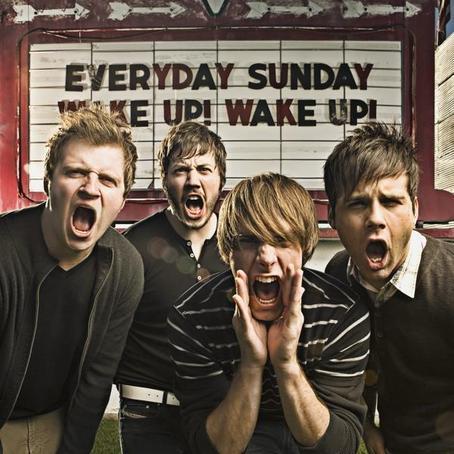
Everyday Sunday’s Spotify BioMelodic Christian pop/rock outfit Everyday Sunday hail from Columbus, OH, born out of a suburban Hilliard church youth group of which lead vocalist Trey Pearson was a member. Taking inspiration from CCM heavyweights Audio Adrenaline, Jars of Clay, and dc Talk, Everyday Sunday issued their independent debut, Sleeper, in 2001, and earned national attention that same year when the single "Just a Story" became a hit on Christian radio. Opening spots on tours for acts like All-Star United, Pax217, Skillet, and Earthsuit followed, and the band's activity ultimately attracted the attention of Flicker Records. Inking a deal with the label in 2002, Everyday Sunday released Stand Up that fall. The record did well, as did their follow-up of melodic rock goodness, 2004's Anthems for the Imperfect. Both albums garnered the young group all kinds of praise and critical accolades from Christian radio and outlets like CCM Magazine, but the endless touring over the years threatened to break the guys up.… However, their love of music and Christ won out in the end, and Everyday Sunday plowed forward to begin writing fresh, inspirational songs. After signing a new deal with Inpop Records, the band entered the studio with producer Ian Eskelin (Krystal Meyers, All-Star United) to record its tightest, catchiest, and most accessible collection to date. Wake Up! Wake Up! appeared in May 2007 to positive response and quickly scored two Christian radio hits in the singles "Find Me Tonight" and "Wake Up! Wake Up!" A full summer of touring followed, and by this point in time, the group was comprised of vocalist Pearson, guitarists Jesse Counts and Aaron Eikenberry, bassist Brandon Eikenberry, and drummer Kevin Cramblet. Numerous lineup changes over time had also found musicians like Dan Hunter (bass), Chris Hines (drums), Jason Siemer (guitar), and Andrew Martin (guitar) pass through the Everyday Sunday ranks, among others. ~ Corey Apar, Rovi
Viberate is a music analytics platform built for A&Rs, artist managers, labels, booking agents, marketers, and artists.
It helps music professionals track artist growth, analyze audience data, monitor playlist activity, compare artists, follow song performance, and identify opportunities across the music market.
Public artist pages provide a free preview of selected artist data. Paid plans provide access to deeper analytics, historical data, charts, comparisons, playlist tools, exports, alerts, reports, and additional professional features.
Yes. Public Viberate artist pages provide selected artist analytics and music data for free.
Viberate also offers a 7-day free trial of the full platform. A credit card is required to start the trial. The trial includes access to the complete product so users can test deeper artist analytics, historical views, playlist insights, comparisons, charts, exports, alerts, and reporting features before choosing a paid plan.
Viberate provides artist analytics across streaming, playlists, social media, video, radio airplay, songs, and audience markets.
Users can analyze Spotify performance, Spotify and Apple Music playlists, YouTube activity, TikTok and Instagram growth, radio spins, song performance, audience locations, demographics, rankings, and overall artist momentum.
Artist profiles also connect to music charts, similar artists, and comparison tools, helping users benchmark performance and evaluate artists in context.
Viberate updates key artist and track data daily.
For followed artists and tracks, selected data is refreshed multiple times per day. This helps teams monitor playlist changes, streaming movement, audience growth, releases, and campaign performance with more current data.
Update frequency can vary depending on the metric and data source.
Yes. Viberate lets users compare up to five artists side by side across streaming, social media, audience, and engagement metrics.
Users can compare fanbase growth, audience demographics, locations, Spotify performance, social metrics, and other artist data over selected time periods.
Artist comparison can be used for A&R scouting, benchmarking, booking decisions, campaign planning, and evaluating artists with similar audiences or market positions.