Emily Remler

Jazz
Bebop
Smooth Jazz
 Viberate Rank: 170410
 Viberate Rank: 170410
 Monthly ListenersFollowers
 Subscribers
 Followers
 Followers
 FansTop Spotify Songs
| Track | 7-Day Streams | |
|---|---|---|
1 | 4.91K | |
2 | 2.73K | |
3 | 1.51K | |
4 | 1.44K | |
5 | 1.27K |
Top YouTube VideosMonthly ListenersFeatured in Playlists| Playlist | Followers | |
|---|---|---|
1 |  Jazz Guitar Classics Spotify | 135.25K |
2 | jazz,funk,soul,blues,afrobeat,latin İlker Özalp | 11.48K |
3 |  Reverberation Radio Allah-Las | 5.56K |
4 | Jazz guitar helgueta | 4.46K |
5 | LA Noire's KTI Radio Station Christopher Morlock | 4.25K |
Audience| City | Monthly Listeners | |
|---|---|---|
1 | | 411 |
2 | | 366 |
3 |  | 358 |
4 | | 317 |
5 |  | 299 |
See full performance history, audience data, playlist activity, rankings, comparisons, and more in Viberate music analytics. Start with a free trial, then continue with a paid plan.
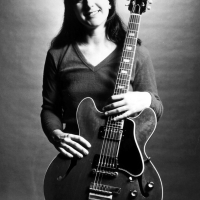
Emily Remler’s Spotify BioEmily Remler was an American jazz guitarist known for an unshakeable sense of time, prominent swing, and her command of bebop, hard bop, and Brazilian styles including bossa nova and samba. An early disciple of Wes Montgomery's musicality and technique, she graduated from the Berklee College of Music. After moving first to New Orleans and then New York, she played with Astrud Gilberto and Nancy Wilson for a couple of years and recorded with the Clayton Brothers. Signed to Concord, she issued five albums under her own name including Firefly (1981), Transitions (1984), Catwalk (1985), Together with Larry Coryell (1985), and East to Wes (1988).
Remler was born in Manhattan in 1957 and raised in Englewood Cliffs, New Jersey. Her father was a meat broker; her mother a housewife. At age eight she began playing around with an acoustic guitar owned by her brother. After learning chord progressions, she taught herself -- by ear initially -- to emulate riffs and licks by a bevy of rock guitarists… including Jimmy Page and Jimi Hendrix. Her brother eventually gifted her his Gibson ES-330, a hollow-body model.
After graduating high school early, Remler enrolled in a two-year degree program at the Berklee College of Music; she was 17. There, she gravitated toward, then became obsessed with jazz guitarists from Charlie Christian, Pat Martino, and Herb Ellis to Wes Montgomery, Grant Green, and George Benson -- she studied them all. She saw guitarist Herb Ellis in New Orleans and introduced herself. He asked her to play something and was astonished by her maturity and swing. He recommended her to Concord Records founder Carl Jefferson, who booked her to play the opening night of the Concord Jazz Festival alongside Ellis, Howard Roberts, Tal Farlow, Barney Kessel, and others. At 24, she blew the crowd away with her chops and hard bop swing.
Remler left New Orleans for New York in 1979 and began playing in a trio with bassist Eddie Gomez and drummer Bob Moses. She also got gigs backing Brazilian legend Astrud Gilberto and jazz vocalist Nancy Wilson. An acquaintance, guitarist John Scofield, was so impressed that he recommended her to bassist John Clayton. He and his brother Jay flew her to Los Angeles, and she played on their second outing, It's All in the Family. That year she cut and released Firefly, her Concord debut album, with pianist Hank Jones, bassist Bob Maize, and drummer Jake Hanna. The set included two originals, a solo version of "A Taste of Honey," a cover of Antonio Carlos Jobim's "Look to the Sky," and readings of Montgomery's "Movin' Along" and tunes by Duke Ellington, McCoy Tyner, and Horace Silver. It was a formula she adopted for most of her studio recordings. As acclaim from jazz critics began to flood magazines and newspapers, Remler married pianist Monty Alexander and toured the U.S. and Europe. She cut Take Two in 1982 with pianist James Williams, drummer Terry Clarke, and bassist Don Thompson. She covered Mongo Santamaria's "Afro Blue" on the set in tribute to her next big influence, John Coltrane, as well as tunes by Alexander, Tyner, Cannonball Adderley, and Dexter Gordon, plus a pair of originals.
In 1984, brimming with confidence, Remler released Transitions, using a full quartet that included Gomez, Moses, and trumpeter John D'earth. She shifted focus away from bebop, relying as much on her own writing, composing half the album alongside tunes by Keith Jarrett, Ellington, and Sam Jones. Critical response was laudatory and it sold reasonably well.
In 1984, Alexander and Remler divorced. She released the quartet offering Catwalk, the first of her albums to feature her compositions exclusively. Recorded with the same quartet, it was celebrated by critics from Tokyo to Miami, got airplay on jazz stations, and afforded her the opportunity to play international jazz festivals. That year she also played on bassist Ray Brown's Soular Energy. She undertook a tour with guitarist Larry Coryell, with whom she became briefly romantically involved, and they released the duo album Together in 1986. It offered a pair of Coryell compositions and covers, but none by Remler. Still, reviews were quite favorable and many critics remarked on how the younger guitarist's skills were equal to the veteran's.
That same year she played on albums by pianist John Colianni and Rosemary Clooney, and continued playing clubs and the festival circuit. At the end of 1986 Remler left New York for Pittsburgh where she became artist-in-residence at Duquesne University and studied with Bob Brookmeyer at the University of Pittsburgh.
In 1988 she returned to New York, renting an apartment in Brooklyn, and played gigs with pianist David Benoit and singer Susannah McCorkle. She also recorded East to Wes with pianist Jones, bassist Buster Williams, and drummer Marvin "Smitty" Smith. A tribute to Montgomery's influence, she composed three pieces for the set including the title track, and moved through tunes by Clifford Brown, Tadd Dameron, Claude Thornhill, Blossom Dearie, and Oscar Hammerstein. Critics who had followed her since Firefly were astonished at the growth in her playing and expansive harmonic approach amid daring structures. In the album's lauded aftermath, she began experimenting with electronics and guitar synths.
Remler played on McCorkle's Sabia and saxophonist Richie Cole's Bossa International. She left Concord and signed with the Houston, Texas-based Justice Records and recorded This Is Me, her seventh and final album. A radical departure from her earlier catalog, the recording reflected an emerging interest in contemporary jazz, its production techniques, and arrangements (by Russ Freeman and Benoit; they also contributed keyboards). There was a large, revolving cast of studio players including Toto drummer Jeff Porcaro and Brazilian guitarist Romero Lubambo. Remler never saw the album's release. While on tour in Australia, she collapsed and died at age 32.
This Is Me was released posthumously and charted, peaking at 20 on the Contemporary Jazz Albums chart. It was also met with contrasting reactions from critics. While many celebrated Remler's versatility and sense of harmonic musical adventure, Leonard Feather openly questioned how much of the album's musical persona reflected her identity as opposed to those of her arrangers. Remler wrote nine of the album's 11 tracks, and co-wrote two others with Benoit and pianist Bill O'Connell. The more laid-back, consciously lyrical approach crisscrossed contemporary and Brazilian jazz with African and Caribbean polyrhythms amid an expansive harmonic approach that revealed advanced compositional skill.
In 2024, 34 years after her passing, producer and "Jazz Detective" Zev Feldman, with Bill Milkowski and George Klabin, released Cookin' at the Queens: Live in Las Vegas 1984 & 1988 on the prestigious Resonance label. It compiled two stellar radio broadcasts from the Four Queens Hotel and Casino on Las Vegas' original strip. Remler was backed by quartet and trio, respectively. In addition to the original broadcasts, the producers included more than 60 minutes of additional material cut from the original radio programs, and placed them in a deluxe package with liner notes from Milkowski and tributes from other jazz musicians. It was released in multiple formats on Record Store Day in November of 2024. ~ Thom Jurek, Rovi
Viberate is a music analytics platform built for A&Rs, artist managers, labels, booking agents, marketers, and artists.
It helps music professionals track artist growth, analyze audience data, monitor playlist activity, compare artists, follow song performance, and identify opportunities across the music market.
Public artist pages provide a free preview of selected artist data. Paid plans provide access to deeper analytics, historical data, charts, comparisons, playlist tools, exports, alerts, reports, and additional professional features.
Yes. Public Viberate artist pages provide selected artist analytics and music data for free.
Viberate also offers a 7-day free trial of the full platform. A credit card is required to start the trial. The trial includes access to the complete product so users can test deeper artist analytics, historical views, playlist insights, comparisons, charts, exports, alerts, and reporting features before choosing a paid plan.
Viberate provides artist analytics across streaming, playlists, social media, video, radio airplay, songs, and audience markets.
Users can analyze Spotify performance, Spotify and Apple Music playlists, YouTube activity, TikTok and Instagram growth, radio spins, song performance, audience locations, demographics, rankings, and overall artist momentum.
Artist profiles also connect to music charts, similar artists, and comparison tools, helping users benchmark performance and evaluate artists in context.
Viberate updates key artist and track data daily.
For followed artists and tracks, selected data is refreshed multiple times per day. This helps teams monitor playlist changes, streaming movement, audience growth, releases, and campaign performance with more current data.
Update frequency can vary depending on the metric and data source.
Yes. Viberate lets users compare up to five artists side by side across streaming, social media, audience, and engagement metrics.
Users can compare fanbase growth, audience demographics, locations, Spotify performance, social metrics, and other artist data over selected time periods.
Artist comparison can be used for A&R scouting, benchmarking, booking decisions, campaign planning, and evaluating artists with similar audiences or market positions.