Elvin Bishop

Blues
Blues Rock
Alternative Rock
 Viberate Rank: 27257
 Viberate Rank: 27257
 Monthly ListenersFollowers
 Subscribers
 Followers
 Followers
 FansTop Spotify Songs
| Track | 7-Day Streams | |
|---|---|---|
1 | 1.08M | |
2 | 12.52K | |
3 | 4.70K | |
4 | 4.27K | |
5 | 2.53K |
Top YouTube Videos| Video | 7-Day Views | |
|---|---|---|
1 | 37.35K | |
2 | 8.00K | |
3 | 1.88K | |
4 | 1.56K | |
5 | 395 |
Monthly ListenersFeatured in Playlists| Playlist | Followers | |
|---|---|---|
1 |  Guardians of the Galaxy: The Official Mixtape Spotify | 2.37M |
2 |  Guardians of the Galaxy Vol. 1, 2, 3 past'elle records | 1.17M |
3 |  Guardians of the Galaxy Soundtrack 📼🎧 Vol. 3, 2, 1 Boisterous Pop | 727.87K |
4 |  Southern Rock Spotify | 542.48K |
5 |  Easy 70s Spotify | 518.81K |
Audience| City | Monthly Listeners | |
|---|---|---|
1 | | 26.73K |
2 | | 23.82K |
3 |  | 23.42K |
4 |  | 21.67K |
5 |  | 20.82K |
See full performance history, audience data, playlist activity, rankings, comparisons, and more in Viberate music analytics. Start with a free trial, then continue with a paid plan.
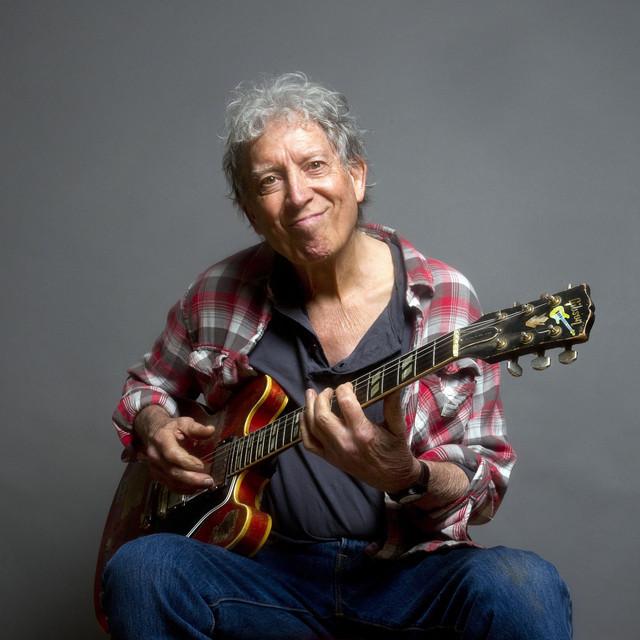
Elvin Bishop’s Spotify BioA veteran guitarist who fuses the blues with gospel, R&B, and country stylings, Elvin Bishop became one of the first stars of blues-rock as a member of the Paul Butterfield Blues Band and later went on to a solo career that peaked with the 1976 single "Fooled Around and Fell in Love," which became a Top Ten smash. Bishop's picking could be flashy, but it was also strongly rooted in roots music traditions, and he was fluid and playful in a way that many guitar heroes of the '70s were not. His guitar took a central role on the Paul Butterfield Blues Band's 1967 The Resurrection of Pigboy Crabshaw, and after he went solo, he hit his stride on 1974's Let It Flow and 1976's Struttin' My Stuff. After a layoff from recording, Bishop was back in fine fettle on 1988's Big Fun and 1991's Don't Let the Bossman Get You Down!, and he continued to record solid work into the 2010s on Red Dog Speaks (2010) and Something Smells Funky 'Round Here (2018).
Elvin Bishop was born in Glendale, California, on… October 21, 1942. He grew up on a farm in Iowa with no electricity or running water, and eventually moved to Oklahoma with his family when he was ten. Raised in an all-white community, his only exposure to African-American traditions was the radio, which introduced him to the blues stations in Shreveport, Louisiana. The piercing sound of Jimmy Reed's harmonica won his attention; Bishop would later liken it to a crossword puzzle that he had to figure out.
Bishop won a National Merit Scholarship to the University of Chicago in 1959, giving him a chance to immerse himself in the thriving Windy City blues scene. After two years of college, Bishop dropped out and pursued music full time, eventually meeting Howlin' Wolf's guitarist Smokey Smothers and learning the basics of blues guitar from him. In the early '60s, Bishop teamed up with blues harp master Paul Butterfield and they formed the core of the Paul Butterfield Blues Band, a group that helped bridge the gap between rock and blues. Although Bishop had only played guitar for a few years, he practiced frequently, and performed with Butterfield in just about every place possible, including campuses, houses, parks, and Big John's on Chicago's North Side, a venue that hosted the Butterfield Blues Band frequently and helped them spread their reputation. Bishop helped shape the sound of several Butterfield albums, especially 1967's The Resurrection of Pigboy Crabshaw, whose title refers to Bishop's nickname and countrified persona.
In 1968, Bishop left Butterfield's band following the release of their fourth album, 1968's In My Own Dream. He launched a solo career and relocated to the San Francisco area, where he made frequent appearances at the Filmore with artists like Eric Clapton, B.B. King, Jimi Hendrix, and the Allman Brothers Band. Bishop recorded four albums for Epic Records, beginning with 1969's The Elvin Bishop Group, and later signed with Capricorn in 1974. His recording of "Traveling Shoes" (from the 1974 album Let It Flow) made a dent on the charts, but the single "Fooled Around and Fell in Love" (from Struttin' My Stuff) made a bigger splash in 1976 when it peaked at number three on the Billboard charts. Despite the success of "Fooled Around," Bishop's next few albums -- including 1976's Hometown Boy Makes Good! and 1978's Hog Heaven -- were only modestly successful, and the Elvin Bishop Group quietly dissolved. Capricorn brought out The Best of Elvin Bishop in 1979 (a collection of his Epic material, The Best of Elvin Bishop: Crabshaw Rising, came out in 1975), and after 1981's Is You Is or Is You Ain't My Baby was issued by the German Line label in 1981, he laid low for several years, eventually resurfacing when he signed with the blues-oriented independent label Alligator Records.
Bishop's first album for Alligator, Big Fun, appeared in 1988, and Don't Let the Bossman Get You Down! followed in 1991; both earned better reviews than his final albums of the '70s. He also participated in Alligator's 1992 20th anniversary cross-country tour; three years later, he toured with veteran bluesman B.B. King and released the album Ace in the Hole. The Skin I'm In followed in 1998, and 2000's That's My Partner saw him teaming up with Smokey Smothers, the musician who taught him guitar many years earlier.
After a five-year hiatus, Bishop released Gettin' My Groove Back in 2005 on Blind Pig Records; he then jumped to the Delta Groove Music label for 2008's The Blues Rolls On, which featured guest spots by B.B. King, Warren Haynes, Derek Trucks, and others. Red Dog Speaks (the title refers to his beloved red 1959 ES-345 Gibson guitar), arrived in 2010, with the joyous and gritty Can't Even Do Wrong Right appearing in 2014. The following year, Bishop teamed with Bob Welsh on piano and guitar and Willy Jordan on hand percussion and vocals to form the Big Fun Trio. They made their recording debut on Alligator's 2018 release Something Smells Funky 'Round Here. Live at New Orleans Jazz & Heritage Festival 2019 captured a set Bishop and his band played at the Crescent City's celebrated annual music festival. Bishop hit the road with longtime friend and harmonica ace Charlie Musselwhite for an intimate concert tour in 2019; the musicians and the fans enjoyed the performances, so the players took the show into the recording studio to cut the Grammy-nominated 100 Years of Blues, released by Alligator in 2020. ~ Steve Leggett & Mark Deming, Rovi
Viberate is a music analytics platform built for A&Rs, artist managers, labels, booking agents, marketers, and artists.
It helps music professionals track artist growth, analyze audience data, monitor playlist activity, compare artists, follow song performance, and identify opportunities across the music market.
Public artist pages provide a free preview of selected artist data. Paid plans provide access to deeper analytics, historical data, charts, comparisons, playlist tools, exports, alerts, reports, and additional professional features.
Yes. Public Viberate artist pages provide selected artist analytics and music data for free.
Viberate also offers a 7-day free trial of the full platform. A credit card is required to start the trial. The trial includes access to the complete product so users can test deeper artist analytics, historical views, playlist insights, comparisons, charts, exports, alerts, and reporting features before choosing a paid plan.
Viberate provides artist analytics across streaming, playlists, social media, video, radio airplay, songs, and audience markets.
Users can analyze Spotify performance, Spotify and Apple Music playlists, YouTube activity, TikTok and Instagram growth, radio spins, song performance, audience locations, demographics, rankings, and overall artist momentum.
Artist profiles also connect to music charts, similar artists, and comparison tools, helping users benchmark performance and evaluate artists in context.
Viberate updates key artist and track data daily.
For followed artists and tracks, selected data is refreshed multiple times per day. This helps teams monitor playlist changes, streaming movement, audience growth, releases, and campaign performance with more current data.
Update frequency can vary depending on the metric and data source.
Yes. Viberate lets users compare up to five artists side by side across streaming, social media, audience, and engagement metrics.
Users can compare fanbase growth, audience demographics, locations, Spotify performance, social metrics, and other artist data over selected time periods.
Artist comparison can be used for A&R scouting, benchmarking, booking decisions, campaign planning, and evaluating artists with similar audiences or market positions.