Elmore James

Blues
Classic Blues
Contemporary Blues
 Viberate Rank: 51206
 Viberate Rank: 51206
 Monthly ListenersFollowers
 Subscribers
 Followers
 Followers
 FansTop Spotify Songs
| Track | 7-Day Streams | |
|---|---|---|
1 | 69.56K | |
2 | 48.02K | |
3 | 8.39K | |
4 | 7.92K | |
5 | 7.03K |
Top YouTube VideosMonthly ListenersFeatured in Playlists| Playlist | Followers | |
|---|---|---|
1 |  Blues Classics Spotify | 2.33M |
2 |  In the Name of the Blues: Tedeschi Trucks Band Takeover Spotify | 484.72K |
3 |  Blues Masters Filtr Legacy Sweden | 226.82K |
4 | TOP 100 Greatest Blues Songs Of All Time: Best Blues Music Kamilgla | 192.29K |
5 |  Chicago Blues Spotify | 191.01K |
Audience| City | Monthly Listeners | |
|---|---|---|
1 |  | 5.98K |
2 |  | 4.06K |
3 |  | 3.76K |
4 |  | 3.39K |
5 |  | 3.16K |
See full performance history, audience data, playlist activity, rankings, comparisons, and more in Viberate music analytics. Start with a free trial, then continue with a paid plan.
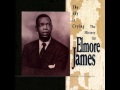
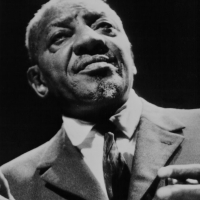
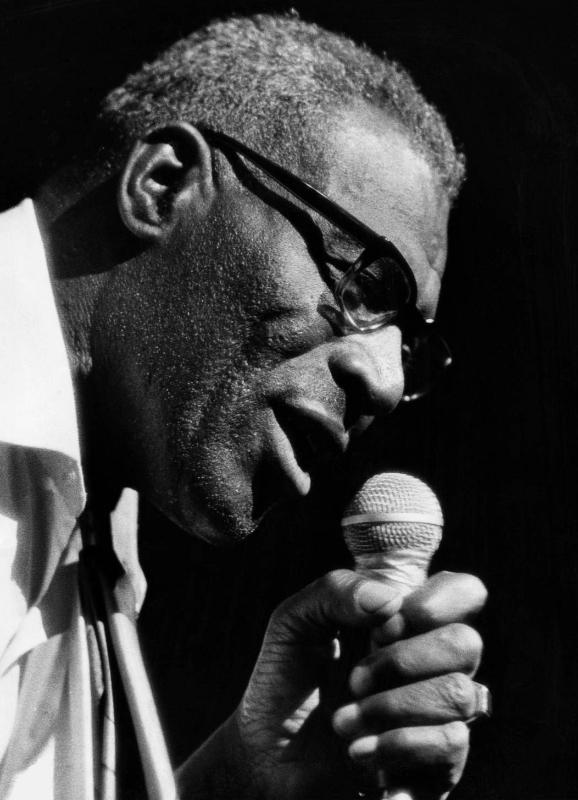
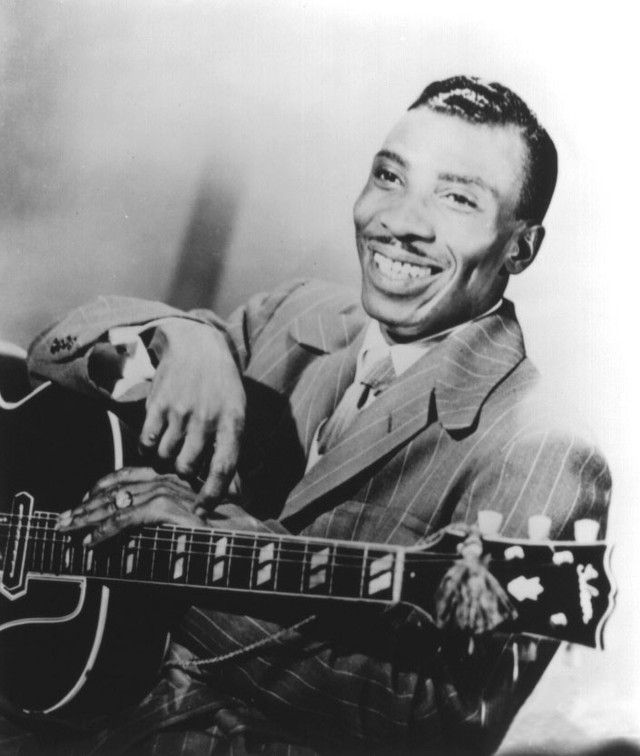
Elmore James’ Spotify BioNo two ways about it, the most influential slide guitarist of the postwar period was Elmore James. Although his early demise from heart failure kept him from enjoying the fruits of the '60s blues revival as his contemporaries Muddy Waters and Howlin' Wolf did, James left a wide influential trail behind him -- in approach, attitude, and tone. As a guitarist, he wrote the book, his slide style influencing the likes of Hound Dog Taylor, Joe Carter, his cousin Homesick James, and J.B. Hutto, while his seldom-heard single-string work had an equally profound effect on B.B. King and Chuck Berry. His signature lick -- an electric updating of Robert Johnson's "I Believe I'll Dust My Broom" and one that Elmore recorded in infinite variations from day one to his last session -- became a part of the essential blues fabric of guitar licks. Others may have had more technique, but Elmore had the sound and all the feeling.
A radio repairman by trade, Elmore reworked his guitar amplifiers in his spare… time, getting them to produce raw, distorted sounds that wouldn't resurface until the advent of heavy rock amplification in the late '60s. This amp-on-11-approach was hot-wired to one of the strongest emotional approaches to the blues ever recorded. Elmore James always gave it everything he had. This commitment of spirit is something that shows up time and again when listening to multiple takes from his session masters. The sheer repetitiveness of the recording process would dim almost anyone's creative fires, but James always seemed to give it 100-percent every time the red light went on. Few blues singers had a voice that could compete with James'; it was loud, forceful, prone to "catch" or break up in the high registers, and almost sounding on the verge of hysteria at certain times. Evidently, having had Robert Johnson as a playing companion back in the mid-'30s had a deep influence on him, not only in his choice of material, but also in his presentation of it.
Backing the twin torrents of Elmore's guitar and voice was one of the greatest -- and earliest -- Chicago blues bands. Named after James' big hit, the Broomdusters featured Little Johnny Jones on piano, J.T. Brown on tenor sax, and Elmore's cousin, Homesick James, on rhythm guitar. This talented nucleus was augmented by a second saxophone on occasion, while the drum stool changed frequently. But this was the band that could go toe to toe in a battle of the blues against the bands of Muddy Waters or Howlin' Wolf and always hold their own. Utilizing a stomping beat, James' slashing guitar, Jones' two-fisted piano delivery, Homesick's rudimentary boogie bass rhythm, and Brown's braying nanny-goat sax leads, the Broomdusters were as loud and powerful and popular as any blues band the Windy City had to offer.
But as urban as their sound was, it always had roots in Elmore's hometown of Canton, Mississippi. He was born the son of Leola Brooks there on January 27, 1918, and was later given the surname of his stepfather, Joe Willie James. He adapted to music at an early age, learning to play bottleneck on a homemade instrument fashioned out of a broom handle and a lard can. By the age of 14, he was already a weekend musician, working the various country suppers and juke joints in the area under the names "Cleanhead" or "Joe Willie James." Although he confined himself to a home-base area around Belzoni, he would join up and work with traveling players coming through like Robert Johnson, Howlin' Wolf, and Sonny Boy Williamson. By the late '30s he had formed his first band and was working the Southern state area with Sonny Boy until the second world war broke out; he spent three years stationed with the Navy in Guam. When he was discharged, he picked up where he left off, moving to Memphis for a time and working in clubs with Eddie Taylor and his cousin Homesick James. Elmore was also one of the first "guest stars" on the popular King Biscuit Time radio show on KFFA in Helena, Arkansas, also doing stints on the Talaho Syrup show on Yazoo City's WAZF and the Hadacol show on KWEM in West Memphis.
Nervous and unsure of his abilities as a recording artist, James was surreptitiously recorded by Lillian McMurray of Trumpet Records at the tail-end of a Sonny Boy session doing his now-signature tune, "Dust My Broom." Legend has it that James didn't even stay around long enough to hear the playback, much less record a second side. McMurray stuck a local singer (BoBo "Slim" Thomas) on the flipside and the record became the surprise R&B hit of 1951, making the Top Ten and conversely making a recording star out of James. With a few months left on his Trumpet contract, James was recorded by the Bihari Brothers for their Modern label subsidiaries, Flair and Meteor, but the results were left in the can until James' contract ran out. In the meantime, James had moved to Chicago and cut a quick session for Chess, which resulted in one single being issued and just as quickly yanked off the market as the Bihari Brothers swooped in to protect their investment. This period of activity found James assembling the nucleus of his great band the Broomdusters, and several fine recordings were issued over the next few years on a plethora of Bihari Brothers-owned labels, with several of them charting and most all of them becoming certified blues classics.
By this time, James had established a beachhead in the clubs of Chicago as one of the most popular live acts, and regularly broadcast over WPOA under the aegis of disc jockey Big Bill Hill. In 1957, with his contract with the Bihari Brothers at an end, he recorded several successful sides for Mel London's Chief label, all of them later being issued on the larger Vee-Jay label. His health -- always in a fragile state due to a recurring heart condition -- would send him back home to Jackson, Mississippi, where he temporarily set aside his playing for work as a disc jockey or radio repairman. He came back to Chicago to record a session for Chess, then just as quickly broke the contract to sign with Bobby Robinson's Fire label, producing the classic "The Sky Is Crying" and numerous others. Running afoul with the Chicago musician's union, he returned to Mississippi, doing sessions in New York and New Orleans and waiting for Big Bill Hill to sort things out. In May of 1963, James returned to Chicago, ready to resume his on-again off-again playing career -- his records were still regularly issued and reissued on a variety of labels -- when he suffered his final heart attack. His wake was attended by over 400 blues luminaries before his body was shipped back to Mississippi. He was elected to the Blues Foundation's Hall of Fame in 1980 and was later elected to the Rock & Roll Hall of Fame as a seminal influence. Elmore James may not have lived to reap the rewards of the blues revival, but his music and influence continued to resonate. ~ Cub Koda, Rovi
Viberate is a music analytics platform built for A&Rs, artist managers, labels, booking agents, marketers, and artists.
It helps music professionals track artist growth, analyze audience data, monitor playlist activity, compare artists, follow song performance, and identify opportunities across the music market.
Public artist pages provide a free preview of selected artist data. Paid plans provide access to deeper analytics, historical data, charts, comparisons, playlist tools, exports, alerts, reports, and additional professional features.
Yes. Public Viberate artist pages provide selected artist analytics and music data for free.
Viberate also offers a 7-day free trial of the full platform. A credit card is required to start the trial. The trial includes access to the complete product so users can test deeper artist analytics, historical views, playlist insights, comparisons, charts, exports, alerts, and reporting features before choosing a paid plan.
Viberate provides artist analytics across streaming, playlists, social media, video, radio airplay, songs, and audience markets.
Users can analyze Spotify performance, Spotify and Apple Music playlists, YouTube activity, TikTok and Instagram growth, radio spins, song performance, audience locations, demographics, rankings, and overall artist momentum.
Artist profiles also connect to music charts, similar artists, and comparison tools, helping users benchmark performance and evaluate artists in context.
Viberate updates key artist and track data daily.
For followed artists and tracks, selected data is refreshed multiple times per day. This helps teams monitor playlist changes, streaming movement, audience growth, releases, and campaign performance with more current data.
Update frequency can vary depending on the metric and data source.
Yes. Viberate lets users compare up to five artists side by side across streaming, social media, audience, and engagement metrics.
Users can compare fanbase growth, audience demographics, locations, Spotify performance, social metrics, and other artist data over selected time periods.
Artist comparison can be used for A&R scouting, benchmarking, booking decisions, campaign planning, and evaluating artists with similar audiences or market positions.