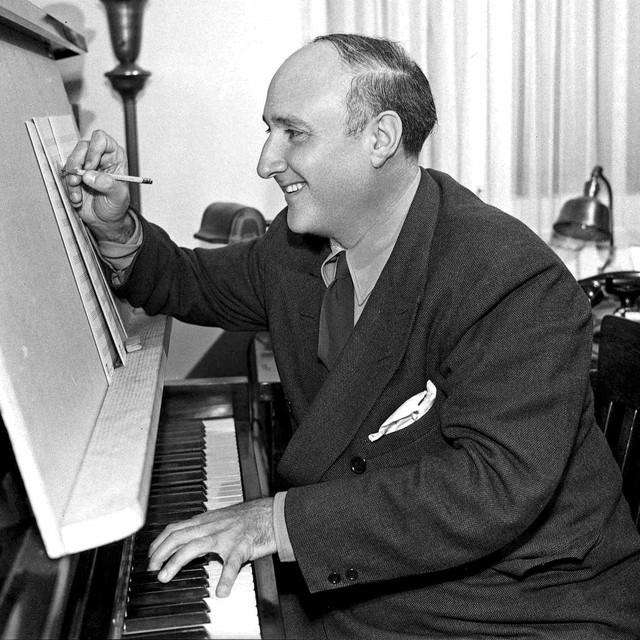
Elmer Bernstein

Classical
Orchestral
Choral
Classical Crossover
 Viberate Rank: 79539
 Viberate Rank: 79539
 Monthly ListenersFollowers
 Subscribers
 Followers
 Followers
 FansTop Spotify Songs
| Track | 7-Day Streams | |
|---|---|---|
1 | 15.31K | |
2 | 11.40K | |
3 | 5.78K | |
4 | 5.78K | |
5 | 5.07K |
Top YouTube VideosMonthly ListenersFeatured in Playlists| Playlist | Followers | |
|---|---|---|
1 |  Iconic Soundtracks Spotify | 1.37M |
2 |  Jazz Soundtracks Spotify | 197.25K |
3 |  Red Dead Redemption 2 VCON | 144.13K |
4 |  Classical Piano Essentials Pianoramix | 138.31K |
5 |  Ted Lasso - Complete Playlist aviamax | 104.99K |
Audience| City | Monthly Listeners | |
|---|---|---|
1 |  | 3.96K |
2 |  | 2.33K |
3 |  | 2.15K |
4 | | 1.97K |
5 |  | 1.95K |
See full performance history, audience data, playlist activity, rankings, comparisons, and more in Viberate music analytics. Start with a free trial, then continue with a paid plan.
Elmer Bernstein’s Spotify BioIf Elmer Bernstein had realized his childhood aspirations, he might have been a concert pianist. Instead, he has been a major force in film music and popular culture for more than fifty years.
Bernstein showed a consuming interest in the piano at an early age. When Bernstein was thirteen, his music teacher arranged an audition for Aaron Copland, who in turn arranged for Bernstein to study with one of his own students. Bernstein enrolled at the Juilliard School as a piano student and also took up composition, for which his teachers included Stefan Wolpe and Roger Sessions. Assigned to an army entertainment unit during World War II, Bernstein first worked as an arranger of traditional American songs for Glenn Miller, which led to a chance to compose for Armed Forces Radio. Bernstein wrote the music for more than eighty broadcasts and wanted to pursue a career as a composer once the war was over. His break came in 1949 when he was commissioned to write the score for a UN radio program on… the founding of the State of Israel, which led to an offer to write music for NBC. That, in turn, got Bernstein a chance to come to Hollywood as a film composer.
Bernstein's professional breakthrough took place in 1955 with Otto Preminger's film The Man With The Golden Arm, a drama dealing with drug addiction. Bernstein's jazz-based score proved popular with the public and critics and was the first of his film music to get an album release, as well as receiving an Oscar nomination. The next major milestone in Bernstein's career came in 1960, when he was engaged to score John Sturges' western The Magnificent Seven. It was here that Bernstein got to put his love of folk music into play: in a manner not far removed from Aaron Copland, he utilized the melodic characteristics of cowboy and traditional Mexican music in composing a sweeping orchestral score. The main title theme quickly took on a life of its own when the makers of Marlboro cigarettes licensed it for a series of commercials that ran for a decade, making it perhaps the most widely heard piece of movie music in history. Bernstein's work during the 1960s ran the gamut from sensitive dramas like To Kill A Mockingbird to such rousing adventure yarns as The Great Escape. He won a 1968 Oscar for his score for Thoroughly Modern Millie. In the early 1970s, Bernstein formed his own record label, Filmmusic Collection, and used it to make new recordings (usually with the Royal Philharmonic Orchestra in London) of film scores that weren't otherwise available, including Miklos Rozsa's music for The Thief of Baghdad and Bernard Herrmann's unused score for Torn Curtain.
In 1977, Bernstein's career took an unexpected turn when he was asked by director John Landis to score the comedy National Lampoon's Animal House. Having never scored a comedy before, the composer hesitated, but Landis said that he wanted the kind of sweeping music that Bernstein was known for. The mix of his dignified music underscoring the film's physical comedy lent a depth to the humor of the movie; other filmmakers liked what they heard, and he has since written the music for such comedies as Airplane and Ghostbusters. At the same time, his status as the dean of living soundtrack composers made Bernstein the first choice for many high profile, serious films, including Martin Scorsese's remake of the 1960 thriller Cape Fear (for which Bernstein rescored Bernard Herrmann's original music) and The Age of Innocence. He remains active in the new century in both film and television music.
Viberate is a music analytics platform built for A&Rs, artist managers, labels, booking agents, marketers, and artists.
It helps music professionals track artist growth, analyze audience data, monitor playlist activity, compare artists, follow song performance, and identify opportunities across the music market.
Public artist pages provide a free preview of selected artist data. Paid plans provide access to deeper analytics, historical data, charts, comparisons, playlist tools, exports, alerts, reports, and additional professional features.
Yes. Public Viberate artist pages provide selected artist analytics and music data for free.
Viberate also offers a 7-day free trial of the full platform. A credit card is required to start the trial. The trial includes access to the complete product so users can test deeper artist analytics, historical views, playlist insights, comparisons, charts, exports, alerts, and reporting features before choosing a paid plan.
Viberate provides artist analytics across streaming, playlists, social media, video, radio airplay, songs, and audience markets.
Users can analyze Spotify performance, Spotify and Apple Music playlists, YouTube activity, TikTok and Instagram growth, radio spins, song performance, audience locations, demographics, rankings, and overall artist momentum.
Artist profiles also connect to music charts, similar artists, and comparison tools, helping users benchmark performance and evaluate artists in context.
Viberate updates key artist and track data daily.
For followed artists and tracks, selected data is refreshed multiple times per day. This helps teams monitor playlist changes, streaming movement, audience growth, releases, and campaign performance with more current data.
Update frequency can vary depending on the metric and data source.
Yes. Viberate lets users compare up to five artists side by side across streaming, social media, audience, and engagement metrics.
Users can compare fanbase growth, audience demographics, locations, Spotify performance, social metrics, and other artist data over selected time periods.
Artist comparison can be used for A&R scouting, benchmarking, booking decisions, campaign planning, and evaluating artists with similar audiences or market positions.