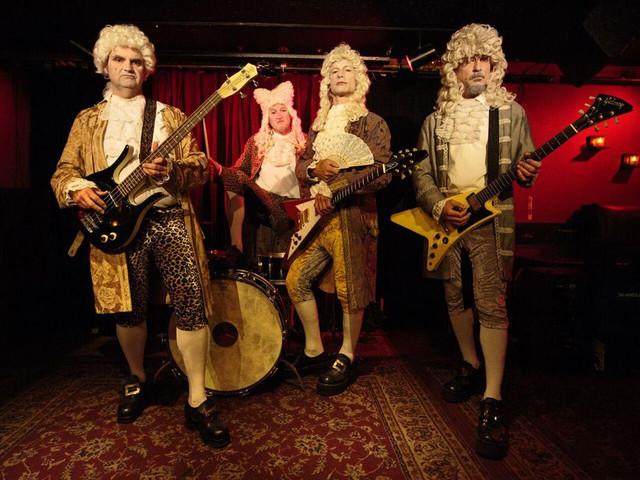
Electric Eel Shock

Rock
Garage Rock
Hard Rock
 Viberate Rank: 219648
 Viberate Rank: 219648
 Monthly ListenersFollowers
 Subscribers
 Followers
 Followers
 FansTop Spotify Songs
| Track | 7-Day Streams | |
|---|---|---|
1 | 636 | |
2 | 563 | |
3 | 244 | |
4 | 170 | |
5 | 163 |
Top YouTube Videos| Video | 7-Day Views | |
|---|---|---|
1 | 187 | |
2 | 116 | |
3 | 86 | |
4 | 42 | |
5 | 31 |
Monthly ListenersFeatured in Playlists| Playlist | Followers | |
|---|---|---|
1 |  Popular Anime Songs Gabs | 3.14K |
2 |  Black Sabbath Tributes & Covers Júlio Costa | 2.98K |
3 | Garage rock 'n roll & psychedelic pop atzedevrieze | 2.65K |
4 | My Spotify Wrapped: Most Listened to 2022 James Gunn | 2.38K |
5 | jrock Patricia Rack | 1.97K |
Audience| City | Monthly Listeners | |
|---|---|---|
1 |  | 88 |
2 |  | 52 |
3 | | 40 |
4 |  | 37 |
5 | | 35 |
See full performance history, audience data, playlist activity, rankings, comparisons, and more in Viberate music analytics. Start with a free trial, then continue with a paid plan.
Electric Eel Shock’s Spotify BioElectric Eel Shock is a Japanese rock trio that powerfully combines classic rock, metal, and punk influences with a gritty garage rock delivery. Aki Morimoto (vocals/guitar) and Kazuto Maekawa (bass) were first brought together over a mutual obsession with Black Sabbath while in school in Osaka. They played together in a pop/rock band in Tokyo, but after the band broke up, Morimoto turned to fishing while Maekawa briefly joined the popular Japanese funk band the Apollos as a session bassist. It was here that Maekawa first met drummer Tomoharu Ito -- who interestingly enough loves to play naked -- and upon hooking back up with Morimoto, Electric Eel Shock was born, initially as an 11-piece band. Scheduling practices quickly became too hard, thus causing EES to strip down to their present threesome. Without wasting time, the guys started making an impact on the Japanese independent rock scene, starting Micro Music with friends to release their first full-length, Maybe I Think, We Can… Beat Nirvana, following it up with Live Punctured. In 1999, EES recorded Slayer Bay Blues and pressed enough for their first U.S. tour. Initial gigs in and around N.Y.C. with friends Peelander-Z were highly successful, so after a brief return home, they soon went back to America, touring for two years straight. They next recorded the Go America full-length and in January 2003, with the help of a U.K. fanzine writer who later became their manager, went to London and played an impressive 12 shows in ten days. Extensive touring continued for the rest of the year, spending time between the U.S. and Europe, including successful stops at SXSW and CMJ in the United States, headlining a stage at the Roskilde Festival in Denmark, and opening for Danko Jones' European tour. Electric Eel Shock went back into the studio in 2004 to record Go Europe! and Go USA!, licensing both around the world and playing in 30 countries. They next released Beat Me, produced by Attie Bouw (Judas Priest, Scorpions), in 2005. ~ Corey Apar
Viberate is a music analytics platform built for A&Rs, artist managers, labels, booking agents, marketers, and artists.
It helps music professionals track artist growth, analyze audience data, monitor playlist activity, compare artists, follow song performance, and identify opportunities across the music market.
Public artist pages provide a free preview of selected artist data. Paid plans provide access to deeper analytics, historical data, charts, comparisons, playlist tools, exports, alerts, reports, and additional professional features.
Yes. Public Viberate artist pages provide selected artist analytics and music data for free.
Viberate also offers a 7-day free trial of the full platform. A credit card is required to start the trial. The trial includes access to the complete product so users can test deeper artist analytics, historical views, playlist insights, comparisons, charts, exports, alerts, and reporting features before choosing a paid plan.
Viberate provides artist analytics across streaming, playlists, social media, video, radio airplay, songs, and audience markets.
Users can analyze Spotify performance, Spotify and Apple Music playlists, YouTube activity, TikTok and Instagram growth, radio spins, song performance, audience locations, demographics, rankings, and overall artist momentum.
Artist profiles also connect to music charts, similar artists, and comparison tools, helping users benchmark performance and evaluate artists in context.
Viberate updates key artist and track data daily.
For followed artists and tracks, selected data is refreshed multiple times per day. This helps teams monitor playlist changes, streaming movement, audience growth, releases, and campaign performance with more current data.
Update frequency can vary depending on the metric and data source.
Yes. Viberate lets users compare up to five artists side by side across streaming, social media, audience, and engagement metrics.
Users can compare fanbase growth, audience demographics, locations, Spotify performance, social metrics, and other artist data over selected time periods.
Artist comparison can be used for A&R scouting, benchmarking, booking decisions, campaign planning, and evaluating artists with similar audiences or market positions.