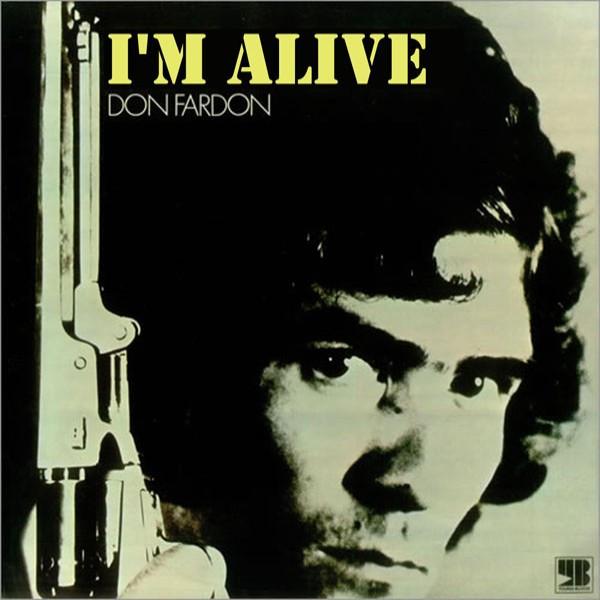
Don Fardon

Country
Americana/Alt Country
Mainstream Pop
 Viberate Rank: 203171
 Viberate Rank: 203171
 Monthly ListenersFollowers
 Subscribers
 Followers
 Followers
 FansTop Spotify Songs
| Track | 7-Day Streams | |
|---|---|---|
1 | 2.92K | |
2 | 1.56K | |
3 | 1.09K | |
4 | 404 | |
5 | 158 |
Top YouTube VideosMonthly ListenersFeatured in Playlists| Playlist | Followers | |
|---|---|---|
1 |  Foute Uur Qmusic mariellev1977 | 43.05K |
2 |  Hacks Soundtrack - Season 1-5 (HBO Max) 116867114 | 11.32K |
3 | 9. Hitzone 1 - 100 (1998-2022) pierre.1990 | 8.69K |
4 |  K-Billy's Super Sounds of the 70s James Humphries | 7.42K |
5 |  Legends of Classic Rock Patrick Hollain | 6.04K |
Audience| City | Monthly Listeners | |
|---|---|---|
1 | | 541 |
2 |  | 341 |
3 | | 285 |
4 |  | 272 |
5 |  | 241 |
See full performance history, audience data, playlist activity, rankings, comparisons, and more in Viberate music analytics. Start with a free trial, then continue with a paid plan.
Don Fardon’s Spotify Biob. Donald Maughn, 19 August 1943, Coventry, West Midlands, England. As the vocalist with the Sorrows, Maughn was featured on this cult act’s most durable release, the pulsating ‘Take A Heart’. A number 21 hit in September 1965, its hypnotic, throbbing beat was maintained on subsequent releases, several of which the singer co-composed. Here, however, he preferred to use an alternative surname, Fardon, which was then retained for the artist’s solo career. His cover version of John D. Loudermilk’ s ‘(The Lament Of The Cherokee) Indian Reservation’ gave him his first and only US hit single in 1968, reaching the Top 20. He broke into the UK Top 40 in 1970 with ‘Belfast Boy’, a homage to the talented, but troubled Northern Irish footballer, George Best. This success paved the way for the re-issue of ‘Indian Reservation’ which, when resurrected, climbed to a respectable number 3 and became one of that year’s most distinctive chart entries. Yet despite several further releases in the early… 70s, some of which were remakes of former Sorrows material, Fardon was unable to secure consistent success. He went into the licensing trade, running pubs in Coventry and Eathorpe, while continuing to work on the cabaret and country circuits. He later helped run a security firm looking after pop stars. Fardon re-released ‘Belfast Boy’ in December 2005 in honour of the recently deceased Best.
Viberate is a music analytics platform built for A&Rs, artist managers, labels, booking agents, marketers, and artists.
It helps music professionals track artist growth, analyze audience data, monitor playlist activity, compare artists, follow song performance, and identify opportunities across the music market.
Public artist pages provide a free preview of selected artist data. Paid plans provide access to deeper analytics, historical data, charts, comparisons, playlist tools, exports, alerts, reports, and additional professional features.
Yes. Public Viberate artist pages provide selected artist analytics and music data for free.
Viberate also offers a 7-day free trial of the full platform. A credit card is required to start the trial. The trial includes access to the complete product so users can test deeper artist analytics, historical views, playlist insights, comparisons, charts, exports, alerts, and reporting features before choosing a paid plan.
Viberate provides artist analytics across streaming, playlists, social media, video, radio airplay, songs, and audience markets.
Users can analyze Spotify performance, Spotify and Apple Music playlists, YouTube activity, TikTok and Instagram growth, radio spins, song performance, audience locations, demographics, rankings, and overall artist momentum.
Artist profiles also connect to music charts, similar artists, and comparison tools, helping users benchmark performance and evaluate artists in context.
Viberate updates key artist and track data daily.
For followed artists and tracks, selected data is refreshed multiple times per day. This helps teams monitor playlist changes, streaming movement, audience growth, releases, and campaign performance with more current data.
Update frequency can vary depending on the metric and data source.
Yes. Viberate lets users compare up to five artists side by side across streaming, social media, audience, and engagement metrics.
Users can compare fanbase growth, audience demographics, locations, Spotify performance, social metrics, and other artist data over selected time periods.
Artist comparison can be used for A&R scouting, benchmarking, booking decisions, campaign planning, and evaluating artists with similar audiences or market positions.