Dmitri Kitayenko

Classical
Orchestral
Chamber Music
 Viberate Rank: 214164
 Viberate Rank: 214164
 Monthly ListenersFollowers
 Subscribers
 Followers
 Followers
 FansTop Spotify Songs
| Track | 7-Day Streams | |
|---|---|---|
1 | 12.27K | |
2 | 3.37K | |
3 | 1.97K | |
4 | 1.70K | |
5 | 1.61K |
Top YouTube VideosMonthly ListenersFeatured in Playlists| Playlist | Followers | |
|---|---|---|
1 |  This Is Tchaikovsky Spotify | 371.34K |
2 | Beautiful, Calming Classical Music vcmstow | 72.62K |
3 |  Klassik zum Entspannen Filtr Germany | 42.04K |
4 |  dreamy classical, romantic era 🥀 Guppie | 38.23K |
5 |  J'aime pas le classique, mais ça j'aime bien ! Filtr France | 19.66K |
Audience| City | Monthly Listeners | |
|---|---|---|
1 |  | 1.11K |
2 |  | 794 |
3 |  | 660 |
4 |  | 577 |
5 |  | 576 |
See full performance history, audience data, playlist activity, rankings, comparisons, and more in Viberate music analytics. Start with a free trial, then continue with a paid plan.
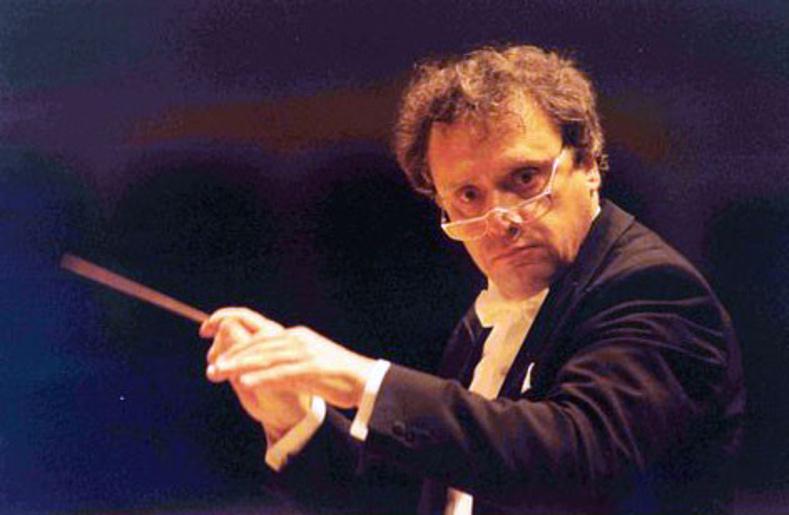
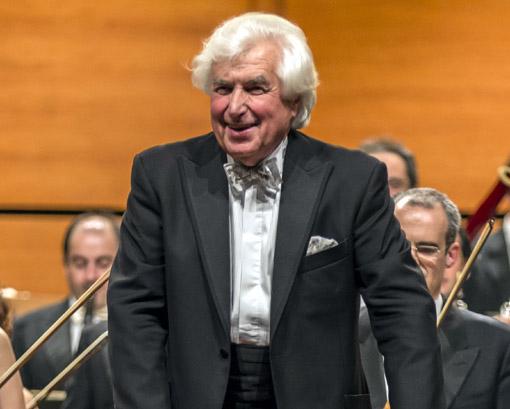
Dmitri Kitayenko’s Spotify BioDmitri Kitaenko is among the leading Russian conductors of his generation. Though generally overshadowed by his contemporary Yuri Temirkanov, as well as older-generation figures like Kiril Kondrashin and Gennady Rozhdestvensky, Kitaenko has held several prestigious conducting posts and has made a spate of critically praised recordings for a variety of major labels in both operatic and symphonic repertory largely dominated by Russian composers.
Kitaenko was born in Leningrad, on August 18, 1940. He studied conducting at the Leningrad Conservatory, then later at the Moscow Conservatory under Lev Ginzburg. With the thaw in the Cold War allowing greater artistic freedom in the Soviet Union, he moved onto the Vienna Conservatory where he studied under famed conductor Hans Swarowsky.
The most crucial event in Kitaenko's early career was his entry in the first Herbert von Karajan Competition in 1969, where he won first prize. The following year he was appointed artistic director at the… Nemirovich-Danchenko Music Theater in Moscow, a post that allowed him to gain much experience in operatic repertory. He also began conducting the leading Russian orchestras and soon became a regular conductor at the Bolshoi. He traveled abroad, too, leading important operatic productions in Brussels, Vienna, and Munich.
In 1976 he was appointed principal conductor of the Moscow Philharmonic Orchestra, succeeding Kiril Kondrashin. During his 14-year stint in Moscow, Kitaenko made many recordings for the Soviet label Melodiya, his releases including the complete symphonies of Prokofiev, and various works by Shostakovich, Rachmaninov, and, surprisingly, Gershwin. In 1990 he left the Soviet Union for Western Europe, taking two conducting posts concurrently, the Bergen (Norway) Philharmonic Orchestra, where he served until 1998, and the Hessischen Rundfunk Orchestra, Frankfurt, a post he held until 1996.
Among Kitaenko's first recordings to be released in the west was a 1991 Prokofiev disc on the Chandos label containing Alexander Nevsky and the Scythian Suite, made with the Danish National Radio Symphony Orchestra and Choir. After 1998, Kitaenko regularly began appearing as a guest conductor in Europe, Japan, and the U.S. In the new century he has made a number of successful recordings, including the 2001 cycle of the five Prokofiev piano concertos, with his former Frankfurt orchestra and pianist Vladimir Krainev on the Elektra label. In 2005, Kitaenko finished recording the 15 symphonies of Shostakovich, and the set was issued on the Capriccio label to a quite favorable critical response. Further recordings included efforts on Shostakovich, Stravinsky, and Tchaikovsky.
Viberate is a music analytics platform built for A&Rs, artist managers, labels, booking agents, marketers, and artists.
It helps music professionals track artist growth, analyze audience data, monitor playlist activity, compare artists, follow song performance, and identify opportunities across the music market.
Public artist pages provide a free preview of selected artist data. Paid plans provide access to deeper analytics, historical data, charts, comparisons, playlist tools, exports, alerts, reports, and additional professional features.
Yes. Public Viberate artist pages provide selected artist analytics and music data for free.
Viberate also offers a 7-day free trial of the full platform. A credit card is required to start the trial. The trial includes access to the complete product so users can test deeper artist analytics, historical views, playlist insights, comparisons, charts, exports, alerts, and reporting features before choosing a paid plan.
Viberate provides artist analytics across streaming, playlists, social media, video, radio airplay, songs, and audience markets.
Users can analyze Spotify performance, Spotify and Apple Music playlists, YouTube activity, TikTok and Instagram growth, radio spins, song performance, audience locations, demographics, rankings, and overall artist momentum.
Artist profiles also connect to music charts, similar artists, and comparison tools, helping users benchmark performance and evaluate artists in context.
Viberate updates key artist and track data daily.
For followed artists and tracks, selected data is refreshed multiple times per day. This helps teams monitor playlist changes, streaming movement, audience growth, releases, and campaign performance with more current data.
Update frequency can vary depending on the metric and data source.
Yes. Viberate lets users compare up to five artists side by side across streaming, social media, audience, and engagement metrics.
Users can compare fanbase growth, audience demographics, locations, Spotify performance, social metrics, and other artist data over selected time periods.
Artist comparison can be used for A&R scouting, benchmarking, booking decisions, campaign planning, and evaluating artists with similar audiences or market positions.