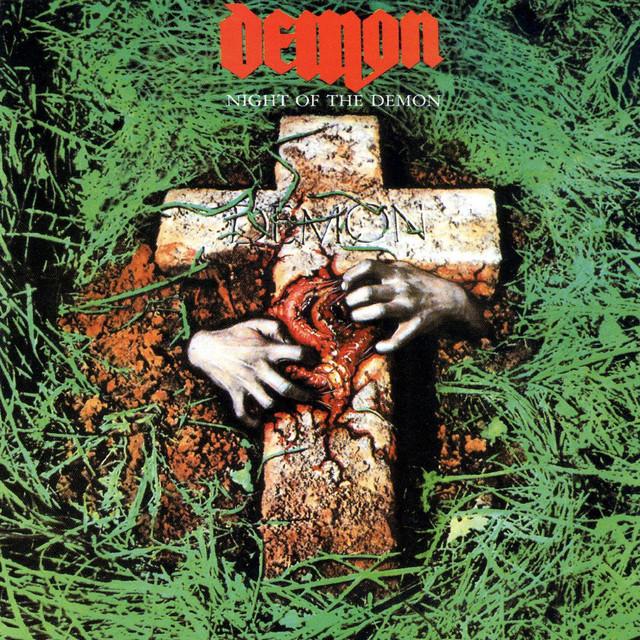
Demon

Metal
Heavy Metal
Hard Rock
Progressive Rock
 Viberate Rank: 112821
 Viberate Rank: 112821
 Monthly ListenersFollowers
 Subscribers
 Followers
 Followers
 FansTop Spotify Songs
| Track | 7-Day Streams | |
|---|---|---|
1 | 13.15K | |
2 | 7.04K | |
3 | 6.19K | |
4 | 5.07K | |
5 | 4.32K |
Top YouTube VideosMonthly ListenersFeatured in Playlists| Playlist | Followers | |
|---|---|---|
1 |  80’s Hair Metal & Rock halun1 | 40.35K |
2 |  SATANIC MUSIC IMBOLC 🧚♂️ | 19.47K |
3 |  COUNTER//CULTURE: Tobias Forge of Ghost Spotify | 16.51K |
4 |  NWOBHM Classics 🔥🔥 Abdurahman Muuse | 10.80K |
5 |  Hårdrock !! Markus Hårdis Andersson | 8.34K |
Audience| City | Monthly Listeners | |
|---|---|---|
1 |  | 1.41K |
2 |  | 1.28K |
3 | | 1.11K |
4 |  | 816 |
5 |  | 693 |
See full performance history, audience data, playlist activity, rankings, comparisons, and more in Viberate music analytics. Start with a free trial, then continue with a paid plan.
Demon’s Spotify BioKnown for their shocking and elaborate occult-themed performances, Demon is an often overlooked yet pivotal band in the New Wave of British Heavy Metal movement. The band's ghoulish image was contrasted by their sound, which adhered closer to traditional hard rock than the kinetic punk-metal of contemporaries like Venom and Motörhead. After the release of their first two studio albums, 1981's Night of the Demon and 1983's The Unexpected Guest, the band decided to take a more progressive approach. Demon disbanded in 1992 but vocalist Dave Hill formed a new iteration of the group in the early 2000s that has gone on to release a string of well-received albums like Better the Devil You Know! (2005), Cemetery Junction (2016), and Invincible (2024).
Singer Dave Hill and guitarist Mal Spooner had already cut their teeth with various amateur acts in their native Staffordshire, England, by the time they decided to join forces and form Demon in 1979. With the assistance of guitarist Clive Cook,… bassist Paul Riley, and drummer John Wright, they quickly secured a one-off single deal with independent Clay Records, resulting in the "Liar" 7" later that year. The disc sold surprisingly well, and Demon were soon snapped up by French label Carrere (then also the home of NWOBHM stars Saxon) and shipped right back into the studio to record a full album, with Cook and Riley making way for new lead guitarist Les Hunt and bassist Chris Ellis at this time. Released in July 1981, their debut, Night of the Demon, was loaded with darkly gothic heavy metal on the one hand (Aide A) and melodic hard rock on the other (Side B), drawing positive comparisons to Judas Priest and latter-day Rainbow. A noteworthy stylistic balancing act, the semi-conceptual LP shifted quite a few units, as did its very solid 1982 follow-up, The Unexpected Guest, which carried on in similar fashion while adding keyboard player Andy Wright to the mix.
1983's The Plague signaled a new, more progressive rock-oriented direction for the group, and subsequent outings Heart of Our Time (1985), Breakout (1987), and Taking the World by Storm (1988) followed suit, but the group suffered a major setback when founding member Mal Spooner succumbed to pneumonia and passed away in December 1984. Hill finally put the band on ice during the ‘90s and even released a solo album in 1994. But after compiling another best-of set in 1999, he decided to hire a new group of backup musicians, and a revamped Demon inaugurated the new millennium with their tenth studio album, 2001's Spaced Out Monkey. Hill and company -- guitarists Ray Walmsley and Karl Finney, keyboardist Paul "Fazza" Farrington, bassist Andy Dale, and drummer Neil Ogden -- issued Better the Devil You Know! in 2005. By the time their next album, Unbroken, arrived in the fall of 2012, Demon had been through some more personnel changes. Hill, Farrington, and Ogden remained, while David Cotterill and Paul Hume had signed on as guitarists, and Paul "Fasker" Johnson took over on bass. Demon marched on with yet another lineup when they released Cemetery Junction in October 2016; former Demon guitarist Ray Walmsley rejoined the band on bass, replacing Paul Johnson, while Karl Waye took over on keyboards from Paul Farrington. In 2018, the group toured the U.K. to celebrate the 35th anniversary of The Unexpected Guest. 2024's Invincible saw the band celebrate their 45th anniversary with a ghoulish set of new songs rooted in classic hard rock and epic prog-metal. ~ James Christopher Monger, Rovi
Viberate is a music analytics platform built for A&Rs, artist managers, labels, booking agents, marketers, and artists.
It helps music professionals track artist growth, analyze audience data, monitor playlist activity, compare artists, follow song performance, and identify opportunities across the music market.
Public artist pages provide a free preview of selected artist data. Paid plans provide access to deeper analytics, historical data, charts, comparisons, playlist tools, exports, alerts, reports, and additional professional features.
Yes. Public Viberate artist pages provide selected artist analytics and music data for free.
Viberate also offers a 7-day free trial of the full platform. A credit card is required to start the trial. The trial includes access to the complete product so users can test deeper artist analytics, historical views, playlist insights, comparisons, charts, exports, alerts, and reporting features before choosing a paid plan.
Viberate provides artist analytics across streaming, playlists, social media, video, radio airplay, songs, and audience markets.
Users can analyze Spotify performance, Spotify and Apple Music playlists, YouTube activity, TikTok and Instagram growth, radio spins, song performance, audience locations, demographics, rankings, and overall artist momentum.
Artist profiles also connect to music charts, similar artists, and comparison tools, helping users benchmark performance and evaluate artists in context.
Viberate updates key artist and track data daily.
For followed artists and tracks, selected data is refreshed multiple times per day. This helps teams monitor playlist changes, streaming movement, audience growth, releases, and campaign performance with more current data.
Update frequency can vary depending on the metric and data source.
Yes. Viberate lets users compare up to five artists side by side across streaming, social media, audience, and engagement metrics.
Users can compare fanbase growth, audience demographics, locations, Spotify performance, social metrics, and other artist data over selected time periods.
Artist comparison can be used for A&R scouting, benchmarking, booking decisions, campaign planning, and evaluating artists with similar audiences or market positions.