Dead Boys

Punk
Punk Rock
Garage Rock
 Viberate Rank: 60932
 Viberate Rank: 60932
 Monthly ListenersFollowers
 Subscribers
 Followers
 Followers
 FansTop Spotify Songs
| Track | 7-Day Streams | |
|---|---|---|
1 | 54.95K | |
2 | 19.04K | |
3 | 16.77K | |
4 | 16.76K | |
5 | 6.83K |
Top YouTube Videos| Video | 7-Day Views | |
|---|---|---|
1 | 128 |
Monthly ListenersFeatured in Playlists| Playlist | Followers | |
|---|---|---|
1 |  Classic Punk Spotify | 1.60M |
2 |  Skatepark Punks Spotify | 1.12M |
3 |  Punk Classics Filtr Legacy Sweden | 73.27K |
4 |  Anthony Bourdain's Favorite Songs alexanderlenox-us | 58.25K |
5 | wicks Brennan McDowell | 43.73K |
Audience| City | Monthly Listeners | |
|---|---|---|
1 | | 5.30K |
2 |  | 3.56K |
3 | | 2.73K |
4 |  | 2.69K |
5 | | 2.56K |
See full performance history, audience data, playlist activity, rankings, comparisons, and more in Viberate music analytics. Start with a free trial, then continue with a paid plan.
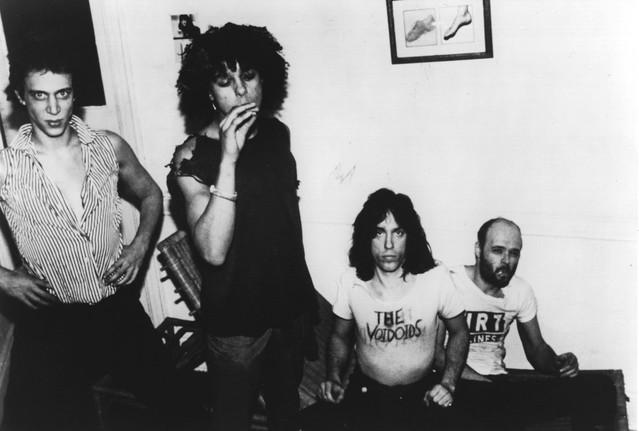
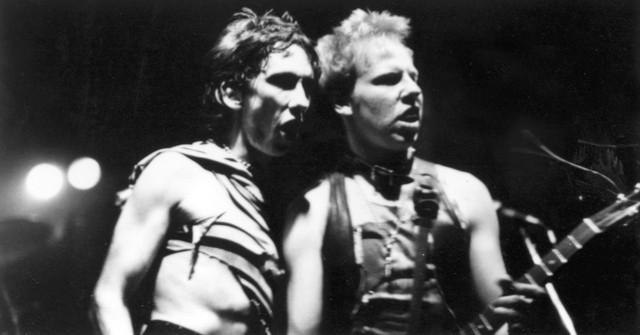
Dead Boys’ Spotify BioA crucially important band in the early years of American punk rock, the Dead Boys titled their classic debut album Young Loud and Snotty, and they devoted their career to living up to that slogan. Following the example of the Raw Power-era Iggy & the Stooges, the Dead Boys had an unapologetically raw and ferocious attack, though they delivered their sonic blows with taut precision, and they eagerly challenged their audience with obnoxious lyrics, a bad attitude, and the self-destructive theatrics of lead singer Stiv Bators. Young Loud and Snotty was too extreme for mainstream audiences in 1977, but it would become an enduring cult classic, and their reputation as an incendiary live act was documented on Return of the Living Dead Boys 1986, taken from a mid-'80s reunion show.
Originally hailing from Cleveland, Ohio, the roots of the Dead Boys lay in the fabled proto-punk band Rocket from the Tombs, led by future Pere Ubu founders Peter Laughner and David Thomas. In 1974, guitarist Gene… O'Connor and drummer John Madansky were added to the band's flexible lineup, and in August 1975, during one of their infrequent live appearances, O'Connor brought his friend Steve Bators up to the stage to sing a few songs. Since Thomas was RFTT's lead singer and Laughner would sometimes take the vocal mike, Bators' presence wasn't welcomed by the rest of the band, and their disagreement would factor into their breakup. It didn't help that O'Connor and Bators preferred the more aggressive sounds of bands like the Stooges, the New York Dolls, and Alice Cooper over the artier approach favored by Thomas and Laughner, so they took the opportunity to start a band of their own that would deliver a harder punch. With the addition of Bators, guitarist William Wilden and bassist Jeff Halmagy, they formed a group called Frankenstein, and they recorded a demo tape in October 1975. Frankenstein had trouble getting gigs, and in early 1976, they called it quits. However, O'Connor and Bators began hearing about the new underground rock scene that was taking shape in the Bowery in New York City at a club called CBGB, and when the Ramones played a show in Cleveland, they befriended the visitors. Joey Ramone was particularly impressed with their style and daring, and he helped arrange an audition at CBGB for Frankenstein. Bators, O'Connor, Wilden, and Madansky made the trip to New York. After hearing them play a short set, CBGB owner Hilly Kristal immediately arranged a gig for the group, and he would soon become their manager.
The band settled in New York City, and soon made some changes. They changed their handle from Frankenstein to the Dead Boys, inspired by a line from the RFTT song "Down in Flames," and the members adopted new stage names. Steve Bators became Stiv Bators, Gene O'Connor became Cheetah Chrome, William Wilden became Jimmy Zero, and John Madansky became Johnny Blitz. The band caused an immediate splash in their newly adopted hometown, thanks to Bators' Iggy Pop-esque, audience-baiting antics (he would writhe on the stage, stab his chest with broken glass, and mock-hang himself with his microphone cable), and the group's intense three-chord punk assault. Kristal helped the Dead Boys strike a deal with Sire Records, the label most closely connected with the CBGB scene, and former Goldie & the Gingerbreads singer Genya Ravan was tapped to produce their debut album. With future star producer Bob Clearmountain playing bass on the sessions, the Dead Boys' Young Loud and Snotty was released in October 1977, and for subsequent touring, Jeff Halmagy returned as their bassist, renaming himself Jeff Magnum.
In addition to barnstorming clubs, the Dead Boys landed a tour opening for their hero Iggy Pop in the United States, and flew to England to play a string of shows with the Damned. Though the album received good reviews in publications sympathetic to punk, the Dead Boys soon discovered that outside a few major cities, most American rock fans weren't accepting of punk in general, or them in particular. While the album would go on to be celebrated as a classic, initial sales proved disappointing, and Sire was not happy with the red ink it added to their balance sheet. (The band wasn't entirely happy with Ravan's mix, and the band leaked tapes of rough mixes they preferred that would pop up on bootleg releases.) The group set their sights on their sophomore effort, which was originally to be produced by Lou Reed, with a working title of Down to Kill. But at the insistence of their record company, eager to convince the band to soften up their sound a bit to produce a breakthrough hit, the group settled on former Cream producer (and bassist for early-'70s Cream disciples Mountain) Felix Pappalardi. The match didn't prove to be a fit, as the former hippie was puzzled by the band's sonic onslaught, and Chrome called former Iggy & the Stooges guitarist James Williamson, begging him to take over the project. Williamson declined, and Pappalardi's mix of We Have Come for Your Children arrived in June 1978. The album spawned another punk classic in "Ain't It Fun" (written by Peter Laughner during his days in Rocket from the Tombs), but the disc sold even fewer copies than its predecessor, pleasing neither critics nor fans. To add insult to injury, the group had to cancel a major tour when Blitz was almost killed after being attacked by muggers in New York City. A series of Blitz Benefit concerts were held at CBGB's to raise money for the drummer's medical bills, and featured appearances by John Belushi and Divine, as well as members of Blondie, the Ramones, and former Alice Cooper guitarist Glen Buxton.
With their record company still pressuring them to dramatically soften their sound and look, the Dead Boys split up in 1979. However, Sire insisted they honor their contract and deliver a third album. The band agreed to a compromise, reuniting to record a live album at CBGB. Bators, making no effort to disguise his contempt for Sire, purposely sang off-mike for the whole show, resulting in an unusable recording. Sire rejected the album; Bomp Records obtained the rights, and after Bators recut his vocals in a studio, the LP was issued in 1981 under the title Night of the Living Dead Boys. Bators arranged a tour to run from late 1979 into early 1980, but the rest of the band chose not to participate, and he assembled a group to fulfill the dates. He would use the same musicians to record much of his solo debut, 1980's Disconnected. The Dead Boys would reunite for the odd show here and there throughout the '80s; a show at the Ritz in New York City on Halloween 1986 was recorded and belatedly released as a live album, 1993's Live at the Ritz 1986; an expanded version would be released by Cleopatra Records in 2024 as Return of the Living Dead Boys 1986.
Bators tried his hand at an acting career, appearing the films Polyester and Tapeheads, before joining forces with ex-members of Sham 69 in the group the Wanderers (who issued a lone album, 1981's Only Lovers Left Alive), and ex-Damned guitarist Brian James in the goth-punk outfit Lords of the New Church, who released several albums between 1982 and 1988. Having relocated to Paris, France, Bators attempted to assemble a punk supergroup, which was to have included Johnny Thunders and Dee Dee Ramone, but it fizzled out before any recording could get under way. On June 4, 1990, Bators died from injuries sustained after being hit by a car in Paris. Meanwhile, Cheetah Chrome recorded with Jeff Dahl of the Angry Samoans, played in a short-lived group with Mike Metoff of the Pagans called the Ghetto Dogs, and teamed with Sonny Vincent of the Testors and Bob Stinson of the Replacements in the group Shotgun Rationale. He also participated in a Rocket from the Tombs reunion, co-founded the Batusis with Sylvain Sylvain of the New York Dolls, and released an album, Solo, in 2013.
After Bators' death, a bounty of Dead Boys compilations, live sets, and rarities collections appeared, including such titles as Twistin' on the Devil's Fork: Live at CBGB's, Magnificent Chaos, Down in Flames, All This & More, and Liver Than You'll Ever Be, in addition to releases by Rocket from the Tombs (The Day the Earth Met the Rocket from the Tombs) and Frankenstein (Eve of the Dead Boys: October 1975). The Dead Boys' influence on subsequent rock bands continued unabated, as such acclaimed groups as Guns N' Roses and Pearl Jam covered their songs in the '90s and 2000s. In 2017, Cheetah Chrome and Johnny Blitz staged a Canadian tour to honor the 40th anniversary of the release of Young Loud and Snotty. The touring band included guitarist Jason "Ginchy" Kottwitz, bassist Ricky Rat, and lead singer Jake Hout, and after coming off the road, the band headed into the studio. Credited to the Dead Boys, their 2017 album Still Snotty: Young Loud and Snotty at 40 featured fresh recordings of the nine original songs from the 1977 debut LP. ~ Stephen Thomas Erlewine & Mark Deming, Rovi
Viberate is a music analytics platform built for A&Rs, artist managers, labels, booking agents, marketers, and artists.
It helps music professionals track artist growth, analyze audience data, monitor playlist activity, compare artists, follow song performance, and identify opportunities across the music market.
Public artist pages provide a free preview of selected artist data. Paid plans provide access to deeper analytics, historical data, charts, comparisons, playlist tools, exports, alerts, reports, and additional professional features.
Yes. Public Viberate artist pages provide selected artist analytics and music data for free.
Viberate also offers a 7-day free trial of the full platform. A credit card is required to start the trial. The trial includes access to the complete product so users can test deeper artist analytics, historical views, playlist insights, comparisons, charts, exports, alerts, and reporting features before choosing a paid plan.
Viberate provides artist analytics across streaming, playlists, social media, video, radio airplay, songs, and audience markets.
Users can analyze Spotify performance, Spotify and Apple Music playlists, YouTube activity, TikTok and Instagram growth, radio spins, song performance, audience locations, demographics, rankings, and overall artist momentum.
Artist profiles also connect to music charts, similar artists, and comparison tools, helping users benchmark performance and evaluate artists in context.
Viberate updates key artist and track data daily.
For followed artists and tracks, selected data is refreshed multiple times per day. This helps teams monitor playlist changes, streaming movement, audience growth, releases, and campaign performance with more current data.
Update frequency can vary depending on the metric and data source.
Yes. Viberate lets users compare up to five artists side by side across streaming, social media, audience, and engagement metrics.
Users can compare fanbase growth, audience demographics, locations, Spotify performance, social metrics, and other artist data over selected time periods.
Artist comparison can be used for A&R scouting, benchmarking, booking decisions, campaign planning, and evaluating artists with similar audiences or market positions.