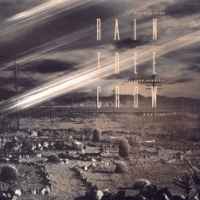
David Sylvian

Rock
Pop Rock
Indie Pop
 Viberate Rank: 45432
 Viberate Rank: 45432
 Monthly ListenersFollowers
 Subscribers
 Followers
 Followers
 FansTop Spotify Songs
| Track | 7-Day Streams | |
|---|---|---|
1 | 19.95K | |
2 | 12.71K | |
3 | 7.36K | |
4 | 5.41K | |
5 | 5.26K |
Top YouTube VideosMonthly ListenersFeatured in Playlists| Playlist | Followers | |
|---|---|---|
1 |  Electronica Romantica Spotify | 299.01K |
2 |  This Is Ryuichi Sakamoto Spotify | 135.48K |
3 |  funeral Ryuichi Sakamoto | 110.90K |
4 |  SKINS SOUNDTRACK season 1, 2, 3, 4, 5, 6 and 7 (all seasons) Christel Aurora Hilmo | 65.42K |
5 |  🗝️ IF U PLZ 🗝️ carolineplz | 63.72K |
Audience| City | Monthly Listeners | |
|---|---|---|
1 | | 4.71K |
2 |  | 1.91K |
3 |  | 1.74K |
4 |  | 1.60K |
5 |  | 1.54K |
See full performance history, audience data, playlist activity, rankings, comparisons, and more in Viberate music analytics. Start with a free trial, then continue with a paid plan.
David Sylvian’s Spotify BioFollowing the 1982 dissolution of Japan, the group's onetime frontman David Sylvian staked out a far-ranging and esoteric career that encompassed not only solo projects but also a series of fascinating collaborative efforts and forays into filmmaking, photography, and modern art. Born David Batt in Kent, England, on February 23, 1958, Sylvian formed Japan in 1974 and served as primary singer/songwriter throughout the group's eight-year existence. Just prior to Japan's breakup, Sylvian began working with composer Ryuichi Sakamoto, with whom he released the single "Bamboo Houses" in 1982, marking the beginning of a longstanding musical relationship.
After 1983's "Forbidden Colours," another joint effort with Sakamoto composed for the film Merry Christmas, Mr. Lawrence, Sylvian released his 1984 solo debut, Brilliant Trees. The first step in his music's evolution from Japan's post-glam synth pop into richly textured, poetic ambience, the album featured contributions from Sakamoto as well… as Jon Hassell and Can alumnus Holger Czukay. That year, Sylvian also published his first book of photographs, Perspectives: Polaroids 82/84; in 1985, he released Preparations for the Journey, a documentary filmed in and around Tokyo, as well as the EP Words with the Shaman.
Gone to Earth, an ambitious double LP recorded with assistance from Robert Fripp and Bill Nelson, followed in 1986, while 1987 marked the release not only of the beautiful Secrets of the Beehive album but also the book collection Trophies: The Lyrics of David Sylvian. At the same time, he began composing the score for modern dancer Gaby Abis' Kin, which premiered at London's Almeida Theater that September; another collaboration with Abis, Don't Trash My Altar, Don't Alter My Trash, bowed in November 1988. Also in 1988, Sylvian reunited with Holger Czukay for the instrumental LP Plight and Premonition; the duo re-teamed in 1989 for Flux + Mutability. Ember Glance: The Permanence of Memory, an installation of sculpture, sound, and light created by Sylvian and Russell Mills, was staged in Tokyo Bay, Shinagawa, in 1990; a year later, he and the other members of Japan, who had briefly reunited under the name Rain Tree Crow, issued a self-titled album.
In 1994, Sylvian emerged in tandem with Robert Fripp for both an album, The First Day, and Redemption, another sound-and-image installation exhibited in Japan. The superb Dead Bees on a Cake followed in 1999; Approaching Silence, a collection of instrumental material, appeared later that fall. In fall 2000 Sylvian returned with the double-disc Everything and Nothing, which made for an excellent introduction to some of Sylvian's projects that had finally taken shape after the composition completion, financial settlements, and time constraints throughout his solo career. He reappeared in 2003 with Blemish, an unsettling disc of new material featuring appearances by avant guitar legend Derek Bailey and electronica experimentalist Christian Fennesz. It took six long years for Sylvian to record a follow-up to Blemish, but he did so with Manafon in 2009. Fennesz appeared on the set, as did vanguard musicians Evan Parker, John Tilbury, Otomo Yoshihide, Polwechsel, and Keith Rowe.
In 2010, Sylvian's Samadhisound imprint released Sleepwalkers, a 16-track compilation of his collaborations from the 2000s, including his Nine Horses project and World Citizen with Sakamoto. It also included one new song, "Five Lines," a collaboration with Dai Fujikura. In 2011, Sylvian released Died in the Wool (MANAFON Variations). It featured reworkings -- more than remixes -- of some tracks from Manafon, and included six new cuts. The work was done in collaboration with Fujikura, Fennesz, and producers Jan Bang and Erik Honoré, among others. Two tracks were actually musical versions of two poems by Emily Dickinson, I Should Not Dare and A Certain Slant of Light. The double digipack also included the CD for Sylvian's audio installation, When We Return You Won’t Recognize Us. In 2012 he, Sidsel Endresen, and Arve Henriksen were featured contributors to Jan Bang's and Erik Honore's Uncommon Deities. The same year he and Stephan Mathieu recorded the duo album Wandermüde.
Back in 2011, Sylvian was taken with American poet Franz Wright's collection Kindertotenwald, and while touring with Christian Fennesz, began composing and remixing ideas related to it on a laptop. He approached Wright about a collaboration, and the poet agreed. In the fall of 2013, Sylvian spent time with Wright, recording him reading from his work. A short while later, he began to assemble the earlier sound ideas, newly composed ones, and those readings in a long-form work. He was aided by Fennesz, pianist John Tilbury, Otomo Yoshide, and Toshimaru Nakamura. The finished piece, There's a Light That Enters Houses with No Other House in Sight, was issued by Samadhisound in the fall of 2014. ~ Jason Ankeny, Rovi
Viberate is a music analytics platform built for A&Rs, artist managers, labels, booking agents, marketers, and artists.
It helps music professionals track artist growth, analyze audience data, monitor playlist activity, compare artists, follow song performance, and identify opportunities across the music market.
Public artist pages provide a free preview of selected artist data. Paid plans provide access to deeper analytics, historical data, charts, comparisons, playlist tools, exports, alerts, reports, and additional professional features.
Yes. Public Viberate artist pages provide selected artist analytics and music data for free.
Viberate also offers a 7-day free trial of the full platform. A credit card is required to start the trial. The trial includes access to the complete product so users can test deeper artist analytics, historical views, playlist insights, comparisons, charts, exports, alerts, and reporting features before choosing a paid plan.
Viberate provides artist analytics across streaming, playlists, social media, video, radio airplay, songs, and audience markets.
Users can analyze Spotify performance, Spotify and Apple Music playlists, YouTube activity, TikTok and Instagram growth, radio spins, song performance, audience locations, demographics, rankings, and overall artist momentum.
Artist profiles also connect to music charts, similar artists, and comparison tools, helping users benchmark performance and evaluate artists in context.
Viberate updates key artist and track data daily.
For followed artists and tracks, selected data is refreshed multiple times per day. This helps teams monitor playlist changes, streaming movement, audience growth, releases, and campaign performance with more current data.
Update frequency can vary depending on the metric and data source.
Yes. Viberate lets users compare up to five artists side by side across streaming, social media, audience, and engagement metrics.
Users can compare fanbase growth, audience demographics, locations, Spotify performance, social metrics, and other artist data over selected time periods.
Artist comparison can be used for A&R scouting, benchmarking, booking decisions, campaign planning, and evaluating artists with similar audiences or market positions.