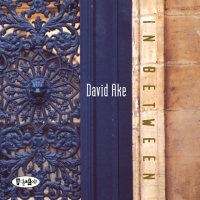
David Ake

Jazz
Jazz Fusion
Smooth Jazz
 Viberate Rank: 442181
 Viberate Rank: 442181
 Monthly ListenersFollowers
 Subscribers
 Followers
 Followers
 FansTop Spotify Songs
| Track | 7-Day Streams | |
|---|---|---|
1 | 11.89K | |
2 | 14 | |
3 | 2 | |
4 | 1 | |
5 | 1 |
Top YouTube VideosMonthly ListenersFeatured in Playlists| Playlist | Followers | |
|---|---|---|
1 |  Coffee Table Jazz Spotify | 2.67M |
2 |  Relaxing Jazz: Soothing Sounds of Saxophone For Relax Dea Records | 10.40K |
3 |  SEKKDS 10K x 10K SEKKDS | 4.00K |
4 |  Graydon's Jazz Playlist hivemindtv | 3.28K |
5 |  Batman Jazz lyzvet_m | 3.16K |
Audience| City | Monthly Listeners | |
|---|---|---|
1 |  | 344 |
2 |  | 322 |
3 |  | 313 |
4 |  | 294 |
5 |  | 290 |
See full performance history, audience data, playlist activity, rankings, comparisons, and more in Viberate music analytics. Start with a free trial, then continue with a paid plan.
David Ake’s Spotify BioPianist, composer, and scholar David Ake’s (sounds like “lake”) latest musical work is titled Slingshot (2022 Posi-Tone), and heartily extends his conceptually humanist approach to music. This new album consists of solo piano performances and duos with bassist Boris Kozlov. It’s a natural evolution of his previous Posi-Tone releases Humanities (2018), Bridges (2013) and Lake Effect (2015), In Between (2005), and Sound & Time (1998).
From 1985 to 1987, Ake attended Cal Arts, where he studied and played with James Newton and Charlie Haden, as well as fellow students Scott Colley, Ravi Coltrane, and Ralph Alessi. Ake went to New York in 1990, where he played with Ben Allison, Jeff Ballard, Gerry Gibbs, and other local stalwarts.
It was back to L.A. in 1994 for Ake to begin graduate studies in ethnomusicology and musicology at UCLA, where he earned his Ph.D. in 1998. It was in this period where Ake met producer Marc Free and recorded his debut record Sound & Time (1998 Posi-Tone), one of… Posi-Tone’s first releases.
In 1999, Ake was part of the faculty at the Univ. of Nevada, Reno. Ake published two books, Jazz Cultures (2002) and Jazz Matters (2010), as well as one co-edited collection, Jazz/Not Jazz. After two years at Case Western Reserve University, he moved to South Florida, where he now serves as Professor and Chair of the Department of Musicology at the University of Miami’s Frost School of Music, and lives with his wife and son.
Viberate is a music analytics platform built for A&Rs, artist managers, labels, booking agents, marketers, and artists.
It helps music professionals track artist growth, analyze audience data, monitor playlist activity, compare artists, follow song performance, and identify opportunities across the music market.
Public artist pages provide a free preview of selected artist data. Paid plans provide access to deeper analytics, historical data, charts, comparisons, playlist tools, exports, alerts, reports, and additional professional features.
Yes. Public Viberate artist pages provide selected artist analytics and music data for free.
Viberate also offers a 7-day free trial of the full platform. A credit card is required to start the trial. The trial includes access to the complete product so users can test deeper artist analytics, historical views, playlist insights, comparisons, charts, exports, alerts, and reporting features before choosing a paid plan.
Viberate provides artist analytics across streaming, playlists, social media, video, radio airplay, songs, and audience markets.
Users can analyze Spotify performance, Spotify and Apple Music playlists, YouTube activity, TikTok and Instagram growth, radio spins, song performance, audience locations, demographics, rankings, and overall artist momentum.
Artist profiles also connect to music charts, similar artists, and comparison tools, helping users benchmark performance and evaluate artists in context.
Viberate updates key artist and track data daily.
For followed artists and tracks, selected data is refreshed multiple times per day. This helps teams monitor playlist changes, streaming movement, audience growth, releases, and campaign performance with more current data.
Update frequency can vary depending on the metric and data source.
Yes. Viberate lets users compare up to five artists side by side across streaming, social media, audience, and engagement metrics.
Users can compare fanbase growth, audience demographics, locations, Spotify performance, social metrics, and other artist data over selected time periods.
Artist comparison can be used for A&R scouting, benchmarking, booking decisions, campaign planning, and evaluating artists with similar audiences or market positions.