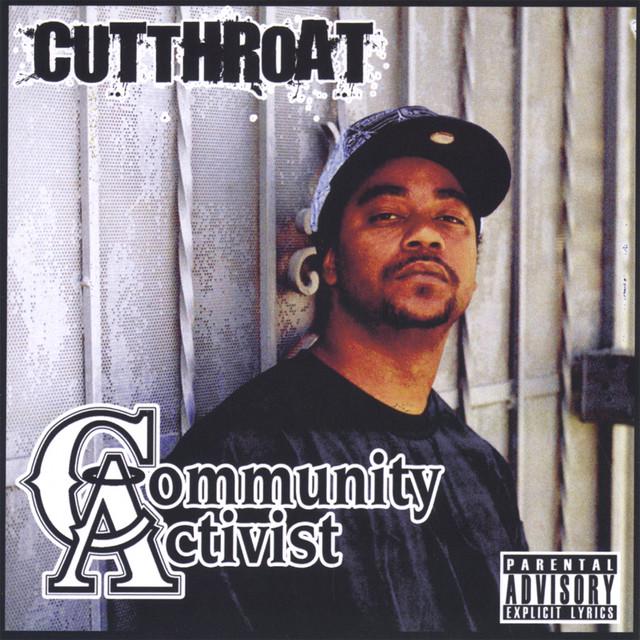
Cutthroat

Hip Hop
Contemporary Hip Hop
 Viberate Rank: 366511
 Viberate Rank: 366511
 Monthly ListenersFollowers
 Subscribers
 Followers
 Followers
 FansTop Spotify Songs
| Track | 7-Day Streams | |
|---|---|---|
1 | 7.99K | |
2 | 545 | |
3 | 304 | |
4 | 222 | |
5 | 169 |
Top YouTube Videos| Video | 7-Day Views | |
|---|---|---|
1 | 2 |
Monthly ListenersFeatured in Playlists| Playlist | Followers | |
|---|---|---|
1 |  Tarantino Collection feelthebeatmania14 | 55.14K |
2 | Stripper Music Neil Beinert | 39.02K |
3 |  Rap & Hip Hop for gym WORKOUT MOTIVATION 🔥 beast mode training aggressive remix hard boxing usa hype Mario Romero | 36.31K |
4 | Memphis rap only mutchomambo | 31.50K |
5 |  Django Unchained - Soundtrack iMaateus | 28.75K |
Audience| City | Monthly Listeners | |
|---|---|---|
1 | | 78 |
2 |  | 71 |
3 |  | 48 |
4 |  | 40 |
5 |  | 40 |
See full performance history, audience data, playlist activity, rankings, comparisons, and more in Viberate music analytics. Start with a free trial, then continue with a paid plan.
Cutthroat’s Spotify BioA young lyricist from Ypsilanti, MI, Cutthroat started practicing the lyrical craft at the tender age of 14. Serious about his mission to master the art of MCing, Cutthroat reached out to the ever-thriving Eastern Michigan hip-hop underground and found common ground with a number of MCs, DJs, and producers. Though the immense skills of Detroit artists like Eminem, D12, Slum Village, and Royce 5'9 might make any MI rapper think twice about the MC field, Cutthroat persisted, forming his own record label, Golden Glair Records. With a little help from Detroit area rap pioneer Mark Kempf (the man who helped Eminem and Bizarre get their start) and his Silent Records staff, Cutthroat was able to release his debut full-length album, Analyze and Interpret, in late 2000. ~ M.F. Di Bella, Rovi
Viberate is a music analytics platform built for A&Rs, artist managers, labels, booking agents, marketers, and artists.
It helps music professionals track artist growth, analyze audience data, monitor playlist activity, compare artists, follow song performance, and identify opportunities across the music market.
Public artist pages provide a free preview of selected artist data. Paid plans provide access to deeper analytics, historical data, charts, comparisons, playlist tools, exports, alerts, reports, and additional professional features.
Yes. Public Viberate artist pages provide selected artist analytics and music data for free.
Viberate also offers a 7-day free trial of the full platform. A credit card is required to start the trial. The trial includes access to the complete product so users can test deeper artist analytics, historical views, playlist insights, comparisons, charts, exports, alerts, and reporting features before choosing a paid plan.
Viberate provides artist analytics across streaming, playlists, social media, video, radio airplay, songs, and audience markets.
Users can analyze Spotify performance, Spotify and Apple Music playlists, YouTube activity, TikTok and Instagram growth, radio spins, song performance, audience locations, demographics, rankings, and overall artist momentum.
Artist profiles also connect to music charts, similar artists, and comparison tools, helping users benchmark performance and evaluate artists in context.
Viberate updates key artist and track data daily.
For followed artists and tracks, selected data is refreshed multiple times per day. This helps teams monitor playlist changes, streaming movement, audience growth, releases, and campaign performance with more current data.
Update frequency can vary depending on the metric and data source.
Yes. Viberate lets users compare up to five artists side by side across streaming, social media, audience, and engagement metrics.
Users can compare fanbase growth, audience demographics, locations, Spotify performance, social metrics, and other artist data over selected time periods.
Artist comparison can be used for A&R scouting, benchmarking, booking decisions, campaign planning, and evaluating artists with similar audiences or market positions.