Curtis Hasselbring

Jazz
Smooth Jazz
Free Jazz
 Viberate Rank: 665466
 Viberate Rank: 665466
 Monthly ListenersFollowers
 Subscribers
 Followers
 Followers
 FansTop Spotify SongsTop YouTube VideosMonthly ListenersFeatured in PlaylistsAudience
| City | Monthly Listeners | |
|---|---|---|
1 | | 4 |
See full performance history, audience data, playlist activity, rankings, comparisons, and more in Viberate music analytics. Start with a free trial, then continue with a paid plan.
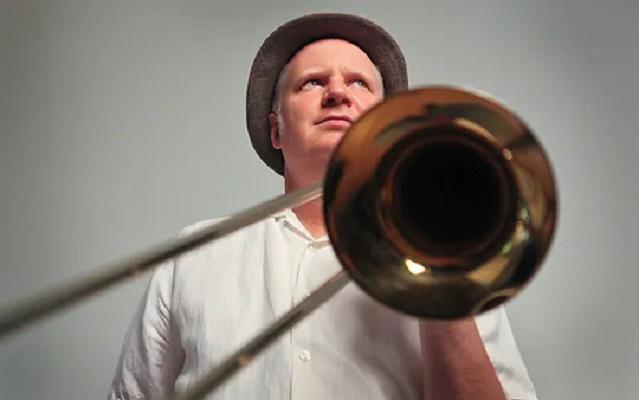
Curtis Hasselbring’s Spotify BioAn alumnus of Boston's New England Conservatory, trombonist Curtis Hasselbring -- also known as Curha -- is among a number of creative jazz musicians who moved to New York (Brooklyn, specifically) and enlivened the city's so-called "downtown scene" during the '90s, continuing his outré explorations into the 21st century as both a bandleader and valued sideman. Hasselbring's first recorded appearances began when he was still in Boston in the late '80s, however, as a member of Ken Schaphorst's big band, Russ Gershon's freewheeling Either/Orchestra, and the Charlie Kohlhase Quintet. In 1988 Hasselbring also began leading his own band, Mellow Edwards, which gigged regularly at a café in Cambridge.
The trombonist continued to perform and record with Schaphorst's ensemble and the Either/Orchestra -- appearing on a number of Accurate label albums by both groups -- until, like many creative jazzers on the Boston scene, he was drawn to New York and the city's fertile avant jazz environment. A… Knitting Factory regular, Hasselbring participated in bands led by the likes of Bobby Previte, Frank London, Jerry Granelli, Satoko Fujii, and Matt Darriau (Ballin' the Jack) beginning in the mid- to late '90s and continuing into the 2000s. His trombone also slid through the arrangements of the Balkan street band stylings of Slavic Soul Party!, a group whose early membership included reedman Chris Speed, like Hasselbring a New England Conservatory graduate who had become a key member of the Brooklyn-based avant jazz community.
Meanwhile, over a dozen musicians had passed through the ranks of Hasselbring's Mellow Edwards group, and in the early 2000s the trombonist felt a name change was in order, christening the band the New Mellow Edwards and ultimately solidifying the lineup into an impressive quartet including bassist Trevor Dunn, drummer John Hollenbeck, and Speed on tenor sax and clarinet. In 2006, Speed founded the independent Skirl Records label, and the New Mellow Edwards' eponymous debut CD arrived on Skirl that same year. Three years later, Skirl issued the group's sophomore album, Big Choantza.
In 2010 Hasselbring received support from Chamber Music America's New Jazz Works Commissioning and Ensemble Development program for his most ambitious project yet, Number Stations, a composed and improvised set based on the curious phenomenon of actual shortwave radio stations that broadcast sequences of numbers thought to be coded messages sent by intelligence agencies to their spies in various countries around the world. Hasselbring conceived the piece for an extended ensemble consisting of the New Mellow Edwards (now with Ches Smith rather than John Hollenbeck on drums) combined with Decoupage, another band that he leads. In addition to Hasselbring on trombone, Decoupage features guitarist Mary Halvorson, Slavic Soul Party!'s Matt Moran on vibes and marimba, and percussionist Satoshi Takeishi; with participation from both the New Mellow Edwards and Decoupage, Number Stations was thus performed by a seven-piece aggregation drawing from two distinct sides of Hasselbring's previous creative output. The Cuneiform label (also home, by the way, to the Claudia Quintet, featuring Hasselbring collaborators Speed, Hollenbeck, and Moran) released Number Stations on disc in January 2013. ~ Dave Lynch, Rovi
Viberate is a music analytics platform built for A&Rs, artist managers, labels, booking agents, marketers, and artists.
It helps music professionals track artist growth, analyze audience data, monitor playlist activity, compare artists, follow song performance, and identify opportunities across the music market.
Public artist pages provide a free preview of selected artist data. Paid plans provide access to deeper analytics, historical data, charts, comparisons, playlist tools, exports, alerts, reports, and additional professional features.
Yes. Public Viberate artist pages provide selected artist analytics and music data for free.
Viberate also offers a 7-day free trial of the full platform. A credit card is required to start the trial. The trial includes access to the complete product so users can test deeper artist analytics, historical views, playlist insights, comparisons, charts, exports, alerts, and reporting features before choosing a paid plan.
Viberate provides artist analytics across streaming, playlists, social media, video, radio airplay, songs, and audience markets.
Users can analyze Spotify performance, Spotify and Apple Music playlists, YouTube activity, TikTok and Instagram growth, radio spins, song performance, audience locations, demographics, rankings, and overall artist momentum.
Artist profiles also connect to music charts, similar artists, and comparison tools, helping users benchmark performance and evaluate artists in context.
Viberate updates key artist and track data daily.
For followed artists and tracks, selected data is refreshed multiple times per day. This helps teams monitor playlist changes, streaming movement, audience growth, releases, and campaign performance with more current data.
Update frequency can vary depending on the metric and data source.
Yes. Viberate lets users compare up to five artists side by side across streaming, social media, audience, and engagement metrics.
Users can compare fanbase growth, audience demographics, locations, Spotify performance, social metrics, and other artist data over selected time periods.
Artist comparison can be used for A&R scouting, benchmarking, booking decisions, campaign planning, and evaluating artists with similar audiences or market positions.