Cowboy

Country
Contemporary Country
Alternative Rock
 Viberate Rank: 125080
 Viberate Rank: 125080
 Monthly ListenersFollowers
 Subscribers
 Followers
 Followers
 FansTop Spotify Songs
| Track | 7-Day Streams | |
|---|---|---|
1 | 64.20K | |
2 | 17.15K | |
3 | 11.50K | |
4 | 6.96K | |
5 | 3.71K |
Top YouTube VideosMonthly ListenersFeatured in Playlists| Playlist | Followers | |
|---|---|---|
1 |  Country Rock Classics Spotify | 208.75K |
2 |  Death Row Records Beardofzeus | 34.29K |
3 |  Muscle Shoals (1964-1980) Tyler Ross | 28.11K |
4 |  HIDDEN Sound ⠓⠊⠙⠙⠑⠝® HIDDEN.NY | 25.38K |
5 |  Cosmic American Music Numero Group | 24.13K |
Audience| City | Monthly Listeners | |
|---|---|---|
1 |  | 4.36K |
2 | | 3.51K |
3 | | 3.02K |
4 | | 2.38K |
5 | | 2.28K |
See full performance history, audience data, playlist activity, rankings, comparisons, and more in Viberate music analytics. Start with a free trial, then continue with a paid plan.
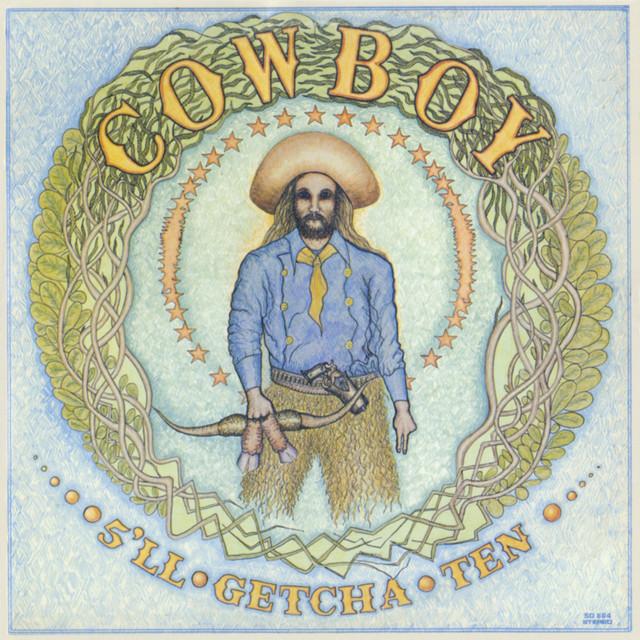
Cowboy’s Spotify BioOne of Southern rock's best-kept secrets during its golden age in the 1970s, Cowboy was formed by songwriters Tommy Talton and Scott Boyer in Jacksonville, Florida in 1969. Playing a kind of acoustic country-rock similar to contemporaries Pure Prairie League, Cowboy had their own twist on the formula thanks to Talton and Boyer's sharp, focused songwriting and a distinguishable Muscle Shoals flair. After hearing the band, Duane Allman passed the word along to Phil Walden at Macon, Georgia's Capricorn Records, which offered the group a recording contract. The band's membership was pretty fluid during this time, other than Talton and Boyer, both of whom became de facto members of the Capricorn house band, playing with the Allman Brothers, Gregg Allman, Alex Taylor, and Bonnie Bramlett, among others. In all, four albums were released under the Cowboy name on Capricorn Records, 1970's Reach for the Sky and 1971's 5'll Getcha Ten (combined into the two-disc compilation Why Quit When You're… Losing in 1973), 1974's Boyer & Talton, and 1977's Cowboy. Also, the 1976 album Happy to Be Alive, attributed to the trio of Tommy Talton, Bill Stewart, and Johnny Sandlin, might be considered a Cowboy album in all but name. That was it, though, until 30 years later when Talton and Boyer put Cowboy back together in 2007, recording tracks at Sandlin's Duck Tape Studio in Decatur, Alabama, although none of those tracks were released at the time. After battling peripheral artery disease, Scott Boyer died in Muscle Shoals in February 2018; he was 70 years old. His bandmate Tommy Talton died on December 28, 2023, at the age of 74. ~ Steve Leggett, Rovi
Viberate is a music analytics platform built for A&Rs, artist managers, labels, booking agents, marketers, and artists.
It helps music professionals track artist growth, analyze audience data, monitor playlist activity, compare artists, follow song performance, and identify opportunities across the music market.
Public artist pages provide a free preview of selected artist data. Paid plans provide access to deeper analytics, historical data, charts, comparisons, playlist tools, exports, alerts, reports, and additional professional features.
Yes. Public Viberate artist pages provide selected artist analytics and music data for free.
Viberate also offers a 7-day free trial of the full platform. A credit card is required to start the trial. The trial includes access to the complete product so users can test deeper artist analytics, historical views, playlist insights, comparisons, charts, exports, alerts, and reporting features before choosing a paid plan.
Viberate provides artist analytics across streaming, playlists, social media, video, radio airplay, songs, and audience markets.
Users can analyze Spotify performance, Spotify and Apple Music playlists, YouTube activity, TikTok and Instagram growth, radio spins, song performance, audience locations, demographics, rankings, and overall artist momentum.
Artist profiles also connect to music charts, similar artists, and comparison tools, helping users benchmark performance and evaluate artists in context.
Viberate updates key artist and track data daily.
For followed artists and tracks, selected data is refreshed multiple times per day. This helps teams monitor playlist changes, streaming movement, audience growth, releases, and campaign performance with more current data.
Update frequency can vary depending on the metric and data source.
Yes. Viberate lets users compare up to five artists side by side across streaming, social media, audience, and engagement metrics.
Users can compare fanbase growth, audience demographics, locations, Spotify performance, social metrics, and other artist data over selected time periods.
Artist comparison can be used for A&R scouting, benchmarking, booking decisions, campaign planning, and evaluating artists with similar audiences or market positions.