Cathy Dennis

Pop
Mainstream Pop
House
 Viberate Rank: 49882
 Viberate Rank: 49882
 Monthly ListenersFollowers
 Subscribers
 Followers
 Followers
 FansTop Spotify Songs
| Track | 7-Day Streams | |
|---|---|---|
1 | 43.34K | |
2 | 34.26K | |
3 | 9.41K | |
4 | 9.00K | |
5 | 5.08K |
Top YouTube VideosMonthly ListenersFeatured in Playlists| Playlist | Followers | |
|---|---|---|
1 |  Old Songs Everyone Knows Ben Lillie | 566.30K |
2 |  IBIZA CLASSICS 🍹1990-2026 Lounge & Restaurant | 220.32K |
3 |  Deserved Spotify | 139.96K |
4 | I’m an 80’s baby Laura Nardella | 105.95K |
5 | 70's 80's 90’s CLASSIC LOVE SONGS MikeUmahag | 92.50K |
Audience| City | Monthly Listeners | |
|---|---|---|
1 |  | 10.59K |
2 |  | 6.04K |
3 | | 4.40K |
4 | | 4.15K |
5 | | 3.81K |
See full performance history, audience data, playlist activity, rankings, comparisons, and more in Viberate music analytics. Start with a free trial, then continue with a paid plan.
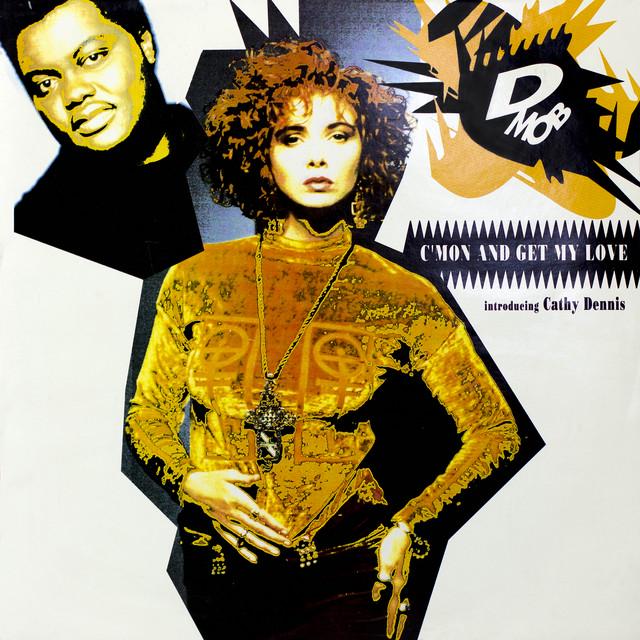
Cathy Dennis’ Spotify BioA former dance diva with slick, soulful vocals, Cathy Dennis enjoyed a handful of pop hits during the early '90s before transforming herself into one of the U.K.'s most successful songwriters. Born in Norwich, U.K., Dennis started publicly performing at the age of 13 with her father's big band. Several years later, the burgeoning musician was singing with a cover band when she was spotted by Simon Fuller, a British artist manager who, at the time, was working with Dancin' Danny D and his club act, D-Mob. Fuller brokered a deal with Polydor Records where Dancin' Danny D would produce an album for Dennis. Three years later, however, an album had yet to materialize, and Dennis took a break to record vocals for D-Mob's "C'mon and Get My Love." The dance track proved to be her first taste of stardom as it ascended the charts on both sides of the Atlantic; the song also appeared on D-Mob's Little Bit of This, Little Bit of That, as well as Dennis' debut album, 1990's Move to This.
Co-writing… much of her own material, Cathy Dennis remained on the charts with a combination of dance singles ("All Night Long (Touch Me)," "Just Another Dream") and ballads ("Too Many Walls".) The successful dance producer Shep Pettibone signed up to work on Dennis' 1992 sophomore album, Into the Skyline, but the record yielded no significant hits and quickly fell off the charts. Dennis recorded a more soul-based third album, Inspiration, yet the singer was quickly becoming disenchanted with performing and the album was ultimately scrapped, with only the track "S.O.S." seeing a release on the Beverly Hills 90210: College Years soundtrack.
As she grew increasingly interested in the music of Paul Weller and the Kinks, Dennis took a singer/songwriter approach to her earthy 1996 effort, Am I the Kinda Girl? It made even less of an impact than Into the Skyline, however, despite receiving some chart recognition for its emotional cover of the Kinks' "Waterloo Sunset." Having such a personal album tank was enough to convince Dennis to focus on songwriting and production for 19 Productions, a company that Simon Fuller was about to turn into a gold mine. One of Fuller's most promising acts, The Spice Girls, went on to sell millions of copies of "Wannabe," the group's infectious debut single that featured "Bumper to Bumper," a song written by Dennis, on Side B. Suddenly, Dennis found herself knee-deep in royalty checks. Successful songwriting work for S Club 7 followed, but the crowning achievement arrived when Kylie Minogue took another Dennis composition, "Can't Get You Out of My Head," to number one in multiple countries. Dennis and her co-writer -- Rob Davis, former member of the glam band Mud -- had a worldwide hit on their hands, for which they received an Ivor Novello songwriting award in 2002.
During the 2000s, Fuller found worldwide success as the producer for two singing-based talent shows: Pop Idol in the U.K. and American Idol in the U.S. Dennis penned and performed the franchise's theme song, and her music appeared on several albums by the shows' most promising alumni (including Clay Aiken and Kelly Clarkson). By the end of 2002, four different publications had named her as one of the highest-paid women in the U.K., and she continued earning accolades (not to mention additional royalty checks) by penning such chart-topping songs as Britney Spears' "Toxic" and Katy Perry's "I Kissed a Girl." ~ David Jeffries & Andrew Leahey
Viberate is a music analytics platform built for A&Rs, artist managers, labels, booking agents, marketers, and artists.
It helps music professionals track artist growth, analyze audience data, monitor playlist activity, compare artists, follow song performance, and identify opportunities across the music market.
Public artist pages provide a free preview of selected artist data. Paid plans provide access to deeper analytics, historical data, charts, comparisons, playlist tools, exports, alerts, reports, and additional professional features.
Yes. Public Viberate artist pages provide selected artist analytics and music data for free.
Viberate also offers a 7-day free trial of the full platform. A credit card is required to start the trial. The trial includes access to the complete product so users can test deeper artist analytics, historical views, playlist insights, comparisons, charts, exports, alerts, and reporting features before choosing a paid plan.
Viberate provides artist analytics across streaming, playlists, social media, video, radio airplay, songs, and audience markets.
Users can analyze Spotify performance, Spotify and Apple Music playlists, YouTube activity, TikTok and Instagram growth, radio spins, song performance, audience locations, demographics, rankings, and overall artist momentum.
Artist profiles also connect to music charts, similar artists, and comparison tools, helping users benchmark performance and evaluate artists in context.
Viberate updates key artist and track data daily.
For followed artists and tracks, selected data is refreshed multiple times per day. This helps teams monitor playlist changes, streaming movement, audience growth, releases, and campaign performance with more current data.
Update frequency can vary depending on the metric and data source.
Yes. Viberate lets users compare up to five artists side by side across streaming, social media, audience, and engagement metrics.
Users can compare fanbase growth, audience demographics, locations, Spotify performance, social metrics, and other artist data over selected time periods.
Artist comparison can be used for A&R scouting, benchmarking, booking decisions, campaign planning, and evaluating artists with similar audiences or market positions.