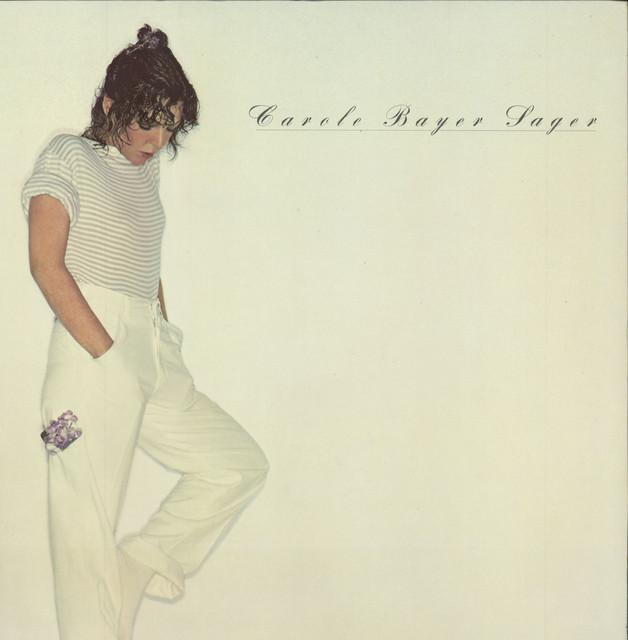
Carole Bayer Sager

Pop
Mainstream Pop
Pop Rock
 Viberate Rank: 39346
 Viberate Rank: 39346
 Monthly ListenersFollowers
 Subscribers
 Followers
 Followers
 FansTop Spotify Songs
| Track | 7-Day Streams | |
|---|---|---|
1 | 62.86K | |
2 | 9.73K | |
3 | 8.24K | |
4 | 6.24K | |
5 | 3.66K |
Top YouTube VideosMonthly ListenersFeatured in Playlists| Playlist | Followers | |
|---|---|---|
1 | Broadway: The Musicals Colton Butcher | 23.80K |
2 | Mabel Denopra Cabugao | 18.57K |
3 |  This Is Hugh Jackman Spotify | 16.56K |
4 |  YACHT ROCK - CERTIFIED PLAYLIST jdryznar | 15.94K |
5 |  This Is Susan Boyle Spotify | 15.94K |
Audience| City | Monthly Listeners | |
|---|---|---|
1 |  | 2.60K |
2 | | 2.37K |
3 | | 1.86K |
4 |  | 1.67K |
5 | | 1.18K |
See full performance history, audience data, playlist activity, rankings, comparisons, and more in Viberate music analytics. Start with a free trial, then continue with a paid plan.
Carole Bayer Sager’s Spotify BioComposer Carole Bayer Sager enjoyed one of the longest hit streaks in contemporary pop, with her chart success spanning across several decades. Born March 8, 1947, in New York City, she wrote her first songs while attending New York's High School of Music and Art during the early '60s; discovered by producer Don Kirshner, she signed to his Screen Gems publishing company and in 1966 authored her first hit, the Mindbenders' oft-covered "A Groovy Kind of Love." After penning a number of songs for the Monkees, Sager wrote the lyrics for the 1970 off-Broadway hit Georgy; in 1975, she co-wrote "Midnight Blue" with singer Melissa Manchester, who took the song into the Top Ten. They later reunited on the smash "Don't Cry Out Loud." Sager's own recording career was launched two years later, when she issued her self-titled debut LP on Elektra; the album scored a British hit with the single "You're Moving Out Today."
After writing Leo Sayer's chart-topping "When I Need You," Sager teamed with her… husband, the celebrated composer Marvin Hamlisch, to write the popular Broadway musical They're Playing Our Song, an autobiographical work exploring the romantic entanglements of a hit songwriting team. The couple later scored an Oscar nomination for "Nobody Does It Better," the theme to the James Bond thriller The Spy Who Loved Me and a number two hit for singer Carly Simon. In 1981, Sager notched her biggest American solo hit with the single "Stronger Than Before," from her third LP, Sometimes Late at Night. She remained far better known as a writer, however, and after her marriage to Hamlisch ended, she began working with the brilliant Burt Bacharach, earning an Academy Award for 1981's "Arthur's Theme (Best That You Can Do)," a number one smash for Christopher Cross. A year later, Sager and Bacharach were married.
Sager's partnership with Bacharach was among the most fruitful of her lengthy career. Perhaps their most notable collaboration was the song "That's What Friends Are For"; originally written in 1982 for the comedy Night Shift, the couple revived the song in 1986 to raise money for AIDS research. Recorded by "Dionne Warwick and Friends" (including Elton John), "That's What Friends Are For" quickly hit number one, earning well over a million dollars for charity. With Neil Diamond, Sager and Bacharach also composed the hit "Heartlight," and later penned the Patti Labelle/Michael McDonald duet "On My Own." In 1988 they collaborated on the soundtrack for the sequel Arthur 2: On the Rocks, and that same year they also authored a number of tracks on the Barbra Streisand LP Till I Loved You. In 1991, however, Sager and Bacharach divorced. She was relatively quiet in the years to follow, most notably writing songs for films including Beethoven's 2nd and Junior. ~ Jason Ankeny, Rovi
Viberate is a music analytics platform built for A&Rs, artist managers, labels, booking agents, marketers, and artists.
It helps music professionals track artist growth, analyze audience data, monitor playlist activity, compare artists, follow song performance, and identify opportunities across the music market.
Public artist pages provide a free preview of selected artist data. Paid plans provide access to deeper analytics, historical data, charts, comparisons, playlist tools, exports, alerts, reports, and additional professional features.
Yes. Public Viberate artist pages provide selected artist analytics and music data for free.
Viberate also offers a 7-day free trial of the full platform. A credit card is required to start the trial. The trial includes access to the complete product so users can test deeper artist analytics, historical views, playlist insights, comparisons, charts, exports, alerts, and reporting features before choosing a paid plan.
Viberate provides artist analytics across streaming, playlists, social media, video, radio airplay, songs, and audience markets.
Users can analyze Spotify performance, Spotify and Apple Music playlists, YouTube activity, TikTok and Instagram growth, radio spins, song performance, audience locations, demographics, rankings, and overall artist momentum.
Artist profiles also connect to music charts, similar artists, and comparison tools, helping users benchmark performance and evaluate artists in context.
Viberate updates key artist and track data daily.
For followed artists and tracks, selected data is refreshed multiple times per day. This helps teams monitor playlist changes, streaming movement, audience growth, releases, and campaign performance with more current data.
Update frequency can vary depending on the metric and data source.
Yes. Viberate lets users compare up to five artists side by side across streaming, social media, audience, and engagement metrics.
Users can compare fanbase growth, audience demographics, locations, Spotify performance, social metrics, and other artist data over selected time periods.
Artist comparison can be used for A&R scouting, benchmarking, booking decisions, campaign planning, and evaluating artists with similar audiences or market positions.