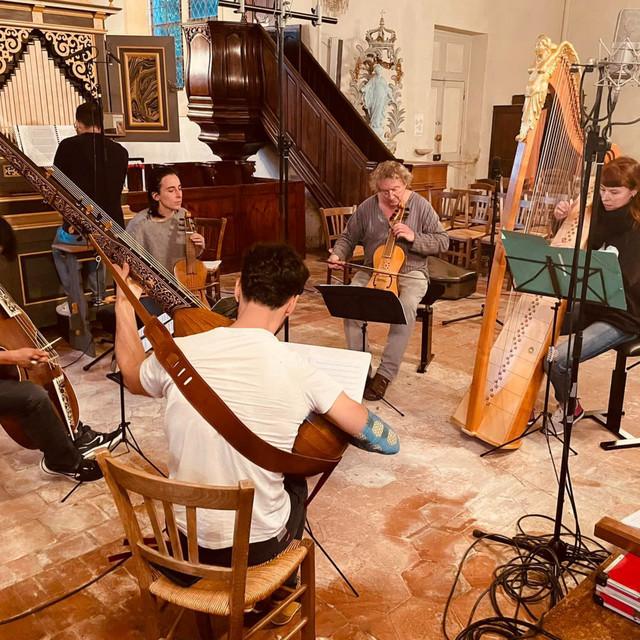
Carlos Mena

Classical
Classical Crossover
Choral
 Viberate Rank: 302058
 Viberate Rank: 302058
 Monthly ListenersFollowers
 Subscribers
 Followers
 Followers
 FansTop Spotify SongsTop YouTube VideosMonthly ListenersFeatured in Playlists
| Playlist | Followers | |
|---|---|---|
1 |  Música clásica para sentirme un villano del siglo XVII JFueyo | 61.76K |
2 |  Klassieke Top 400 (2026) | NPO Klassiek NPO Klassiek | 24.19K |
3 |  RADDERS HOUSE | YOUR HUB FOR DEEP HOUSE MUSIC Raddershouse | 15.28K |
4 |  Deep House Classics 2026 Thomas Coxhead | 15.03K |
5 |  baroque bangers jackson ellis | 11.42K |
Audience| City | Monthly Listeners | |
|---|---|---|
1 |  | 374 |
2 | | 310 |
3 |  | 187 |
4 | | 178 |
5 |  | 164 |
See full performance history, audience data, playlist activity, rankings, comparisons, and more in Viberate music analytics. Start with a free trial, then continue with a paid plan.
Carlos Mena’s Spotify BioCountertenor Carlos Mena's repertory extends from the Baroque to 19th and 20th century works. Featured on more than 50 albums, he is also an important educator.
Mena was born in Vitoria-Gasteiz in Spain's Basque country in 1971. In his home city, he attended the Conservatorio Superior de Música Jesús Guridi. After master classes with Charles Brett, he moved to Basel, Switzerland, for studies at the Schola Cantorum Basiliensis. His principal teachers there were René Jacobs and Richard Levitt. Mena received his diploma in 1997 and soon found opportunities to perform with such leading early music groups as the Ricercar Consort, the Ensemble Gilles Binchois, and Al Ayre Español. After appearing with several ensembles on recordings of the 1990s, he made his solo debut in 2001 with the album Lágrimas Corriendo on the Almaviva label. The following year, he was featured on the Ricercar Consort album De Æternitate on the Mirare label. That album earned a Diapason d'Or award in France, and Mena… made several more albums for Mirare over the next few years.
Mena has a large repertory of Baroque opera roles, including the lead in Handel's Radamisto, Speranza in Monteverdi's L'Orfeo, and Disinganno in Handel's allegory Il trionfo del tempo e del disinganno. His interests extend to 20th century music, and he has appeared in John Cage's Europera 5. As a concert artist, Mena is in demand internationally; he has appeared in various Western European countries, North and South America, Australia, and Japan, often with top conductors. In addition to Mirare, Mena has recorded for Harmonia Mundi, Glossa, and Naïve, among other labels. Mena moved to Sony Classical in 2023, appearing with the ensemble La Madrileña in the recital Dixerunt. Mena had been widely active as an educator. Since 1998, he has taught at the Academia de Música Antigua at the University of Salamanca, Spain. In 2018, he joined the faculty at Musikex, the Extremadura School of Music (Cáceres, Spain), and he is also a member of the faculty at the University of Applied Sciences and Arts of Northwestern Switzerland. Mena has served as a visiting professor at the Teatro Real de Madri, the University of Alfonso X in Madrid, the University of Alcalá de Henaries, and various music schools in Spain and beyond. ~ James Manheim, Rovi
Viberate is a music analytics platform built for A&Rs, artist managers, labels, booking agents, marketers, and artists.
It helps music professionals track artist growth, analyze audience data, monitor playlist activity, compare artists, follow song performance, and identify opportunities across the music market.
Public artist pages provide a free preview of selected artist data. Paid plans provide access to deeper analytics, historical data, charts, comparisons, playlist tools, exports, alerts, reports, and additional professional features.
Yes. Public Viberate artist pages provide selected artist analytics and music data for free.
Viberate also offers a 7-day free trial of the full platform. A credit card is required to start the trial. The trial includes access to the complete product so users can test deeper artist analytics, historical views, playlist insights, comparisons, charts, exports, alerts, and reporting features before choosing a paid plan.
Viberate provides artist analytics across streaming, playlists, social media, video, radio airplay, songs, and audience markets.
Users can analyze Spotify performance, Spotify and Apple Music playlists, YouTube activity, TikTok and Instagram growth, radio spins, song performance, audience locations, demographics, rankings, and overall artist momentum.
Artist profiles also connect to music charts, similar artists, and comparison tools, helping users benchmark performance and evaluate artists in context.
Viberate updates key artist and track data daily.
For followed artists and tracks, selected data is refreshed multiple times per day. This helps teams monitor playlist changes, streaming movement, audience growth, releases, and campaign performance with more current data.
Update frequency can vary depending on the metric and data source.
Yes. Viberate lets users compare up to five artists side by side across streaming, social media, audience, and engagement metrics.
Users can compare fanbase growth, audience demographics, locations, Spotify performance, social metrics, and other artist data over selected time periods.
Artist comparison can be used for A&R scouting, benchmarking, booking decisions, campaign planning, and evaluating artists with similar audiences or market positions.