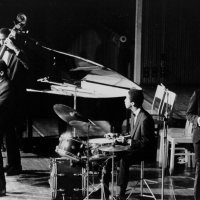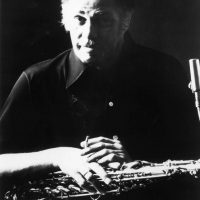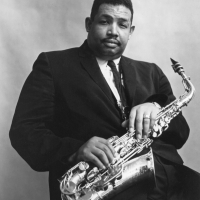
Cannonball Adderley

Jazz
Bebop
Soul
Jazz Blues
 Viberate Rank: 16977
 Viberate Rank: 16977
 Monthly ListenersFollowers
 Subscribers
 Followers
 Followers
 FansTop Spotify Songs
| Track | 7-Day Streams | |
|---|---|---|
1 | 346.21K | |
2 | 232.99K | |
3 | 198.62K | |
4 | 121.76K | |
5 | 119.78K |
Top YouTube VideosMonthly ListenersFeatured in Playlists| Playlist | Followers | |
|---|---|---|
1 |  Jazz Classics Spotify | 5.08M |
2 |  Feel Good Jazz Spotify | 549.36K |
3 |  Jazz Classics Blue Note Edition Spotify | 549.30K |
4 |  jazz bar in nyc🎷 mishelle | 454.31K |
5 |  66 GREENE _BY.ALEXANDER | 395.13K |
Audience| City | Monthly Listeners | |
|---|---|---|
1 |  | 15.44K |
2 | | 14.50K |
3 | | 11.16K |
4 |  | 9.63K |
5 | | 9.39K |
See full performance history, audience data, playlist activity, rankings, comparisons, and more in Viberate music analytics. Start with a free trial, then continue with a paid plan.
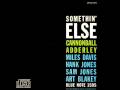
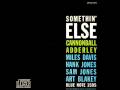
Cannonball Adderley’s Spotify BioOne of the great alto saxophonists to emerge from the hard bop era, Julian "Cannonball" Adderley possessed an exuberant, bright tone that communicated directly and emotionally. With live audiences, his intelligent banter about the music's presentation, combined with wry humor, made him popular. He and younger brother and cornetist Nat formed a short-lived quintet that split in 1957 when Cannonball joined Miles Davis alongside John Coltrane. Adderley participated in historic recordings including Milestones and Kind of Blue. The Adderleys' second single was also a hit, "This Here" on Riverside. In 1958 he issued Somethin' Else, his only Blue Note leader date and the last recording to feature Davis as a sideman. Between 1959 and 1963, the Adderley group played soulful hard bop. After Adderley signed with Capitol in 1964, he formed a long partnership with staff producer David Axelrod. The quintet's sound evolved, embracing soul and gospel alongside blues. It resulted in charting albums… such as Mercy, Mercy, Mercy!, Why Am I Treated So Bad, Country Preacher, and the funky Brazilian fusion outing The Happy People (that featured Airto Moreira and Flora Purim). The group's late albums on Fantasy included the orchestral score for the musical play Big Man: The Legend of John Henry. Lastly, Phenix and Lovers showcased Adderley doubling on soprano while emphasizing long melodic statements atop electric funky rhythms to fine result.
Julian Adderley was born in Florida in 1928. The son of high school guidance counselor Julian Carlyle Adderley (who also played jazz cornet) and elementary school teacher Jessie Johnson. He began musical studies in grade school. Adderley initially wanted to play tenor, but was thwarted by tight finances before and during the second world war; he settled on a second-hand alto saxophone.
After his parents took teaching positions at Florida A&M University, the Adderleys moved to Tallahassee where Julian and Nat attended high school and played in orchestra and marching band. It was in high school that Adderley earned the "cannonball" nickname from his classmates, due to his voracious appetite. As teens, Cannonball and Nat played with Ray Charles during the early '40s, while he was living in Tallahassee. After completing music studies at Florida A&M, Adderley moved to Broward County. He served as band director for Dillard High School in Fort Lauderdale until 1950, when he was drafted into the army during the Korean war. During his hitch, he directed the 36th Army Dance Band. (Younger brother Nat and trombonist Curtis Fuller served in the outfit.) After his discharge, Adderley moved to New York City in 1955 to study at one of the city's celebrated music schools. He haunted jazz clubs by night, witnessed the evolution of bebop firsthand, and showcased his chops on bandstands across the city. One evening he was asked to sit in with bassist Oscar Pettiford; his regular saxophonist Jerome Richardson was unable to make the gig. Adderley was impressive in the role, prompting punters and critics to saddle him with the "new Charlie Parker" tag, despite the fact they played nothing alike. Adderley's primary influence on the alto was, in fact, Benny Carter.
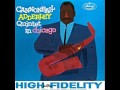
The Adderleys formed a quintet and signed to Savoy; they later cut sides for EmArcy and Mercury. That said, they weren't very successful, but their gigs got the attention of several top-flight jazzmen including Art Blakey and Miles Davis. The latter, impressed by Cannonball's bluesy alto sound, asked the saxophonist to join his group, and Adderley joined Davis in October 1957. Davis repaid the favor by appearing on Adderley's Blue Note leader debut, Somethin' Else. Recorded shortly after the pair met; it marked the last time Davis appeared as a sideman. Adderley contributed to seminal Davis albums including Milestones and Kind of Blue. This period overlapped with pianist Bill Evans' tenure in Davis' sextet; this led directly to the pianist's appearances on the saxophonist's Portrait of Cannonball (1958) and later, Know What I Mean? (1962). During his tenure with Davis, Adderley also worked in the orchestras of Gil Evans and Bill Russo.
After leaving Davis' employ in 1959, the Adderleys formed a second quintet. They signed to Riverside even as Cannonball was cutting sides for EmArcy and Mercury. Cannonball Adderley & the Poll-Winners Featuring Ray Brown & Wes Montgomery appeared on Riverside in 1960 and was followed by A Child's Introduction to Jazz in 1961. After 1962's Know What I Mean? with Evans, bassist Percy Heath, and drummer Connie Kay, the saxophonist's quintet -- featuring pianist/composer Joe Zawinul, bassist Sam Jones, and drummer Louis Hayes -- backed vocalist Nancy Wilson on Nancy Wilson & Cannonball Adderley. (Adderley had served earlier with Sarah Vaughan and Dinah Washington.) In 1963, he issued Cannonball's Bossa Nova on Riverside, leading the "Bossa Rio Sextet" with an all-star session ensemble that included percussionist Dom Um Romao, saxophonist Paulo Moura Hepteto, and pianist Sergio Mendes. Multi-instrumentalist Yusef Lateef joined the outfit, expanding the band into a sextet. They recorded live in 1962 and 1963, but much of the music captured on tape wasn't released until the mid-'80s. The albums released at that time included Cannonball Adderley Sextet - Lugano 1963 (TCB) and A Day with Cannonball Adderley 1963 (Baybridge).
Adderley signed his quintet to Capitol in 1964. Almost immediately he built an alliance and strong working relationship with staff producer David Axelrod (the same year the latter began his storied collaboration with Lou Rawls). That year, they cut three albums: Cannonball Adderley Live!, Cannonball Adderley with the New Exciting Voice of Ernie Andrews! - Live Session!, and Cannonball Adderley's Fiddler on the Roof. The following year, the Adderleys teamed up with an orchestra and arranger Oliver Nelson to release Domination.
By 1966, Lateef left had the band to return to his compelling and wildly diverse solo career. The quintet toured relentlessly. An album was recorded live at Chicago's The Club, but sat in the vault until 2005 when it was released as Money in the Pocket. The Cannonball Adderley Quintet with Strings - Great Love Themes arranged by Ray Ellis, appeared that year as did Cannonball In Japan and Cannonball Adderley: Live in Paris, April 23rd, 1966.
In 1967, the Cannonball Adderley Quintet (with Nat, bassist Sam Jones, drummer Roy McCurdy, and pianist Joe Zawinul) released Mercy Mercy, Mercy - Live at the "It" Club. According to the liner notes, it was cut from the stage at Chicago's Club DeLisa. In actuality, it was recorded in a Los Angeles studio. Axelrod invited an audience, provided an open bar, and let the crowd get loose. The soulful, raucous set boasted a hit single in Zawinul's title track (revealing his historic move to the Fender Rhodes electric piano). It reached number 11 on the Hot 100, while the album peaked at 13. It won the 1967 Grammy Award for Best Instrumental Jazz Performance - Group or Soloist with Group. Axelrod followed the same formula for 1967's Why Am I Treated So Bad! While it didn't perform as well commercially, it was still one of the band's perennial bestsellers. The live-in-studio formula really worked for the Adderley quintet. 1967's 74 Miles Away/Walk Tall and 1968's Accent on Africa were recorded similarly. Feldman left the band and was replaced by bassist Walter Booker.
The socially conscious Country Preacher was a real concert recording made in 1969 at an unidentified meeting of the Southern Christian Leadership Conference's Operation Breadbasket in Chicago. The set's introduction was provided by the Rev. Jesse Jackson. It spent two months on the R&B charts in 1970. That year, they played the Monterey Jazz Festival and released The Cannonball Adderley Quintet & Orchestra, arranged and conducted by William Fischer and Lalo Schifrin. They also issued the "live," ambitiously funky The Price You Gotta Pay to Be Free. Partly recorded from the stage at Monterey, and partly with an invited audience in an L.A. studio, the raucous set proved influential to samplers and crate diggers later on. A brief scene from the band's jazz festival performance of the track was included in Clint Eastwood's 1971 film Play Misty for Me. 1970 also saw the release of Love, Sex & the Zodiac. It was led by Nat with Cannonball pianists Hal Galper, Jimmy Jones, and George Duke (Duke also played clavinet and synth), Booker, McCurdy, and L.A. DJ and writer Rick Holmes narrating. Capitol deleted the title shortly after it was released.
Between August 3 and 9 of 1971, The Cannonball Adderley Quintet, with Duke on piano and keys, played a stint at the Troubadour in Los Angeles. The band now included Airto on percussion with guests Mike Deasy on electric guitar, Ernie Watts on tenor sax, Alvin Batiste on clarinet, and percussionist Buck Clarke. These legendary shows provided the entirety of the material on the classic double length The Black Messiah and the single disc, Music, You All, that appeared in 1976.
The Black Messiah appeared in 1972, as did The Happy People (recorded in New York in 1970), Adderley's studio-recorded tribute to the modern age of Brazilian jazz and fusion. In addition to the quintet on the Axelrod-produced set, Adderley added select guests including electric bassist Chuck Rainey, guitarist David T. Walker, percussionist Airto Moreira, and Moreira's spouse, the iconic singer Flora Purim. 1972 also saw the Adderley band resurrect the Zodiac project. They issued Soul Zodiac -- another approach to the Zodiac material with Holmes as part of the Nat Adderley Sextet -- it reached number 75 on the Top 200 and peaked at 11 on the R&B albums chart. The group also teamed up to record and release Soul of the Bible, a jazz and narrative project based on the Christian scriptures with Holmes, Moreira, and guest vocalists Fleming Williams, Arthur Charma, Olga James, and Stephanie Spruill, with additional percussionists.
Adderley left Capitol and reunited with Orrin Keepnews, signing to Fantasy in late 1972. He assembled the quintet -- with Hal Galper replacing Duke on piano -- to record Inside Straight in a Berkeley studio with a rowdy invited audience. Adderley delivered a spoken introduction and the band ripped through a solid, provocative electro-acoustic jazz-funk and samba set. Released in 1973, Inside Straight is regarded by some as the saxophonist's last great album. The quintet toured the festival circuit across the globe, and served as the backing band on 1973's Joe Williams Live.
In 1974, the quintet joined Axelrod and a large studio cast that included Gene Ammons, Johnny "Guitar" Watson, Duke, Oscar Brashear, and many others to cut Axelrod's own ambitious orchestral jazz-funk outing, Heavy Axe, issued later that year by Fantasy. Later, Cannonball re-assembled the quintet and producer with guests Duke and guitarist Phil Upchurch, and cut the intensely electric Pyramid. The album drew mostly positive reviews, with the three-part "Cannon Suite" an obvious highlight. Adderley also played on Raul De Souza's Colors and with Nat on Double Exposure with a cast that included Phil Upchurch.
Following two world tours, Adderley assembled two versions of his quintet at Fantasy Studios in March and April of 1975, in order to re-record tunes from across his career. The March band included Nat, Hayes, Jones, and Duke. In April, pianist Mike Wolf replaced Duke, Booker sat in for Jones, and McCurdy for Hayes. Moreira played percussion throughout. The album won positive notice for the sophisticated, reworked versions of "Work Song," "One Note Samba," "74 Miles Away," and a medley of "Walk Tall" and "Mercy, Mercy Mercy."
In June 1975, Adderley commenced recording an album with old and new friends including drummer Jack DeJohnette and bassist Alphonso Johnson. Adderley greatly admired both, but had never worked with either. They completed most of the work over two days and realized an unexpected bonus. Moreira brought composer/multi-instrumentalist Hermeto Pascoal into the studio on the first day. On the second day he returned with a composition written especially for the band and sessions. Sadly, the album was left partly unfinished and was completed by Nat posthumously.
The final project Adderley produced and recorded during his lifetime was Big Man: The Legend of John Henry. The score for a "folk musical" was actually staged at Carnegie Hall after the recording was released. Composed by the Adderleys with a libretto by Diane Lampert and Peter Farrow, the set was recorded in late June with a full jazz orchestra, vocal chorus, strings, and singing actors (including Robert Guillaume). The narrative employs the American folk myth resurrected as an African-American Jesus; it's told metaphorically rather than literally, and refracted through the lens of the Civil Rights struggle. The lead was played and sung by Joe Williams; it also featured vocalist Randy Crawford in her first recorded performance. Cannonball's quintet included Duke under the pseudonym Dawilli Gonga. The album was produced and arranged by Axelrod; it wed Adderley's love of jazz, soul, and funk to large-group harmonic ideas, Caribbean and Brazilian rhythms, gutbucket blues, and gospel.
In July 1975 Adderley suffered a stroke from a cerebral hemorrhage. He died four weeks later, on August 8, 1975, at St. Mary Methodist Hospital in Gary, Indiana. He was 46 years old. In 1976, Capitol released the live Music, You All, recorded in 1972. Zawinul composed "Cannonball" as a tribute and recorded it on Weather Report's Black Market. Adderley's entire catalog has been remastered and reissued several times. Since the '80s, there have been dozens of compilations.
In 2019, Reel to Real Recordings (co-founded by musician Cory Weeds and producer/archivist/project manager Zev Feldman, issued Swingin' in Seattle: Live at the Penthouse 1966-1967, composed of completely unissued performances from the Northwest club. In April 2024, Elemental Music issued Burnin' in Bordeaux: Live in Paris 1969, the first complete, authorized release of the quintet's performance there. Transferred from the original tape reels recorded by the ORTF (Radio France), it was issued in cooperation with the Cannonball Adderley Estate and INA France. Also released from the ORTF tapes collection was Poppin’ in Paris: Live at L’Olympia 1972. Both were offered in deluxe packages containing rare photos, reminiscences by the musicians, and critical essays. Another archival concert by the last version of the quintet (with pianist Michael Wolf) appeared the following month as Live in Montreal May 1975. ~ Thom Jurek, Rovi
Viberate is a music analytics platform built for A&Rs, artist managers, labels, booking agents, marketers, and artists.
It helps music professionals track artist growth, analyze audience data, monitor playlist activity, compare artists, follow song performance, and identify opportunities across the music market.
Public artist pages provide a free preview of selected artist data. Paid plans provide access to deeper analytics, historical data, charts, comparisons, playlist tools, exports, alerts, reports, and additional professional features.
Yes. Public Viberate artist pages provide selected artist analytics and music data for free.
Viberate also offers a 7-day free trial of the full platform. A credit card is required to start the trial. The trial includes access to the complete product so users can test deeper artist analytics, historical views, playlist insights, comparisons, charts, exports, alerts, and reporting features before choosing a paid plan.
Viberate provides artist analytics across streaming, playlists, social media, video, radio airplay, songs, and audience markets.
Users can analyze Spotify performance, Spotify and Apple Music playlists, YouTube activity, TikTok and Instagram growth, radio spins, song performance, audience locations, demographics, rankings, and overall artist momentum.
Artist profiles also connect to music charts, similar artists, and comparison tools, helping users benchmark performance and evaluate artists in context.
Viberate updates key artist and track data daily.
For followed artists and tracks, selected data is refreshed multiple times per day. This helps teams monitor playlist changes, streaming movement, audience growth, releases, and campaign performance with more current data.
Update frequency can vary depending on the metric and data source.
Yes. Viberate lets users compare up to five artists side by side across streaming, social media, audience, and engagement metrics.
Users can compare fanbase growth, audience demographics, locations, Spotify performance, social metrics, and other artist data over selected time periods.
Artist comparison can be used for A&R scouting, benchmarking, booking decisions, campaign planning, and evaluating artists with similar audiences or market positions.