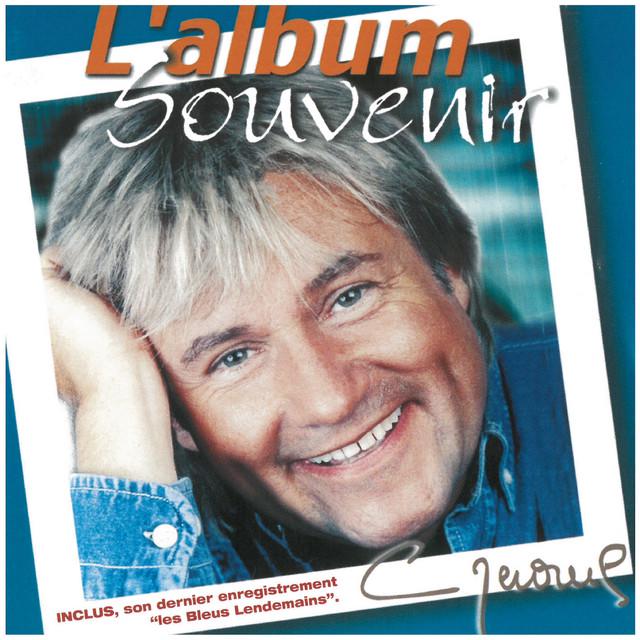
C. Jérôme

Pop
Mainstream Pop
 Viberate Rank: 95807
 Viberate Rank: 95807
 Monthly ListenersFollowers
 Subscribers
 Followers
 Followers
 FansTop Spotify Songs
| Track | 7-Day Streams | |
|---|---|---|
1 | 39.22K | |
2 | 34.20K | |
3 | 11.87K | |
4 | 3.35K | |
5 | 3.35K |
Top YouTube VideosMonthly ListenersFeatured in Playlists| Playlist | Followers | |
|---|---|---|
1 |  Tubes Français 70 Spotify | 628.92K |
2 |  Seventies Hits 1970-1979 Victor Legerstee | 22.47K |
3 | FRANSE CHANSONS TOP 75 Sebas van Wijk | 20.28K |
4 |  De 40 Bekendste Franse Liedjes Dave De Graaf | 20.05K |
5 | Jaren 60 en 70 teuntje60 | 17.65K |
Audience| City | Monthly Listeners | |
|---|---|---|
1 | | 4.28K |
2 |  | 3.47K |
3 |  | 2.67K |
4 | | 2.01K |
5 |  | 1.91K |
See full performance history, audience data, playlist activity, rankings, comparisons, and more in Viberate music analytics. Start with a free trial, then continue with a paid plan.
C. Jérôme’s Spotify BioLater known as a popular radio host, French chanteur C. Jérôme first shot to stardom as one of his country's most successful pop singers of the early '70s. Born Claude Dhotel in the twelfth arrondissement of Paris in 1946, he was raised by his grandparents in the village of Meurthe-et-Moselle near Nancy, where he developed a love of rock & roll from a young age. At age 16, he fronted rock band les Storms while working as a shoe salesman, and became a regular at the Paris discotheque, Golf-Drouot, where he met longtime producer Jean Albertini. After several largely ignored singles, he achieved his big break in 1972 with "Kiss Me," which reached the number one spot in both his homeland, and across several European countries. Three albums followed, Baby Boy (1974), Cindy (1976), and Retro C'est Trop (1977), but by the time of 1983's Eve et Moi, his star had waned. However, two years later he witnessed something of a revival when the Didier Barbelivien-penned Et Tu Danses Avec Lui spent… almost six months in the French album charts. Following 1988's C'est la Nuit, 1990's Danielle S'en Va: Kiss Me, and 1994 swan song Nuits Blanches, he retired from the music scene and concentrated his efforts on becoming a radio personality. After a successful stint on Radio Monte Carlo's daily morning show, Les Annees Tubes, he moved to TF1's La Chanson Tresor and teamed up with Michel Drucker on Vivement Dimanche, a role which was sadly to be his last, after he lost his battle with bowel cancer in 2000. ~ Jon O'Brien, Rovi
Viberate is a music analytics platform built for A&Rs, artist managers, labels, booking agents, marketers, and artists.
It helps music professionals track artist growth, analyze audience data, monitor playlist activity, compare artists, follow song performance, and identify opportunities across the music market.
Public artist pages provide a free preview of selected artist data. Paid plans provide access to deeper analytics, historical data, charts, comparisons, playlist tools, exports, alerts, reports, and additional professional features.
Yes. Public Viberate artist pages provide selected artist analytics and music data for free.
Viberate also offers a 7-day free trial of the full platform. A credit card is required to start the trial. The trial includes access to the complete product so users can test deeper artist analytics, historical views, playlist insights, comparisons, charts, exports, alerts, and reporting features before choosing a paid plan.
Viberate provides artist analytics across streaming, playlists, social media, video, radio airplay, songs, and audience markets.
Users can analyze Spotify performance, Spotify and Apple Music playlists, YouTube activity, TikTok and Instagram growth, radio spins, song performance, audience locations, demographics, rankings, and overall artist momentum.
Artist profiles also connect to music charts, similar artists, and comparison tools, helping users benchmark performance and evaluate artists in context.
Viberate updates key artist and track data daily.
For followed artists and tracks, selected data is refreshed multiple times per day. This helps teams monitor playlist changes, streaming movement, audience growth, releases, and campaign performance with more current data.
Update frequency can vary depending on the metric and data source.
Yes. Viberate lets users compare up to five artists side by side across streaming, social media, audience, and engagement metrics.
Users can compare fanbase growth, audience demographics, locations, Spotify performance, social metrics, and other artist data over selected time periods.
Artist comparison can be used for A&R scouting, benchmarking, booking decisions, campaign planning, and evaluating artists with similar audiences or market positions.