Bucks Fizz

Pop
Mainstream Pop
Indie Pop
 Viberate Rank: 53899
 Viberate Rank: 53899
 Monthly ListenersFollowers
 Subscribers
 Followers
 Followers
 FansTop Spotify Songs
| Track | 7-Day Streams | |
|---|---|---|
1 | 70.05K | |
2 | 39.00K | |
3 | 7.73K | |
4 | 6.08K | |
5 | 2.17K |
Top YouTube VideosMonthly ListenersFeatured in Playlists| Playlist | Followers | |
|---|---|---|
1 |  Oldies Best songs 80s, 70s, 60s / Throwbacks HITS / 💿 indiemono | 446.42K |
2 |  80s Ballads Hits Filtr Sweden | 292.66K |
3 | All 80 s Rock & Classic Hits Peter Bakker | 135.88K |
4 |  Eurovision Winners Spotify | 109.32K |
5 |  80s Party Filtr | 107.83K |
Audience| City | Monthly Listeners | |
|---|---|---|
1 | | 10.41K |
2 | | 6.33K |
3 |  | 5.11K |
4 | | 5.09K |
5 | | 4.47K |
See full performance history, audience data, playlist activity, rankings, comparisons, and more in Viberate music analytics. Start with a free trial, then continue with a paid plan.
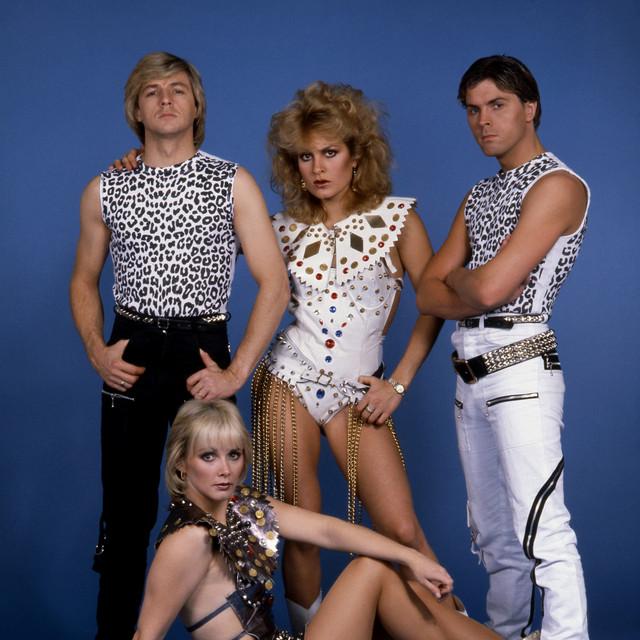
Bucks Fizz’s Spotify BioThe winners of the 1981 Eurovision Song Contest, British quartet Bucks Fizz were, throughout the early '80s, regarded among the most successful bands of their era, chalking up no less than nine Top 20 hits between 1981-1983, including three chart-toppers, "Making Your Mind Up" (their Eurovision winner), "The Land of Make Believe," and "My Camera Never Lies." The band's total chart record includes 20 Top 40 entries, and it was 1988 before Bucks Fizz finally stopped scoring hits -- not a bad record for a group that did not even exist before the Eurovision Song Contest. Bucks Fizz were the brainchild of the production/writing team of Nicola Martin and Andy Hill, and were formed specifically to perform a song the duo had written for the contest. Adhering to the two male, two female formula that had proved so successful at the contest in the years since ABBA's 1974 victory, the group lined up as Jay Aston, Cheryl Baker, Bobby G, and Mike Nolan and, with Eurovision under their belt, they… were to prove unstoppable. Three further hits during 1981 -- "Piece of the Action," "One of Those Nights," and "Land of Make Believe" were accompanied by an eponymous LP that reached number 14 on the U.K. chart; into 1982, the Are You Ready album went Top Ten, while "My Camera Never Lies," "Now Those Days Are Gone," and "If You Can't Stand the Heat" maintained the band's singles success.
The Hand Cut album and four hit singles -- "Run for Your Life," "When We Were Young," "London Town," and "Rules of the Game" -- brought the band similar success in 1983. But slowly diminishing chart positions were beginning to show. The last two 45s peaked at numbers 34 and 57, respectively, while even a Christmas Greatest Hits album only reached number 25. Bucks Fizz appeared to be bouncing back, however, as summer 1984's "Talking in Your Sleep" at least marched into the Top 20. But two further underperformers, "Golden Days" and "I Hear Talk," saw the band's star decline once again, while a road accident shortly before Christmas left Nolan badly injured and necessitated the cancellation of the group's current tour. Worse was to come, as Jay Aston departed in 1985; he was replaced by Shelley Preston and Bucks Fizz continued scoring minor hits -- interspersed by the occasional major one (1986's "New Beginning" reached number eight) until 1988's "Heart of Stone" finally ended their chart career.
Since that time, Bucks Fizz have remained a going concern, although constant lineup changes have seen some 15 or so different singers pass through the ranks, including former Dollar frontman David Van Day. Of the founding members, Baker quit in 1993 and Nolan in 1986, leaving Bobby G alone to link the current incarnation to its past. Nolan and Van Day later formed their own version of the band, Bucks Fizz featuring Mike Nolan. They released several singles, and also re-recorded a number of old hits for various compilations. Nolan later left this band, but Van Day continued on as Bucks Fizz and, following several highly publicized legal tussles with Bobby G, now tours as David Van Day's Bucks Fizz Show. In 2004, the mid-'80s lineup of Baker, Nolan, Bobby G, and Preston re-formed for a handful of shows around the release of the band's The Ultimate Anthology collection; two years later, following the appearance of the Lost Masters rarities album, another reunion saw the four original members (plus Preston) reconvene to record a version of the Proclaimers' "500 Miles" for the Comic Relief charity. ~ Dave Thompson, Rovi
Viberate is a music analytics platform built for A&Rs, artist managers, labels, booking agents, marketers, and artists.
It helps music professionals track artist growth, analyze audience data, monitor playlist activity, compare artists, follow song performance, and identify opportunities across the music market.
Public artist pages provide a free preview of selected artist data. Paid plans provide access to deeper analytics, historical data, charts, comparisons, playlist tools, exports, alerts, reports, and additional professional features.
Yes. Public Viberate artist pages provide selected artist analytics and music data for free.
Viberate also offers a 7-day free trial of the full platform. A credit card is required to start the trial. The trial includes access to the complete product so users can test deeper artist analytics, historical views, playlist insights, comparisons, charts, exports, alerts, and reporting features before choosing a paid plan.
Viberate provides artist analytics across streaming, playlists, social media, video, radio airplay, songs, and audience markets.
Users can analyze Spotify performance, Spotify and Apple Music playlists, YouTube activity, TikTok and Instagram growth, radio spins, song performance, audience locations, demographics, rankings, and overall artist momentum.
Artist profiles also connect to music charts, similar artists, and comparison tools, helping users benchmark performance and evaluate artists in context.
Viberate updates key artist and track data daily.
For followed artists and tracks, selected data is refreshed multiple times per day. This helps teams monitor playlist changes, streaming movement, audience growth, releases, and campaign performance with more current data.
Update frequency can vary depending on the metric and data source.
Yes. Viberate lets users compare up to five artists side by side across streaming, social media, audience, and engagement metrics.
Users can compare fanbase growth, audience demographics, locations, Spotify performance, social metrics, and other artist data over selected time periods.
Artist comparison can be used for A&R scouting, benchmarking, booking decisions, campaign planning, and evaluating artists with similar audiences or market positions.