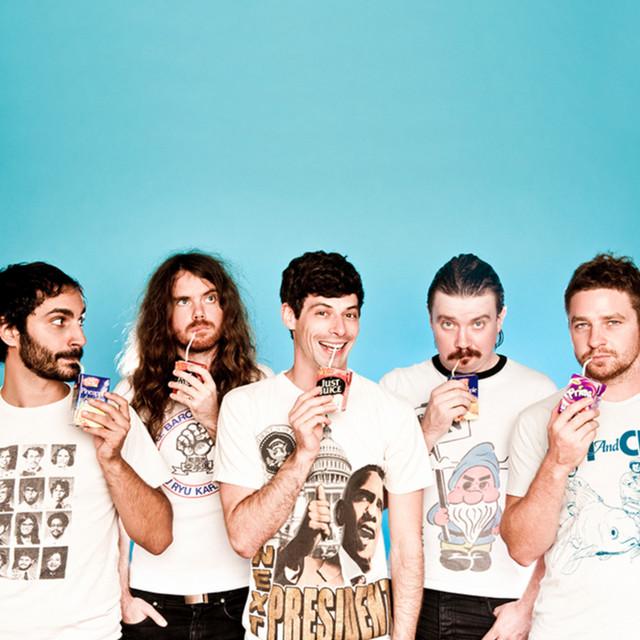
Bluejuice

Rock
Indie Rock
Funk Rock
Alternative Rock
 Viberate Rank: 116617
 Viberate Rank: 116617
 Monthly ListenersFollowers
 Subscribers
 Followers
 Followers
 FansTop Spotify Songs
| Track | 7-Day Streams | |
|---|---|---|
1 | 33.04K | |
2 | 29.27K | |
3 | 19.85K | |
4 | 5.42K | |
5 | 1.62K |
Top YouTube VideosMonthly ListenersFeatured in Playlists| Playlist | Followers | |
|---|---|---|
1 |  Indie Rock Hits 🎸 oceanify | 423.20K |
2 |  Aussie Alternative Classics Spotify | 216.53K |
3 |  SONGS THAT GET WHITE PEOPLE TURNT Samuel Ilias | 145.44K |
4 |  Kids Disco 2024 Aurus | 61.02K |
5 |  looking back now our journey is over fiver arley | 55.16K |
Audience| City | Monthly Listeners | |
|---|---|---|
1 | | 27.65K |
2 | | 26.27K |
3 | | 25.51K |
4 | | 17.49K |
5 | | 9.13K |
See full performance history, audience data, playlist activity, rankings, comparisons, and more in Viberate music analytics. Start with a free trial, then continue with a paid plan.
Bluejuice’s Spotify BioThe prosaic nature of Bluejuice's back-story -- they met at school and formed a band -- has led them to invent a biography for themselves more suited to their quirky nature. According to the story, half of them are former members of rock band Sherbet, and the other half consist of lady boys from Thailand. Fortunately, Sherbet's tour manager appreciated the joke when he discovered it. The original lineup of Bluejuice consisted of vocalists Jake Stone and Stavros Yiannoukas, drummer Ned Molesworth, keyboardist and guitarist Jerry Craib, and bass guitarist Jamie Cibej. Stone and Yiannoukas alternated between energetic rock singing and rapping, sometimes pseudonymously as MCs Velocity and Kinetic, respectively. They were markedly different from the other bands of Sydney's underground scene in 2001 when they formed, with punkish prankishness and sense of humor dominating over the city's defining indie rock seriousness or hip-hop's façade of toughness. Their first two releases were EPs,… Zebraaazz in 2003 and The Good Luck Pig in 2005. Their first album, Problems, followed in 2007, with all three of its singles placed in high rotation on JJJ Radio. Their innovative videos, one of which was shot while the bandmembers were skydiving and another capturing an impromptu performance in a mall, also earned them acclaim. Bluejuice's live shows and the energy that went into them were responsible for the biggest buzz: Jake Stone was arrested for wearing part of a police uniform on-stage (charges were later dropped) and broke a hand and leg in separate incidents in 2008. That year, the E.L.F. (better known as Darren Cross, formerly of Gerling) remixed their popular single "Vitriol" and they were left drummerless when Molesworth left for the United States. ~ Jody Macgregor, Rovi
Viberate is a music analytics platform built for A&Rs, artist managers, labels, booking agents, marketers, and artists.
It helps music professionals track artist growth, analyze audience data, monitor playlist activity, compare artists, follow song performance, and identify opportunities across the music market.
Public artist pages provide a free preview of selected artist data. Paid plans provide access to deeper analytics, historical data, charts, comparisons, playlist tools, exports, alerts, reports, and additional professional features.
Yes. Public Viberate artist pages provide selected artist analytics and music data for free.
Viberate also offers a 7-day free trial of the full platform. A credit card is required to start the trial. The trial includes access to the complete product so users can test deeper artist analytics, historical views, playlist insights, comparisons, charts, exports, alerts, and reporting features before choosing a paid plan.
Viberate provides artist analytics across streaming, playlists, social media, video, radio airplay, songs, and audience markets.
Users can analyze Spotify performance, Spotify and Apple Music playlists, YouTube activity, TikTok and Instagram growth, radio spins, song performance, audience locations, demographics, rankings, and overall artist momentum.
Artist profiles also connect to music charts, similar artists, and comparison tools, helping users benchmark performance and evaluate artists in context.
Viberate updates key artist and track data daily.
For followed artists and tracks, selected data is refreshed multiple times per day. This helps teams monitor playlist changes, streaming movement, audience growth, releases, and campaign performance with more current data.
Update frequency can vary depending on the metric and data source.
Yes. Viberate lets users compare up to five artists side by side across streaming, social media, audience, and engagement metrics.
Users can compare fanbase growth, audience demographics, locations, Spotify performance, social metrics, and other artist data over selected time periods.
Artist comparison can be used for A&R scouting, benchmarking, booking decisions, campaign planning, and evaluating artists with similar audiences or market positions.