Blue Cheer

Rock
Hard Rock
Psychedelic Rock
Blues Rock
 Viberate Rank: 90464
 Viberate Rank: 90464
 Monthly ListenersFollowers
 Subscribers
 Followers
 Followers
 FansTop Spotify Songs
| Track | 7-Day Streams | |
|---|---|---|
1 | 9.89K | |
2 | 4.28K | |
3 | 2.19K | |
4 | 1.26K | |
5 | 1.02K |
Top YouTube Videos| Video | 7-Day Views | |
|---|---|---|
1 | 3 |
Monthly ListenersFeatured in Playlists| Playlist | Followers | |
|---|---|---|
1 |  60s Rock Anthems Spotify | 1.02M |
2 |  60s Rock Drive Spotify | 325.64K |
3 |  Once Upon A Time In...Hollywood Radio Josh Gardner | 100.16K |
4 |  Mafia 3 - Soundtrack Mikkel Frøkjær-Jensen | 49.40K |
5 | wicks Brennan McDowell | 43.73K |
Audience| City | Monthly Listeners | |
|---|---|---|
1 |  | 792 |
2 | | 654 |
3 |  | 644 |
4 | | 606 |
5 |  | 604 |
See full performance history, audience data, playlist activity, rankings, comparisons, and more in Viberate music analytics. Start with a free trial, then continue with a paid plan.
Blue Cheer’s Spotify BioThe hard rock group Blue Cheer were often referred to as being "louder than god" and no band of their era more richly earned that title. Often cited as the first heavy metal band, they were inarguably heavy on albums like 1968's Vincebus Eruptum and Outsideinside, playing raw, blues-based rock with a bludgeoning impact and monolithic guitar sound that inspired hundreds of bands to turn up their amps and summon mountains of noise. The group embraced a more polished approach on 1969's conventionally bluesy Blue Cheer and 1971's folk-infused Oh! Pleasant Hope, but after reuniting on 1985's The Beast Is Back, they returned to their roots in proto-metal hard rock, a path they would follow for the rest of their career, which wound up with 2007's What Doesn't Kill You.
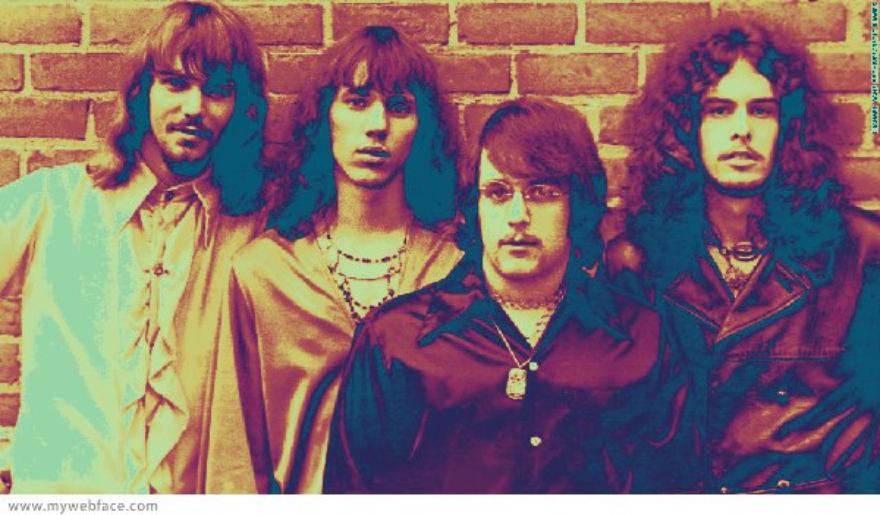
Blue Cheer was founded in 1966 by bassist and lead vocalist Dickie Peterson, who had previously played with a group based out of Davis, California, Andrew Staples & The Oxford Circle. After relocating to San Francisco, Peterson …wanted to form an electric blues band, and recruited guitarist Leigh Stephens and drummer Eric Albronda for the project. When Albronda dropped out, he invited his Oxford Circle bandmate Paul Whaley to take his place. (Albronda would later produce several albums for the group.) For a while, Blue Cheer expanded to a sextet, with the addition of guitarist Jerre Peterson (Dickie's brother), vocalist and harmonica player Jere Whiting, and keyboard player Vale Hamanaka. However, after seeing the Jimi Hendrix Experience in concert, Peterson was won over to the idea of a primal guitar, bass, and drums trio, and the new additions were sent packing. (Vale Hamanaka would later found the groundbreaking punk fanzine Search & Destroy under the name V. Vale.) The group took the name Blue Cheer from a popular brand of LSD brewed by Augustus Owsley Stanley, the celebrated San Francisco acid chemist who was briefly the band's patron, and they began playing the burgeoning West Coast psychedelic ballroom circuit. Their overloaded, guitar-driven music turned heads, and six months after making their debut, Blue Cheer was signed by Phillips Records.
Blue Cheer's first single for Phillips was a hard rock reinterpretation of the Eddie Cochran classic "Summertime Blues," and it became a surprise hit upon its release in late 1967, rising to number 11 on the Top 100 Singles chart, and topping out at number three in Canada. January 1968 saw the release of their debut album, Vincebus Eruptum, which made it to number 11 on the Top 200 albums chart, and made them one of the most talked-about bands on the West Coast rock scene, though not everyone appreciated their high-impact approach -- when they appeared on Steve Allen's TV talk show in 1968, he introduced them with the words, "It's Blue Cheer! Run for your life!" With Vincebus Eruptum still high in the charts, the trio cut their second LP, Outsideinside, which was issued in August 1968. Owing to the group's massive stage volume and huge array of amplifiers, parts of the album were recorded outside, the tale being that they were simply too loud for any recording studio.
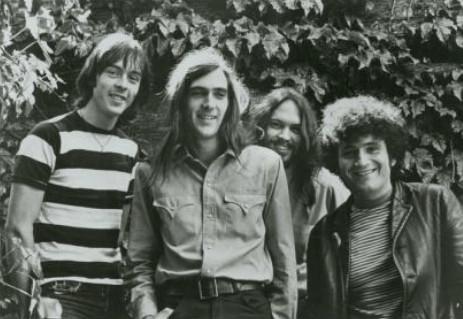
Outsideinside didn't live up to the sales expectations set by the first album, and by the end of 1968, Leigh Stephens had left Blue Cheer, reportedly because he could no longer tolerate their ear-shattering volume. He was replaced by Randy Holden, formerly of the Fender IV and the Other Half. Midway through the sessions for Blue Cheer's third album, 1969's New! Improved! Blue Cheer, Holden quit, and the band became a quartet with the addition of guitarist Bruce Stephens and keyboard player Ralph Burns Kellogg. (Holden would later become a cult favorite with his 1970 solo effort Population II.) New! Improved! Blue Cheer would feature one side of material with Holden and a second with Stephens and Kellogg; the latter two would return for the group's fourth album, 1969's Blue Cheer, which moved them into a more conventional boogie-blues format, but Paul Whaley had quit, and Norman Mayell took over on drums, leaving Peterson as the only original member in the band. Gary Lee Yoder, who had been a member of the Oxford Circle with Peterson, helped write two songs on Blue Cheer, and he became a full member of the band for 1970's The Original Human Being, taking over as guitarist after Bruce Stephens parted ways with the group. 1971's Oh! Pleasant Hope was an unexpectedly rootsy album with touches of folk and country, and marked the first time since Outsideinside that Blue Cheer had the same personnel for two albums in a row. By this time, by his own admission, Dickie Peterson was struggling with a dependence on hard drugs, and he only sang lead on three of the album's songs; after it came and went with little notice, Blue Cheer broke up.
Blue Cheer briefly reunited for live dates in 1974, with guitarists Jerre Peterson and Ruben De Fuentes and drummer Terry Rae; in 1975, Dickie Peterson dropped out, and Nick St. Nicholas, who played in a latter-day edition of Steppenwolf, took over for a while as bassist, though this version of the band was gone by year's end. In 1978, Peterson revived Blue Cheer with a new edition featuring guitarist Tony Rainier and drummer Mike Fleck, and in 1984, original drummer. Paul Whaley rejoined Blue Cheer. The Peterson/Rainier/Whaley lineup cut 1985's The Beast Is Back, their first studio album since Oh! Pleasant Hope, released by the maverick metal label Megaforce Records. As interest in the group renewed, Rhino Records issued 1986's Louder Than God: The Best of Blue Cheer, the first American compilation drawn from the group's sides for Phillips. Four years later, Mercury, who owned the rights to the Phillips masters, followed suit with their own Blue Cheer anthology, Good Times Are So Hard to Find. 1990 also saw the release of a fresh studio album from Blue Cheer, Highlights and Lowlives, which featured Peterson, Whaley, and guitarist Andrew "Duck" McDonald and was produced by Jack Endino, the Seattle based engineer and producer who had previously worked with Nirvana, Mudhoney, and Soundgarden. (Several bands on the Seattle grunge scene would cite Blue Cheer's first two LPs as an influence, and Mudhoney even wrote and recorded a song in homage to Randy Holden, "Holden," which appeared on the collection March to Fuzz.)
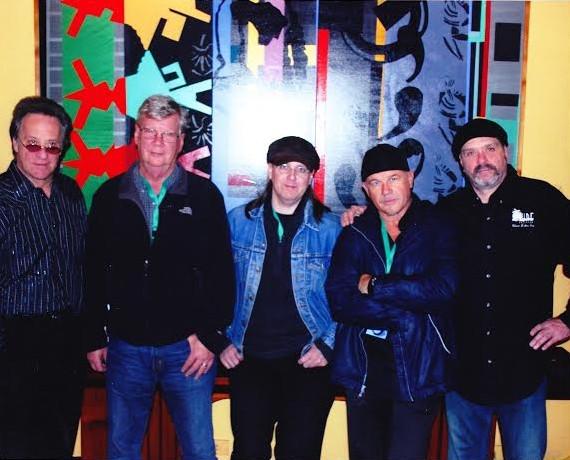
While German guitarist Dieter Saller would take over for McDonald for the 1991 studio set Dining with the Sharks (Peterson and Whaley had relocated to Germany in the early '90s), McDonald would soon return to the fold, and the Peterson/Whaley/McDonald lineup would become Blue Cheer's most stable, touring frequently and cutting a studio LP in 2007, What Doesn't Kill You. As Blue Cheer were once again rediscovered, this time by the doom and stoner metal communities, they stayed busy on the road playing for fans old and new, but on October 12, 2009, Dickie Peterson died from prostate cancer, and days later, McDonald posted a statement on the Blue Cheer website: "Blue Cheer is done. Out of respect for Dickie, Blue Cheer (will) never become a viable touring band again." Despite Peterson's passing, interest in Blue Cheer refused to die. An unreleased album recorded in 1978 with Peterson, Whaley, and Tony Rainier, 7, was issued in 2012 by ShroomAngel Records, and in 2018, BeatRocket Records delivered The '67 Demos, containing lo-fi recordings pre-dating the band's signing to Phillips. ~ Mark Deming, Rovi
Viberate is a music analytics platform built for A&Rs, artist managers, labels, booking agents, marketers, and artists.
It helps music professionals track artist growth, analyze audience data, monitor playlist activity, compare artists, follow song performance, and identify opportunities across the music market.
Public artist pages provide a free preview of selected artist data. Paid plans provide access to deeper analytics, historical data, charts, comparisons, playlist tools, exports, alerts, reports, and additional professional features.
Yes. Public Viberate artist pages provide selected artist analytics and music data for free.
Viberate also offers a 7-day free trial of the full platform. A credit card is required to start the trial. The trial includes access to the complete product so users can test deeper artist analytics, historical views, playlist insights, comparisons, charts, exports, alerts, and reporting features before choosing a paid plan.
Viberate provides artist analytics across streaming, playlists, social media, video, radio airplay, songs, and audience markets.
Users can analyze Spotify performance, Spotify and Apple Music playlists, YouTube activity, TikTok and Instagram growth, radio spins, song performance, audience locations, demographics, rankings, and overall artist momentum.
Artist profiles also connect to music charts, similar artists, and comparison tools, helping users benchmark performance and evaluate artists in context.
Viberate updates key artist and track data daily.
For followed artists and tracks, selected data is refreshed multiple times per day. This helps teams monitor playlist changes, streaming movement, audience growth, releases, and campaign performance with more current data.
Update frequency can vary depending on the metric and data source.
Yes. Viberate lets users compare up to five artists side by side across streaming, social media, audience, and engagement metrics.
Users can compare fanbase growth, audience demographics, locations, Spotify performance, social metrics, and other artist data over selected time periods.
Artist comparison can be used for A&R scouting, benchmarking, booking decisions, campaign planning, and evaluating artists with similar audiences or market positions.