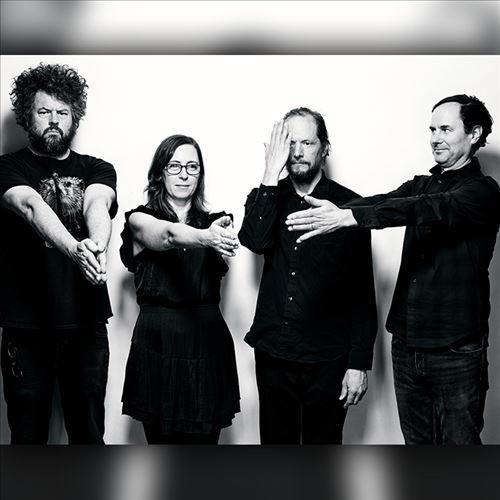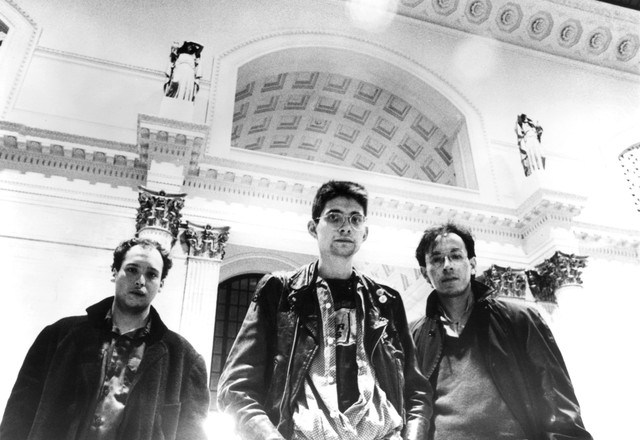
Big Black

Punk
Punk Rock
Noise Rock
 Viberate Rank: 94224
 Viberate Rank: 94224
 Monthly ListenersFollowers
 Subscribers
 Followers
 Followers
 FansTop Spotify Songs
| Track | 7-Day Streams | |
|---|---|---|
1 | 6.59K | |
2 | 4.29K | |
3 | 4.04K | |
4 | 4.00K | |
5 | 2.88K |
Top YouTube VideosMonthly ListenersFeatured in Playlists| Playlist | Followers | |
|---|---|---|
1 |  Blonded Frank Ocean | 307.41K |
2 | Industrial music for industrial people⚙️ Michael Alexander | 21.36K |
3 |  WonkoFM WonkoTheSane | 21.06K |
4 |  if I was a DJ Fever Ray | 20.14K |
5 |  Yorekok yorekokmodeextreme | 13.46K |
Audience| City | Monthly Listeners | |
|---|---|---|
1 | | 935 |
2 | | 820 |
3 | | 759 |
4 |  | 711 |
5 |  | 551 |
See full performance history, audience data, playlist activity, rankings, comparisons, and more in Viberate music analytics. Start with a free trial, then continue with a paid plan.
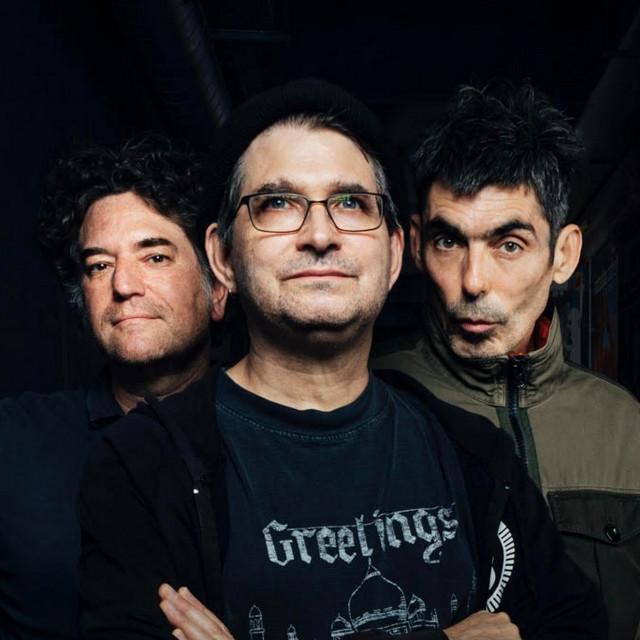
Big Black’s Spotify BioWhile punk rock was always supposed to be about pushing the envelope, few post-punk bands seemed willing to go quite so far to creatively confront their audience as Big Black. The group's guitars alternately sliced like a machete and ground like a dentist's drill, creating a groundbreaking and monolithic dissonance in the process. Their use of a drum machine, cranked up to ten and sounding a tattoo that pummeled the audience into submission, was a crucial precursor to the coming industrial music scene while creating a sound that was far more challenging and organic than what groups such as Ministry and Nine Inch Nails would achieve with similar ingredients. Big Black's songs, which openly dealt with such topics as mutilation, murder, rape, child molestation, arson, immolation, racism, and misogyny, established them as a group who acknowledged no taboos; and while they didn't seem to be advocating the antisocial or criminal behavior they sang about, there was also a level of familiarity… with their subject matter that made more than a few listeners blanch. Big Black were a band who went where few bands dared to go (and where many felt bands shouldn't go), and for good or ill, their pervasive influence had a seismic impact on indie rock. At the same time, Big Black were a group who maintained firmly held ideals when it came to doing business: they paid for their own recordings, booked their own shows, handled their own management and publicity, and remained stubbornly independent at a time when many independent bands were eagerly reaching out for the major-label brass ring.
Big Black was the brainchild of Steve Albini, who spent much of his youth in Missoula, Montana. A skinny and unimposing kid with glasses and an intense demeanor, Albini was something of a loner in his high school days. After reading about the then-burgeoning punk rock scene in the music press, Albini began hunting down records and developed a taste for Suicide and the Ramones. In his senior year of high school, he began teaching himself to play guitar and bass to keep himself occupied after injuring his leg in a motorcycle accident. In 1980, after graduating from high school, Albini moved to Evanston, Illinois, not far from Chicago, to study journalism and art at Northwestern University. Not unexpectedly, Albini soon immersed himself in the Chicago punk scene and became a passionate fan of Naked Raygun. Before long, he became interested in starting a band of his own, and he briefly played with a new wave outfit called Stations; the group's most lingering influence was that Albini bought a Roland TR-606 drum machine to handle the band's percussion chores.
In 1981, frustrated by his inability to get a group off the ground, Albini decided to start a band all by his lonesome. Borrowing a four-track tape machine in exchange for a case of beer, he spent his spring break in his room, recording a six-song EP on which he played all the guitar and bass parts, handled all the vocals, and let "Roland" take care of the drumming. Calling the EP Lungs, Albini credited the material to the group name Big Black, and a local Chicago label, Ruthless Records, released the record near the end of 1982. Albini also began writing for several fanzines, most notably Matter, and his cantankerous screeds on a variety of topics (but mostly relating to the low ethical and musical standards of those in the music community) coupled with his lyrical obsessions gained him a reputation as the angriest man in rock & roll.
While response to Lungs was mixed, Albini at least had a calling card for his new "group," and he was eager to put together a version of Big Black that could play live. In early 1983, Albini persuaded Jeff Pezzati, from his beloved Naked Raygun, to join the new group, and during a practice session in the basement of Pezzati's home, Santiago Durango, who also lived in the building and was a guitarist with Naked Raygun, came down and offered to jam with the group. The son of a doctor from Colombia who came to America to study at the University of Illinois, Durango was, like Albini, an intelligent social misfit who found solace in the abrasive sound of punk rock, joining a band called Silver Abuse in 1979, and the two quickly hit it off. Durango became a permanent member of Big Black, and his muscular guitar sound was the ideal match of Albini's jagged, metallic tone.
The band's next record, 1983's Bulldozer EP, was recorded with the group's new lineup, and this time around Albini had access to a 24-track recording studio and a sympathetic engineer and producer, Iain Burgess. The result was a quantum leap over Lungs, and the first real recorded manifestation of Big Black's trademark bruising, sinister sound. Initially packaged in a specially fabricated steel sleeve, Bulldozer received significantly greater attention in the independent music press than Lungs, and the band's third EP, 1984's Racer-X, combined with increased touring and better distribution thanks to a licensing deal with Homestead Records, began to break their following outside the Midwest.
In late 1984, Jeff Pezzati, bowing to the demands of his day job and Naked Raygun's increasingly busy schedule, amicably parted ways with Big Black. Santiago Durango, meanwhile, opted to leave Naked Raygun and make Big Black his first musical commitment. Dave Riley, a bassist who had done studio work in Detroit before relocating to Chicago and joining the band Savage Beliefs, was tapped as Big Black's new bass player. Not long after Riley signed on, Big Black began work on their first full-length album. Both musically and lyrically, 1985's Atomizer upped the ante on the musical and lyrical ferocity of Big Black's previous body of work, an unrelenting assault of guitar sounds and imagined violence of all sorts. Atomizer made Big Black the new cause célèbre of the indie rock scene; it was a polarizing work that people either loved or hated, but no one seemed neutral about, and enough listeners were taken with the record's sonic assault that it became a significant underground success. (The album also gave Albini the opportunity to launch the first of many salvos against digital recording technology when Atomizer was released on compact disc, along with several tracks from singles and EPs, as a collection called The Rich Man's Eight Track Tape.) However, the group didn't see as much of Atomizer's profits as they believed was their fair share, and following the release of Big Black's "El Duce" single, they parted ties with Homestead and entered into a new distribution agreement with Touch & Go Records, whose owner, Corey Rusk, was a trusted friend of Albini and the band. (Years later, Touch & Go would reissue the entire Big Black back catalog.)
Big Black's first release for Touch & Go was 1987's infamous Headache EP. An early limited-edition release of the record featured an appalling photo of the victim of an auto accident whose head had been split in two (an opaque black-plastic outer bag protected the sensibilities of those shopping for, say, a Smiths import). The music, however, was something of a letdown after Atomizer, and the band seemed to know it; the later mass-market release featured a sticker reading "Not as good as Atomizer, so don't get your hopes up, cheese!" There were also tensions within the band; Albini and Durango reportedly found Riley difficult to work with, and all three had trouble fitting Big Black's increasingly demanding schedule in alongside their personal commitments. Santiago Durango decided to return to law school in the fall of 1987, and the group decided this was a sign to call it quits.
Big Black announced their breakup as far in advance as possible and recorded a final album (half recorded in London, half recorded at Albini's new home studio) and mounted well-received farewell tours of Europe and the United States in the summer of 1987. Shortly after the band performed their final show in Seattle on August 11 (where they destroyed their gear at the finale), Touch & Go released Songs About Fucking, a scabrous masterpiece that went on to become the group's most successful album. In 1992, after the band's catalog reverted to Touch & Go, Pigpile, a live album and video recorded at the London date of the farewell tour, was released.
Following Big Black's breakup, Albini went on to a celebrated career as a producer and engineer, recording sessions for Nirvana, the Breeders, the Pixies, Superchunk, Bush, and Jimmy Page & Robert Plant, along with (by his own word) 1,000 bands no one has ever heard of, and opening his own recording studio in Chicago, Electrical Audio. He also performed in the acerbic and short-lived Rapeman as well as the more experimental and long-running Shellac. Albini died on May 7, 2024, of a heart attack at his recording studio. He was 61 years old. Dave Riley was briefly a member of the group Bull; in 1995, he was incapacitated with a stroke which, due to an early misdiagnosis, was incorrectly reported in some quarters to be a suicide attempt. Riley was living in Arizona and working in animal rescue when he succumbed to cancer on December 24, 2019. Santiago Durango for a time worked with the group Arsenal and recorded with Boss Hog, but his career in music has taken a back seat to his practice as a lawyer; his clients include Touch & Go Records and celebrated groupie and artist Cynthia Plaster Caster. ~ Mark Deming, Rovi
Viberate is a music analytics platform built for A&Rs, artist managers, labels, booking agents, marketers, and artists.
It helps music professionals track artist growth, analyze audience data, monitor playlist activity, compare artists, follow song performance, and identify opportunities across the music market.
Public artist pages provide a free preview of selected artist data. Paid plans provide access to deeper analytics, historical data, charts, comparisons, playlist tools, exports, alerts, reports, and additional professional features.
Yes. Public Viberate artist pages provide selected artist analytics and music data for free.
Viberate also offers a 7-day free trial of the full platform. A credit card is required to start the trial. The trial includes access to the complete product so users can test deeper artist analytics, historical views, playlist insights, comparisons, charts, exports, alerts, and reporting features before choosing a paid plan.
Viberate provides artist analytics across streaming, playlists, social media, video, radio airplay, songs, and audience markets.
Users can analyze Spotify performance, Spotify and Apple Music playlists, YouTube activity, TikTok and Instagram growth, radio spins, song performance, audience locations, demographics, rankings, and overall artist momentum.
Artist profiles also connect to music charts, similar artists, and comparison tools, helping users benchmark performance and evaluate artists in context.
Viberate updates key artist and track data daily.
For followed artists and tracks, selected data is refreshed multiple times per day. This helps teams monitor playlist changes, streaming movement, audience growth, releases, and campaign performance with more current data.
Update frequency can vary depending on the metric and data source.
Yes. Viberate lets users compare up to five artists side by side across streaming, social media, audience, and engagement metrics.
Users can compare fanbase growth, audience demographics, locations, Spotify performance, social metrics, and other artist data over selected time periods.
Artist comparison can be used for A&R scouting, benchmarking, booking decisions, campaign planning, and evaluating artists with similar audiences or market positions.