Augusta Holmès

Classical
Chamber Music
Classical Crossover
 Viberate Rank: 318033
 Viberate Rank: 318033
 Monthly ListenersFollowers
 Subscribers
 Followers
 Followers
 FansTop Spotify Songs
| Track | 7-Day Streams | |
|---|---|---|
1 | 10.57K | |
2 | 8.92K | |
3 | 8.92K | |
4 | 1.72K | |
5 | 327 |
Top YouTube VideosMonthly ListenersFeatured in Playlists| Playlist | Followers | |
|---|---|---|
1 |  Classical Reading Spotify | 634.33K |
2 |  Violin Greatest Sony Classical & Jazz Benelux | 97.58K |
3 |  Musique pour lire ou travailler 📖 (sans parole) Filtr France | 43.86K |
4 |  Klassik zum Entspannen Filtr Germany | 42.04K |
5 |  Klassik zum Lernen, Arbeiten und zur Konzentration Filtr Germany | 39.55K |
Audience| City | Monthly Listeners | |
|---|---|---|
1 |  | 1.07K |
2 |  | 750 |
3 | | 698 |
4 | | 646 |
5 |  | 600 |
See full performance history, audience data, playlist activity, rankings, comparisons, and more in Viberate music analytics. Start with a free trial, then continue with a paid plan.
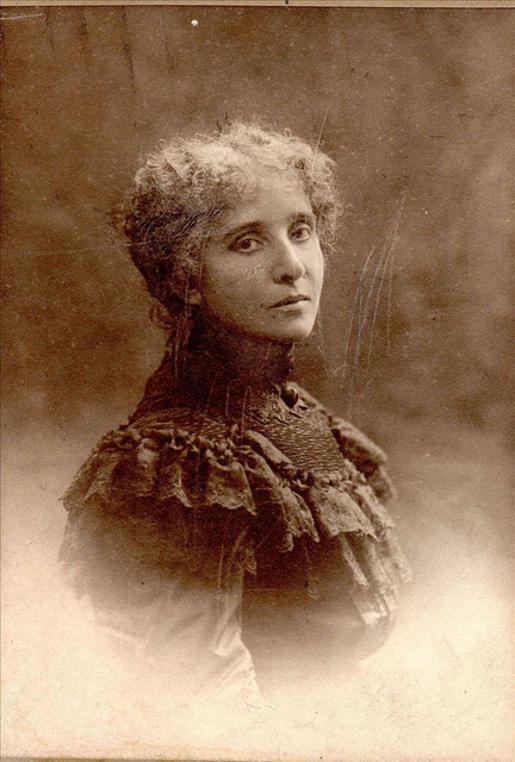
Augusta Holmès’ Spotify BioAugusta Holmès was a French composer whose works were largely forgotten until the 2010s. She was among the circle of musicians associated with César Franck and Camille Saint-Saëns, and had a reputation for composing in an intense, virile style. She was born in Paris in 1847 to Irish parents and was an only child. She was primarily raised by her father after her mother died in 1858. Her godfather was Alfred de Vigny, the famous poet, and he was rumored to be her biological father. Although she displayed a talent for music at a young age, her mother forbade her from studying it. After she passed away, however, Holmès began her musical studies. She was not allowed to enroll at the Paris Conservatory because she was female, so she had to resort to private lessons for her musical education. She studied harmony and counterpoint with Henri Lambert, orchestration with Hyacinthe Klosè, and voice with Guillot de Sainbris. She also received instruction from the Parisian pianist Mademoiselle… Peyronnet and achieved rapid progress. From 1870 to 1871 Holmès took a break from music to serve as a nurse in the Franco-Prussian War, and then became a French citizen and added the distinctive accent to her name. Her earliest compositions consisted mostly of songs, written under the male pseudonym Hermann Zenta, to avoid the sexism that was commonly directed toward female composers. In the early 1870s she began cohabitating with writer Catulle Mendès, and while they had five children together, they were never married. By 1875, she was well-known throughout Paris and had become a student of César Franck at the suggestion of her friend Camille Saint-Saëns. From this point on, she focused mostly on composing large-scale works that included cantatas, symphonic poems, and two operas. Her symphonic poems Irlande, Pologne, and Ludus pro patria were very successful, and helped develop her reputation as a composer of big, grandiose music. In 1890 she was commissioned to write the massive Hymne à la paix for 600 musicians for the Beatrice Exhibition in Florence. Later, in 1899, she composed another colossal work for the Universal Exhibition in Paris, the Ode triomphale en l'honneur du centenaire de 1789 for 900 singers and 300 instrumentalists. Her family left a large volume of her works to the Paris Conservatoire, where it has remained mostly unpublished and in manuscript form. Her music has received a renewed interest in modern times. In 2017 the BBC Radio 3, in collaboration with the Arts and Humanities Research Council, initiated a project that focused on Forgotten Female Composers. This resulted in premiere recordings of some of Holmès works by the BBC Concert Orchestra which were broadcast in honor of Women's Day, 2018. The following year, the BBC National Orchestra of Wales, conducted by Valentina Peleggi performed Roland Furieux for the first time. ~ RJ Lambert, Rovi
Viberate is a music analytics platform built for A&Rs, artist managers, labels, booking agents, marketers, and artists.
It helps music professionals track artist growth, analyze audience data, monitor playlist activity, compare artists, follow song performance, and identify opportunities across the music market.
Public artist pages provide a free preview of selected artist data. Paid plans provide access to deeper analytics, historical data, charts, comparisons, playlist tools, exports, alerts, reports, and additional professional features.
Yes. Public Viberate artist pages provide selected artist analytics and music data for free.
Viberate also offers a 7-day free trial of the full platform. A credit card is required to start the trial. The trial includes access to the complete product so users can test deeper artist analytics, historical views, playlist insights, comparisons, charts, exports, alerts, and reporting features before choosing a paid plan.
Viberate provides artist analytics across streaming, playlists, social media, video, radio airplay, songs, and audience markets.
Users can analyze Spotify performance, Spotify and Apple Music playlists, YouTube activity, TikTok and Instagram growth, radio spins, song performance, audience locations, demographics, rankings, and overall artist momentum.
Artist profiles also connect to music charts, similar artists, and comparison tools, helping users benchmark performance and evaluate artists in context.
Viberate updates key artist and track data daily.
For followed artists and tracks, selected data is refreshed multiple times per day. This helps teams monitor playlist changes, streaming movement, audience growth, releases, and campaign performance with more current data.
Update frequency can vary depending on the metric and data source.
Yes. Viberate lets users compare up to five artists side by side across streaming, social media, audience, and engagement metrics.
Users can compare fanbase growth, audience demographics, locations, Spotify performance, social metrics, and other artist data over selected time periods.
Artist comparison can be used for A&R scouting, benchmarking, booking decisions, campaign planning, and evaluating artists with similar audiences or market positions.