Arthur Rubinstein

Blues
Classic Blues
Chamber Music
 Viberate Rank: 18550
 Viberate Rank: 18550
 Monthly ListenersFollowers
 Subscribers
 Followers
 Followers
 FansTop Spotify Songs
| Track | 7-Day Streams | |
|---|---|---|
1 | 69.45K | |
2 | 52.74K | |
3 | 50.38K | |
4 | 42.63K | |
5 | 35.67K |
Top YouTube VideosMonthly ListenersFeatured in Playlists| Playlist | Followers | |
|---|---|---|
1 |  Música Clásica Que Sí Es Clásica José Gonzales | 339.49K |
2 |  100 of the most famous classical music pieces 🎻 🎹 🎺 ILKER SATUR | 320.24K |
3 |  gut-wrenchingly beautiful pieces of classical music mileadiponzio | 151.70K |
4 |  Classical Music for Reading Filtr Legacy Sweden | 144.36K |
5 | Guess that Tune. Ben | 111.04K |
Audience| City | Monthly Listeners | |
|---|---|---|
1 |  | 9.97K |
2 |  | 8.11K |
3 | | 8.10K |
4 | | 6.54K |
5 |  | 6.08K |
See full performance history, audience data, playlist activity, rankings, comparisons, and more in Viberate music analytics. Start with a free trial, then continue with a paid plan.
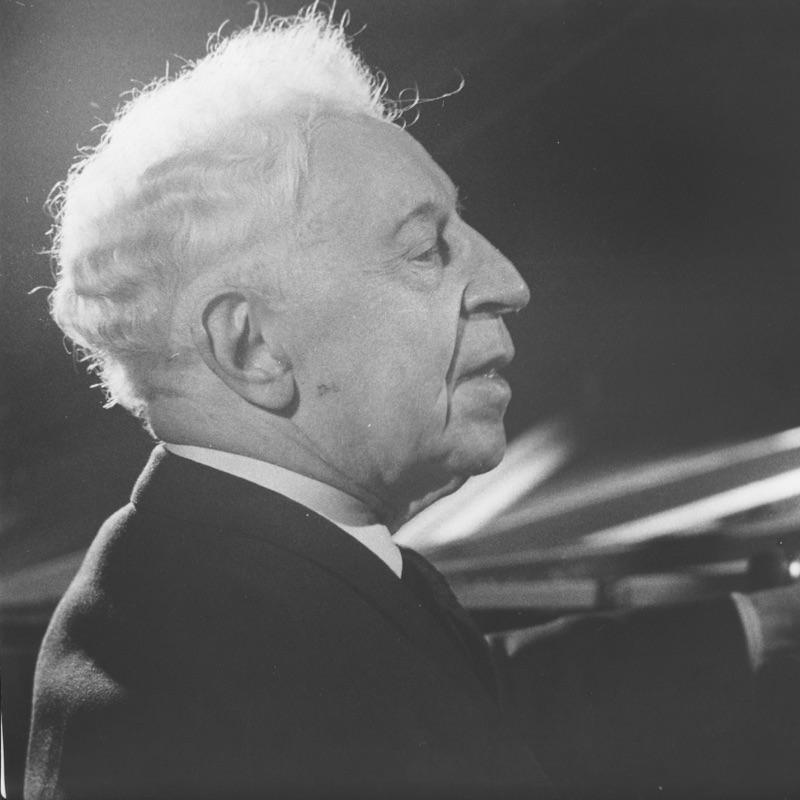
Arthur Rubinstein’s Spotify BioWarm, lyrical, and aristocratic in his interpretations, Artur Rubinstein performed impressively into extremely old age, and he was a keyboard prodigy almost from the time he could climb onto a piano bench. He came from a mercantile rather than a musical family, but fixated on the piano as soon as he heard it. At age three he impressed Joseph Joachim, and by the age of seven he was playing Mozart, Schubert, and Mendelssohn at a charity concert in his hometown. In Warsaw, he had piano lessons with Alexander Róóycki; then in 1897 he was sent to Berlin to study piano with Heinrich Barth and theory with Robert Kahn and Max Bruch, all under Joachim's general supervision. In 1899 came his first notable concerto appearance in Potsdam. Soon thereafter, just barely a teenager, he began touring Germany and Poland.
After brief studies with Paderewski in Switzerland in 1903, Rubinstein moved to Paris, where he met Ravel, Dukas, and Jacques Thibaud, and played Saint-Saëns' G minor concerto to the… composer's approval. That work would remain a flashy Rubinstein vehicle for six decades, and it was the concerto he offered in his American debut with the Philadelphia Orchestra in New York's Carnegie Hall in 1906. His under-prepared American tour was not especially well-received, though, so he withdrew to Europe for further study. Rubinstein became an adept and sensitive chamber musician and accompanist; his 1912 London debut was accompanying Pablo Casals, and during World War I he toured with Eugène Ysaÿe.
He gave several successful recitals in Spain during the 1916-1917 season, and soon toured Latin America. Along the way he developed a great flair for Hispanic music; Heitor Villa-Lobos went so far as to dedicate to Rubinstein his Rudepoêma, one of the toughest works in the repertory. Although Rubinstein would later be somewhat typecast as a Chopin authority, his readings of Falla, Granados, and Albéniz would always be equally idiomatic.
Rubinstein's international reputation grew quickly, although he was by his own account a sloppy technician. In the mid-1930s he withdrew again and drilled himself in technique. By 1937 he reemerged as a musician of great discipline, poise, and polish -- qualities he would mostly retain until his farewell recital in London in 1976, at the age of 89. Rubinstein's temperament had sufficient fire for Beethoven but enough poetry for Chopin; his tempos and dynamics were always flexible, but never distorted. His 1960s recordings for RCA of nearly all Chopin's solo piano music have been considered basic to any record collection since their release, and his version of Falla's Nights in the Gardens of Spain is another classic, as are his various late collaborations with the Guarneri Quartet.
Rubinstein became a naturalized American citizen in 1946, but he maintained residences in California, New York, Paris, and Geneva; two of his children were born in the United States, one in Warsaw, and one in Buenos Aires. He had married Aniela Mlynarska in 1932, but womanizing remained integral to his reputation as an irrepressible bon vivant. He maintained that the slogan "wine, women, and song" as applied to him meant 80 percent women and only 20 percent wine and song.
Still, there was a serious side to his life. After World War II, he refused ever again to perform in Germany, in response to the Nazi extermination of his Polish family. Rubinstein became a strong supporter of Israel; in gratitude, an international piano competition in his name was instituted in Jerusalem in 1974. His honors included the Gold Medal of the Royal Philharmonic Society of London, the U.S. Medal of Freedom (1976), and membership in the French Legion of Honor.
Viberate is a music analytics platform built for A&Rs, artist managers, labels, booking agents, marketers, and artists.
It helps music professionals track artist growth, analyze audience data, monitor playlist activity, compare artists, follow song performance, and identify opportunities across the music market.
Public artist pages provide a free preview of selected artist data. Paid plans provide access to deeper analytics, historical data, charts, comparisons, playlist tools, exports, alerts, reports, and additional professional features.
Yes. Public Viberate artist pages provide selected artist analytics and music data for free.
Viberate also offers a 7-day free trial of the full platform. A credit card is required to start the trial. The trial includes access to the complete product so users can test deeper artist analytics, historical views, playlist insights, comparisons, charts, exports, alerts, and reporting features before choosing a paid plan.
Viberate provides artist analytics across streaming, playlists, social media, video, radio airplay, songs, and audience markets.
Users can analyze Spotify performance, Spotify and Apple Music playlists, YouTube activity, TikTok and Instagram growth, radio spins, song performance, audience locations, demographics, rankings, and overall artist momentum.
Artist profiles also connect to music charts, similar artists, and comparison tools, helping users benchmark performance and evaluate artists in context.
Viberate updates key artist and track data daily.
For followed artists and tracks, selected data is refreshed multiple times per day. This helps teams monitor playlist changes, streaming movement, audience growth, releases, and campaign performance with more current data.
Update frequency can vary depending on the metric and data source.
Yes. Viberate lets users compare up to five artists side by side across streaming, social media, audience, and engagement metrics.
Users can compare fanbase growth, audience demographics, locations, Spotify performance, social metrics, and other artist data over selected time periods.
Artist comparison can be used for A&R scouting, benchmarking, booking decisions, campaign planning, and evaluating artists with similar audiences or market positions.