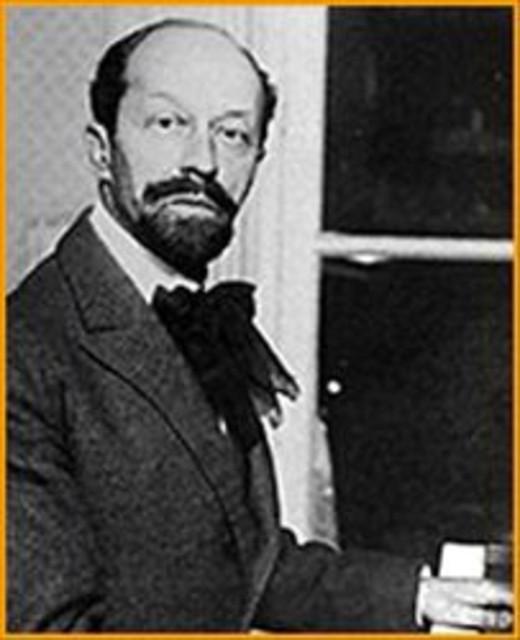
Albert Roussel

Classical
Chamber Music
 Viberate Rank: 340491
 Viberate Rank: 340491
 Monthly ListenersFollowers
 Subscribers
 Followers
 Followers
 FansTop Spotify SongsTop YouTube VideosMonthly ListenersFeatured in Playlists
| Playlist | Followers | |
|---|---|---|
1 |  Harp Classics Zeke Jacobsen | 11.85K |
2 |  Romantic Classical E. McNeil | 9.46K |
3 |  Chamber Music for Self-Renewal synergy555 | 4.21K |
4 |  19th century romance novel nehir mert | 3.50K |
5 |  La Belle Époque Devon LePage | 3.13K |
Audience| City | Monthly Listeners | |
|---|---|---|
1 |  | 84 |
2 |  | 72 |
3 | | 66 |
4 |  | 54 |
5 |  | 53 |
See full performance history, audience data, playlist activity, rankings, comparisons, and more in Viberate music analytics. Start with a free trial, then continue with a paid plan.
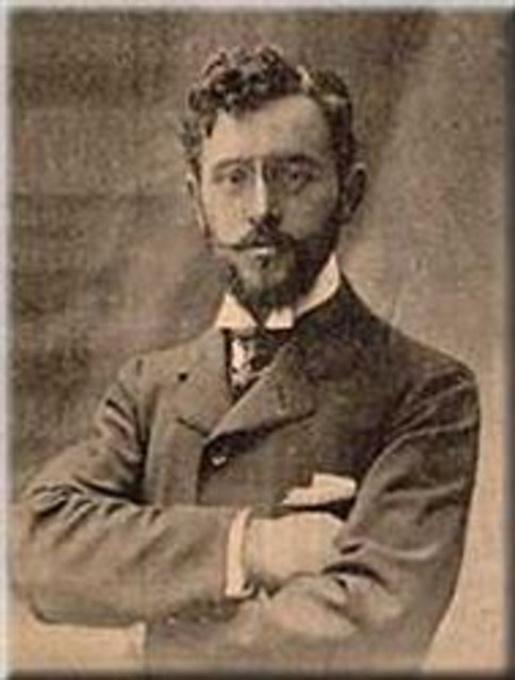
Albert Roussel’s Spotify BioThough less well known than his contemporaries Ravel and Debussy, Albert Roussel is nevertheless regarded as one of the most important figures in early twentieth century French music. Roussel's music reflects his efforts to explore new possibilities of expression while remaining faithful to traditional musical ideas; evident in his chamber music and works for the stage, this tension between traditionalism and experimentation is particularly successful in his symphonies.
Born into an affluent family, Roussel lost both his parents when he was very young, and was entrusted to the care of his grandfather at age seven; in 1880, the grandfather died, and a maternal aunt took over the responsibility of raising the boy. Although he was interested in music, Roussel decided to pursue a naval career; he graduated from the Ecole Navale in 1889, eventually serving in Indochina as an officer.
In 1894, however, Roussel resigned his commission, devoting himself completely to music. He went to Paris,… where he studied with the composer and organist Eugene Gigout. Four years later, he began studies with Vincent d'Indy at the newly-founded Schola Cantorum. In 1902, although he had not yet completed his studies, Roussel became professor of counterpoint at the Schola Cantorum.
Having already composed several significant works (including his Piano Trio and the First Symphony), Roussel married Blanche Preisach in 1908; the following year, the two traveled to India, where he was exposed to the medieval Hindu legend of Queen Padmavati, who sacrificed her life for love. Fascinated by this story, Roussel decided to set it to music (his opera, Padmåvatî, 1923).
At the outbreak of World War I in 1914 Roussel applied for active duty, eventually obtaining an artillery commission; after the war, having retired to Perros-Guirec on the coast of Brittany, he focused on unfinished projects, which included the opera-ballet Padmåvatî. This work, which incorporates elements of traditional Indian music, marked a new period for Roussel, whose earlier compositions showed influences of Impressionism.
During the 1920s, Roussel struggled to balance an increasing structural complexity with emotional expressiveness in his works. His Second Symphony, completed in 1921, exemplifies this tension; in Roussel's subsequent works, the listener can also detect elements of neo-Classicism.
In 1922, Roussel settled in Vasterival, in the coast of Normandy. Despite increasingly frail health, he devoted much of his energy to composing; he completed the Piano Concerto in 1927. His increasing public esteem is evidenced by a festival entirely devoted to his works in Paris (1927) as well as a commission from the Boston Symphony Orchestra for that organization's 50th anniversary (Third Symphony, 1930); Roussel traveled to the United States for the performance.
Works composed toward the end of Roussel's life, such as the String Quartet (1931-1932), the Fourth Symphony (1934), and the String Trio (1937), show his melodic idiom to be enriched by elements of chromaticism and polytonality. In these compositions, Roussel managed a successful synthesis of these new elements with the transparency of his earlier style.
Viberate is a music analytics platform built for A&Rs, artist managers, labels, booking agents, marketers, and artists.
It helps music professionals track artist growth, analyze audience data, monitor playlist activity, compare artists, follow song performance, and identify opportunities across the music market.
Public artist pages provide a free preview of selected artist data. Paid plans provide access to deeper analytics, historical data, charts, comparisons, playlist tools, exports, alerts, reports, and additional professional features.
Yes. Public Viberate artist pages provide selected artist analytics and music data for free.
Viberate also offers a 7-day free trial of the full platform. A credit card is required to start the trial. The trial includes access to the complete product so users can test deeper artist analytics, historical views, playlist insights, comparisons, charts, exports, alerts, and reporting features before choosing a paid plan.
Viberate provides artist analytics across streaming, playlists, social media, video, radio airplay, songs, and audience markets.
Users can analyze Spotify performance, Spotify and Apple Music playlists, YouTube activity, TikTok and Instagram growth, radio spins, song performance, audience locations, demographics, rankings, and overall artist momentum.
Artist profiles also connect to music charts, similar artists, and comparison tools, helping users benchmark performance and evaluate artists in context.
Viberate updates key artist and track data daily.
For followed artists and tracks, selected data is refreshed multiple times per day. This helps teams monitor playlist changes, streaming movement, audience growth, releases, and campaign performance with more current data.
Update frequency can vary depending on the metric and data source.
Yes. Viberate lets users compare up to five artists side by side across streaming, social media, audience, and engagement metrics.
Users can compare fanbase growth, audience demographics, locations, Spotify performance, social metrics, and other artist data over selected time periods.
Artist comparison can be used for A&R scouting, benchmarking, booking decisions, campaign planning, and evaluating artists with similar audiences or market positions.