Anne Schwanewilms

Classical
Opera
Choral
 Viberate Rank: 581572
 Viberate Rank: 581572
 Monthly ListenersFollowers
 Subscribers
 Followers
 Followers
 FansTop Spotify Songs
| Track | 7-Day Streams | |
|---|---|---|
1 | 432 | |
2 | 137 | |
3 | 117 | |
4 | 86 | |
5 | 86 |
Top YouTube VideosMonthly ListenersFeatured in Playlists| Playlist | Followers | |
|---|---|---|
1 |  This Is Mahler Spotify | 62.22K |
2 |  This Is Richard Strauss Spotify | 29.10K |
3 |  Year of Wonder : Classical Music for Every Day - Clemency Burton-Hill lilham | 16.11K |
4 |  Choral: The 50 Greatest Tracks Udiscovermusic classical | 6.15K |
5 |  PKD openculturedotcom | 2.38K |
Audience| City | Monthly Listeners | |
|---|---|---|
1 | | 108 |
2 |  | 75 |
3 |  | 72 |
4 |  | 56 |
5 |  | 54 |
See full performance history, audience data, playlist activity, rankings, comparisons, and more in Viberate music analytics. Start with a free trial, then continue with a paid plan.
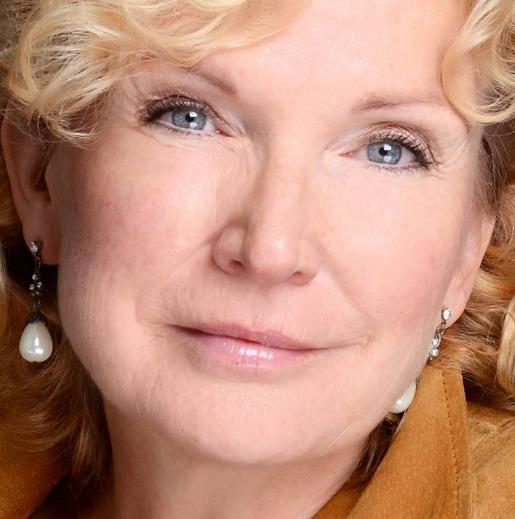
Anne Schwanewilms’ Spotify BioSoprano Anne Schwanewilms emerged in the late 1990s as a promising young singer in dramatic roles. She has sung major Wagner parts and has become known as an important interpreter of the music of Richard Strauss, both operas and lieder.
Schwanewilms was born in 1967 in Gelsenkirchen in West Germany's Ruhr region. She considered a career as a florist but then started voice lessons with the operatic bass Hans Sotin and others at the Musikhochschule Köln. After finishing her studies, she was a member of the Cologne Opera Studio from 1990 to 1992, then joined the permanent cast of the Cologne Opera, remaining there until 1996. At that point, she was a mezzo-soprano, but she changed direction, learning soprano repertory and even canceling already-booked commitments. Launching herself as a freelancer, Schwanewilms quickly found roles; she was invited to the Bayreuth Festival in 1996 to appear as one of the Valkyries in Wagner's Die Walküre and in the second female lead of Gutrune in… Götterdämmerung.
Schwanewilms was invited back several times to Bayreuth and appeared at the Salzburg Festival as well, and her name spread through other houses. She appeared at major houses around Germany, continental Europe, Britain, and Japan. Schwanewilms appeared on several operatic recordings in the late 1990s and made her solo debut on the Somm label in 2000 in the cantata Around the Curve of the World by Francis Grier. In 2005, she was heard with the Hallé Orchestra in Strauss lieder, and she later joined Vignoles on the Hyperion label's series of Strauss songs, and with the Gürzenich Orchestra of Cologne in Strauss' Four Last Songs.
Her debut at New York's Metropolitan Opera came in 2013 as the Kaiserin in Richard Strauss' Die Frau ohne Schatten. By that time, she had added major Strauss operatic roles to her repertory, including Ariadne in Ariadne auf Naxos, the Feldmarschallin in Der Rosenkavalier, and Danae in Die Liebe der Danae. She also sings major Italian roles, including Desdemona in Verdi's Otello. Schwanewilms is regarded as a major Strauss specialist, and she is an enthusiastic interpreter of lieder by Strauss and others, working with top-notch accompanists such as Malcolm Martineau, Roger Vignoles, and Charles Spencer. Schwanewilms joined the faculty of the Hochschule für Musik Franz Liszt in Weimar in 2018. In 2021, by which time her recording catalog included more than 30 albums, she appeared on a London Philharmonic recording of Mahler's Symphony No. 8 ("Symphony of a Thousand") conducted by Vladimir Jurowski. ~ James Manheim, Rovi
Viberate is a music analytics platform built for A&Rs, artist managers, labels, booking agents, marketers, and artists.
It helps music professionals track artist growth, analyze audience data, monitor playlist activity, compare artists, follow song performance, and identify opportunities across the music market.
Public artist pages provide a free preview of selected artist data. Paid plans provide access to deeper analytics, historical data, charts, comparisons, playlist tools, exports, alerts, reports, and additional professional features.
Yes. Public Viberate artist pages provide selected artist analytics and music data for free.
Viberate also offers a 7-day free trial of the full platform. A credit card is required to start the trial. The trial includes access to the complete product so users can test deeper artist analytics, historical views, playlist insights, comparisons, charts, exports, alerts, and reporting features before choosing a paid plan.
Viberate provides artist analytics across streaming, playlists, social media, video, radio airplay, songs, and audience markets.
Users can analyze Spotify performance, Spotify and Apple Music playlists, YouTube activity, TikTok and Instagram growth, radio spins, song performance, audience locations, demographics, rankings, and overall artist momentum.
Artist profiles also connect to music charts, similar artists, and comparison tools, helping users benchmark performance and evaluate artists in context.
Viberate updates key artist and track data daily.
For followed artists and tracks, selected data is refreshed multiple times per day. This helps teams monitor playlist changes, streaming movement, audience growth, releases, and campaign performance with more current data.
Update frequency can vary depending on the metric and data source.
Yes. Viberate lets users compare up to five artists side by side across streaming, social media, audience, and engagement metrics.
Users can compare fanbase growth, audience demographics, locations, Spotify performance, social metrics, and other artist data over selected time periods.
Artist comparison can be used for A&R scouting, benchmarking, booking decisions, campaign planning, and evaluating artists with similar audiences or market positions.