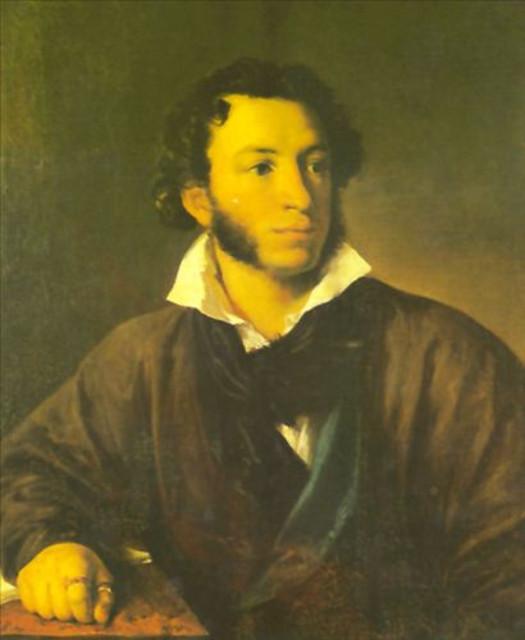
Alexander Pushkin

Classical
Opera
 Viberate Rank: 937043
 Viberate Rank: 937043
 Monthly ListenersFollowers
 Subscribers
 Followers
 Followers
 FansTop Spotify SongsTop YouTube VideosMonthly ListenersFeatured in Playlists
| Playlist | Followers | |
|---|---|---|
1 |  This is: Marina Rebeka Prima Classic | 3.04K |
Audience| City | Monthly Listeners | |
|---|---|---|
1 |  | 7 |
2 |  | 4 |
3 |  | 4 |
4 |  | 4 |
5 |  | 3 |
See full performance history, audience data, playlist activity, rankings, comparisons, and more in Viberate music analytics. Start with a free trial, then continue with a paid plan.
Alexander Pushkin’s Spotify Bio"The Russian Shakespeare" and the "father of modern Russian literature" are among the many extolments given, not undeservedly, to the great poet and dramatist Alexander Pushkin. A towering figure in the Romantic era, Pushkin was the first Russian to use common speech in his poetry and was the author of what is generally regarded as the greatest Russian literary work, the novel in verse Evgeny Onegin (1823-1831). Numerous other Pushkin works are considered supreme masterpieces, like the 1833 poem "The Bronze Horseman" and the 1830 drama "The Stone Guest." Pushkin wielded influence not only on subsequent generations of Russian writers, but on composers, as well: Evgeny Onegin was the source for Tchaikovsky's opera of the same name; Mussorgsky's Boris Godunov, Glinka's Ruslan and Lyudmila and Rachmaninov's The Miserly Knight were operas also inspired by identically titled Pushkin works.
Alexander Pushkin was born in Moscow on June 6, 1799. He received his early education from Russian and… French tutors. From age 12 Pushkin studied at the Imperial Lyceum near St. Petersburg, and soon began writing his first poems. Following his 1817 graduation, Pushkin accepted a post in the Foreign Affairs Ministry in St. Petersburg. His most important early works appeared shortly: Ruslan and Lyudmila (1820), Prisoner of the Caucasus (1820-1821), The Fountain of Bakhchisaray (1823), and several others. Compelled to leave St. Petersburg in 1820 owing to his supposed radical political ideas, Pushkin moved about the country over the next few years, eventually living as an exile near Pskov. Though Tsar Nicholas I granted him his freedom in 1826, Pushkin thenceforth remained under the censors' scrutiny.
In 1831 Pushkin married the beautiful Natalya Goncharova, who would soon become a favorite celebrity at the Imperial Court. Pushkin resented the lowly post he was given there as a means for the Tsar to invite Goncharova to the palace balls. Goncharova's imprudent lifestyle sent Pushkin deeply into debt, for despite the high quality of such works as the short story "The Queen of Spades" (1834) and the novel The Captain's Daughter (1836), Pushkin's income remained relatively modest.
Exacerbating the writer's unhappy marriage and growing financial problems were swirling rumors of his wife's infidelity, underscored by an anonymous note to Pushkin informing him he was a cuckold. As a result Pushkin challenged Goncharova's alleged lover, Baron Georges d'Anthès, to a duel. In the contest that followed Pushkin was shot and died on February 10, 1837.
Viberate is a music analytics platform built for A&Rs, artist managers, labels, booking agents, marketers, and artists.
It helps music professionals track artist growth, analyze audience data, monitor playlist activity, compare artists, follow song performance, and identify opportunities across the music market.
Public artist pages provide a free preview of selected artist data. Paid plans provide access to deeper analytics, historical data, charts, comparisons, playlist tools, exports, alerts, reports, and additional professional features.
Yes. Public Viberate artist pages provide selected artist analytics and music data for free.
Viberate also offers a 7-day free trial of the full platform. A credit card is required to start the trial. The trial includes access to the complete product so users can test deeper artist analytics, historical views, playlist insights, comparisons, charts, exports, alerts, and reporting features before choosing a paid plan.
Viberate provides artist analytics across streaming, playlists, social media, video, radio airplay, songs, and audience markets.
Users can analyze Spotify performance, Spotify and Apple Music playlists, YouTube activity, TikTok and Instagram growth, radio spins, song performance, audience locations, demographics, rankings, and overall artist momentum.
Artist profiles also connect to music charts, similar artists, and comparison tools, helping users benchmark performance and evaluate artists in context.
Viberate updates key artist and track data daily.
For followed artists and tracks, selected data is refreshed multiple times per day. This helps teams monitor playlist changes, streaming movement, audience growth, releases, and campaign performance with more current data.
Update frequency can vary depending on the metric and data source.
Yes. Viberate lets users compare up to five artists side by side across streaming, social media, audience, and engagement metrics.
Users can compare fanbase growth, audience demographics, locations, Spotify performance, social metrics, and other artist data over selected time periods.
Artist comparison can be used for A&R scouting, benchmarking, booking decisions, campaign planning, and evaluating artists with similar audiences or market positions.