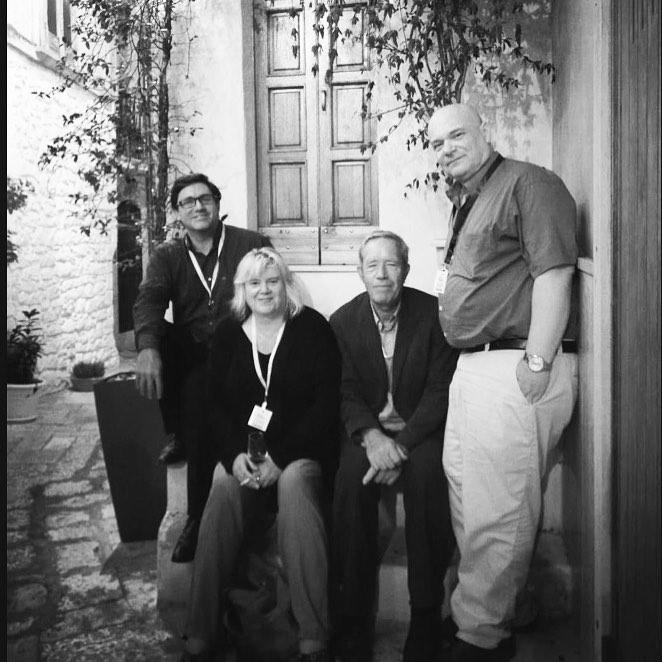
Alexander Balanescu

Classical
Chamber Music
 Viberate Rank: 439262
 Viberate Rank: 439262
 Monthly ListenersFollowers
 Subscribers
 Followers
 Followers
 FansTop Spotify SongsTop YouTube VideosMonthly ListenersFeatured in Playlists
| Playlist | Followers | |
|---|---|---|
1 | Pina Bausch Movie Soundtrack ccalleo | 23.96K |
2 |  NPR Classical NPR Music | 14.43K |
3 |  Pina Bausch: The music of her pieces (1974 - 2009) | M.S.P Ricardo Dávalos | 5.38K |
4 |  Alexander McQueen: Mind, Mythos, Muse NGV Melbourne | 4.13K |
5 |  Pina Bausch Wendy | 3.71K |
Audience| City | Monthly Listeners | |
|---|---|---|
1 |  | 210 |
2 |  | 114 |
3 |  | 61 |
4 |  | 57 |
5 | | 56 |
See full performance history, audience data, playlist activity, rankings, comparisons, and more in Viberate music analytics. Start with a free trial, then continue with a paid plan.
Alexander Balanescu’s Spotify BioViolinist and violist Alexander Balanescu leads the Balanescu String Quartet, a group that crosses the boundary between classical and popular music. Classically trained himself, Balanescu performed 20th century composers for three years, then decided to create a music addressed to more people than just music specialists.
Alexander Balanescu was born in Romania, but moved with his family to Israel in 1969 when his University-employed father decided to escape the regime of Ceaucsecu. Balanescu went on to study violin in London, and then in New York at Juilliard. He returned to London after his studies, and joined the renowned Arditti Quartet, a group strongly committed to new composers, performing up to 100 new works every year. Balanescu performed music by such composers as Ligeti and Xenakis in the Arditti Quartet for three years. He quit, feeling that much of Arditti's material addressed itself to too few people; that the music was aimed mostly at critics and other composers. In 1987,… he formed his own band, the Balanescu Quartet. With his Quartet, he kept working with modern composers, namely Michael Nyman and Gavin Bryars. Balanescu also began interacting with the pop world, performing with his Quartet on the Pet Shop Boys first tour (1989), as well as later working with David Byrne and John Lurie. In 1992, he paid hommage to Kraftwerk -- who he considered as important electronic composers as Stockhausen -- through the Balanescu Quartet's Possessed on Mute. Inspired by his return to Romania during their tour, he was inspired to write their next album, Luminitza which came out at the start of 1994 to much positive press. Also with the Quartet, Balanescu has performed on Bryars' 1995 release, in a televised contemporary opera, Camera and with Spiritualized Electric Mainline. He composed the score for Philip Haas' Angels and Insects, which was released in 1996, and was still active in the Balanescu Quartet as of the late '90s.
Viberate is a music analytics platform built for A&Rs, artist managers, labels, booking agents, marketers, and artists.
It helps music professionals track artist growth, analyze audience data, monitor playlist activity, compare artists, follow song performance, and identify opportunities across the music market.
Public artist pages provide a free preview of selected artist data. Paid plans provide access to deeper analytics, historical data, charts, comparisons, playlist tools, exports, alerts, reports, and additional professional features.
Yes. Public Viberate artist pages provide selected artist analytics and music data for free.
Viberate also offers a 7-day free trial of the full platform. A credit card is required to start the trial. The trial includes access to the complete product so users can test deeper artist analytics, historical views, playlist insights, comparisons, charts, exports, alerts, and reporting features before choosing a paid plan.
Viberate provides artist analytics across streaming, playlists, social media, video, radio airplay, songs, and audience markets.
Users can analyze Spotify performance, Spotify and Apple Music playlists, YouTube activity, TikTok and Instagram growth, radio spins, song performance, audience locations, demographics, rankings, and overall artist momentum.
Artist profiles also connect to music charts, similar artists, and comparison tools, helping users benchmark performance and evaluate artists in context.
Viberate updates key artist and track data daily.
For followed artists and tracks, selected data is refreshed multiple times per day. This helps teams monitor playlist changes, streaming movement, audience growth, releases, and campaign performance with more current data.
Update frequency can vary depending on the metric and data source.
Yes. Viberate lets users compare up to five artists side by side across streaming, social media, audience, and engagement metrics.
Users can compare fanbase growth, audience demographics, locations, Spotify performance, social metrics, and other artist data over selected time periods.
Artist comparison can be used for A&R scouting, benchmarking, booking decisions, campaign planning, and evaluating artists with similar audiences or market positions.