Albert Hammond

Rock
Pop Rock
Mainstream Pop
 Viberate Rank: 11663
 Viberate Rank: 11663
 Monthly ListenersFollowers
 Subscribers
 Followers
 Followers
 FansTop Spotify Songs
| Track | 7-Day Streams | |
|---|---|---|
1 | 454.55K | |
2 | 86.54K | |
3 | 72.73K | |
4 | 50.84K | |
5 | 43.46K |
Top YouTube Videos| Video | 7-Day Views | |
|---|---|---|
1 | 432.83K | |
2 | 113.65K | |
3 | 60.14K | |
4 | 55.15K | |
5 | 37.09K |
Monthly ListenersFeatured in Playlists| Playlist | Followers | |
|---|---|---|
1 |  Soft Rock Spotify | 3.55M |
2 |  70s Road Trip Spotify | 3.43M |
3 |  Canciones del Recuerdo Spotify | 3.00M |
4 |  Soft 70s Spotify | 1.19M |
5 |  70er Hits Spotify | 783.47K |
Audience| City | Monthly Listeners | |
|---|---|---|
1 |  | 45.75K |
2 |  | 29.22K |
3 |  | 17.93K |
4 |  | 16.89K |
5 | | 16.29K |
See full performance history, audience data, playlist activity, rankings, comparisons, and more in Viberate music analytics. Start with a free trial, then continue with a paid plan.
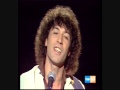
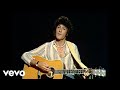
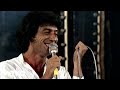
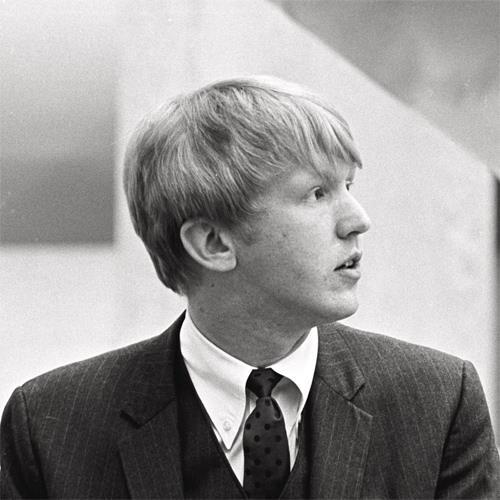
Albert Hammond’s Spotify BioAlbert Hammond is best remembered by casual listeners for his 1972 hit "It Never Rains in Southern California," an international success that peaked at number five on the U.S. singles charts and went Top Ten in Canada, Germany, Spain, Norway, and New Zealand. However, folks who read songwriting credits know he's also one of the most successful tunesmiths of the 1970s, '80s, and '90s, penning songs for the Hollies, Tina Turner, Leo Sayer, Chicago, Celine Dion, Whitney Houston, Diana Ross, Julio Iglesias & Willie Nelson, and many more. Hammond is a master of soft rock, delivering songs with affecting melodies and lyrics that tell relatable stories about love and heartache, and his best-known song (which was the title track of his debut album) is a splendid example of what he did best. Hammond is also fluent in Spanish and recorded a number of albums in that tongue, helping to earn him a sizable following in Spain. In the 2000s, he revived his recording career with releases like 2005's… Revolution of the Heart and 2016's In Symphony, and at the age of 80, he delivered one of his most personal and outspoken releases yet with 2024's Body of Work.
Albert Hammond was born in London, England on May 18, 1944. His family was from Gibraltar, and they were relocated to England for their safety during World War II. After the war in Europe ended, his parents took young Albert with them as they returned to Gibraltar, where he grew up. He became fluent in both English and Spanish, which would serve him well in his later career. His family lived modestly on his father's fireman's pay, and one of his early diversions was music -- he sang in church and became head choir boy. Hammond also became interested in popular music, taking up the guitar and singing for his own enjoyment.
Hammond reached his teens just as rock & roll was taking hold of British youth, and with his guitar, he began performing in public, singing numbers made famous by Dion for audiences of American servicemen. In 1958, Hammond and his friend Richard Cartwright began performing as a duo on the island, as well as in Spain. Hammond had become proficient on the guitar, and their vocals were good enough that they eventually became part of a band called the Diamond Boys, with Hammond quitting school to focus on his new career. The Diamond Boys, whose vocal influences included the Everly Brothers, the Kalin Twins, and the Brook Brothers, mostly covered English and Spanish rock & roll hits, though they also performed some of Hammond's original compositions. The Diamond Boys were good enough to make a steady living playing clubs in Casablanca, and were considered up-and-coming stars in Spain and on Gibraltar. They landed a recording contract with RCA Records, which led to the release of a 1963 EP that included their cover of Ray Charles' "What'd I Say," as well as Hammond's "New Orleans" and "Fools in Love." The group disbanded soon after, and Hammond and Cartwright eventually headed for England, where they briefly became a part of a band called Los Cincos Ricardos, who cut one single, a cover of the Kinks' "Most Exclusive Residence for Sale" back with Hammond's "It's All Over Now."
One of the members contributing to Los Cincos Ricardos' repertoire was Mike Hazelwood, who prompted Hammond to push his songwriting harder than his performing, altering the focus and direction of his early career. Hammond, in collaboration with Hazelwood and others, including Scott English ("Frisco Annie") and future star producer/songwriter Tony Macaulay, made a particular specialty out of writing American-style songs, trading in images and references from the United States. One Macaulay-Hammond song, "Oklahoma Sunday Morning," was even recorded by Glen Campbell in his pre-stardom days. Hammond and Hazelwood found their first success on a British television series entitled Oliver in the Overworld, for which they wrote all of the songs, among them a novelty tune called "Gimme Dat Ding." Hammond also picked up work as a session singer in London, appearing on sessions by Dave Dee, Dozy, Beaky, Mick & Tich. In 1967, Hammond, Hazelwood and their friend Steve Rowland formed the group Family Dogg, which managed to make some noise in the press and charted one single, "A Way of Life," in 1969. Their sales failed to live up to their publicity, and they broke up after a disappointing debut album, also called A Way of Life, whose studio band included Jimmy Page, John Paul Jones, and John Bonham, soon to become stars with Led Zeppelin. Hammond and Rowland also wrote and recorded several singles together, issued under various aliases, without making any impact on the charts.
While he wasn't making much headway as a performer, Hammond enjoyed a string of hits as a songwriter as the '60s drew to a close: "Little Arrows" by Leapy Lee in 1968, "Make Me an Island" and "You're Such a Good Looking Woman" by Irish singer Joe Dolan in 1969 and 1970, "Good Morning Freedom" by Blue Mink in 1970, "Gimme Dat Ding" by the Pipkins in 1970 (which was an unexpected hit on both sides of the Atlantic), and "Freedom Come, Freedom Go" by the Fortunes in 1971. Hammond also found time to sing on Michael Chapman's fourth album, 1971's Wrecked Again, and worked briefly with the group the Magic Lanterns, who cut his and Hazelwood's songs as well as other material. Hammond and Hazelwood came to the United States to work on a stage music that was never produced, and with time on his hands, Hammond began knocking on the doors of various record companies. After numerous rejections, he signed with a new label, Mums, which was co-founded by ex-Dunhill Records partner Bobby Roberts with distribution by Columbia Records, on the strength of a brace of new songs that he brought to the audition. A series of demos were strong enough to be released as singles, but it was "It Never Rains in Southern California," part of Hammond & Hazelwood's backlog of tunes and recorded in California with some of L.A.'s top session musicians, that broke Hammond as a recording artist. The song reached number five in America and became a million-seller around the world.
The accompanying album, 1972's It Never Rains in Southern California, also featured the songs "Down by the River" (which went Top 20 in Australia and hit the Easy Listening charts in America), "If You Gotta Break Another Heart" (later recorded by Cass Elliot), and "The Air That I Breathe," which was a major international hit by the Hollies. Hammond's follow-up album, 1973's The Free Electric Band (its title track salvaged from the unproduced musical), produced another international hit single with its title track, though it failed to crack the Top 40 in the United States, despite some strong regional airplay. 1974's Albert Hammond, produced by Simon & Garfunkel producer Roy Halee, included the song "I'm a Train," which became Hammond's last Top 40 hit in America. Working with Halee led to Hammond writing songs with Art Garfunkel, part of a major flurry of activity that included producing a single for Johnny Cash ("Praise the Lord and Pass the Soup," a Hammond-Hazelwood composition), and collaborating with Richard Carpenter and John Bettis ("I Need to Be in Love").
For 1975's 99 Miles from LA, Hammond wrote several songs in collaboration with Hal David, including the title track, which was a number one hit on the Easy Listening chart, though it only rose to number 91 on the Hot 100. The album was produced by Phil Ramone and included Hammond's version of "To All the Girls I've Loved Before," which would become a massive success for Julio Iglesias & Willie Nelson. Hammond had already enjoyed hits in Spain, and in 1976, he issued My Spanish Album, his first full album in that language. Its success would put a new spin on his career as a performer, and as his star rose in Europe, he would cut four more LPs in Spanish between 1977 and 1981 (Mi Album di Recuerdos, Albert Louis Hammond, Al Otro Lado del Sol, and Comprenderte). Hammond also had a big hit in the Netherlands with 1986's Hammond & West, a collaboration with popular Dutch vocalist Albert West, and he continued to record occasionally in English, with 1989's Best of Me finding him cutting new versions of some of his best-known tracks.
Recording took a back seat to performing and writing in the mid-'80s, with Starship ("Nothing's Gonna Stop Us Now"), Chicago ("I Don't Wanna Live Without Your Love"), Whitney Houston ("One Moment in Time"), and Bonnie Tyler ("Where Were You") among the many artists who charted with his tunes. Hammond only released one album in the '90s, 1996's Coplas and Songs, but he returned in 2005 with Revolution of the Heart, a collection of fresh songs recorded for the German SPV label. 2010's Legend was an ambitious two-disc set that saw Hammond re-recording some of his best-known songs with an impressive roster of guests including Cliff Richard, Al Stewart, Bonnie Tyler, Julio Iglesias, and Dani Martin. It also included one new song, "Changing Me," which Hammond wrote and recorded with his son Albert Hammond, Jr., who had become a star in his own right as guitarist with the Strokes. 2013's Legend, Vol. 2 once again saw Hammond revisiting his back catalog, this time with him handling all the vocals himself. After another LP of new interpretations of his songbook -- 2016's In Symphony, this time with lush orchestral arrangements -- Hammond set to work on a new set of songs, many dealing with personal themes and social commentary, and the result was 2024's Body of Work. ~ Bruce Eder & Mark Deming, Rovi
Viberate is a music analytics platform built for A&Rs, artist managers, labels, booking agents, marketers, and artists.
It helps music professionals track artist growth, analyze audience data, monitor playlist activity, compare artists, follow song performance, and identify opportunities across the music market.
Public artist pages provide a free preview of selected artist data. Paid plans provide access to deeper analytics, historical data, charts, comparisons, playlist tools, exports, alerts, reports, and additional professional features.
Yes. Public Viberate artist pages provide selected artist analytics and music data for free.
Viberate also offers a 7-day free trial of the full platform. A credit card is required to start the trial. The trial includes access to the complete product so users can test deeper artist analytics, historical views, playlist insights, comparisons, charts, exports, alerts, and reporting features before choosing a paid plan.
Viberate provides artist analytics across streaming, playlists, social media, video, radio airplay, songs, and audience markets.
Users can analyze Spotify performance, Spotify and Apple Music playlists, YouTube activity, TikTok and Instagram growth, radio spins, song performance, audience locations, demographics, rankings, and overall artist momentum.
Artist profiles also connect to music charts, similar artists, and comparison tools, helping users benchmark performance and evaluate artists in context.
Viberate updates key artist and track data daily.
For followed artists and tracks, selected data is refreshed multiple times per day. This helps teams monitor playlist changes, streaming movement, audience growth, releases, and campaign performance with more current data.
Update frequency can vary depending on the metric and data source.
Yes. Viberate lets users compare up to five artists side by side across streaming, social media, audience, and engagement metrics.
Users can compare fanbase growth, audience demographics, locations, Spotify performance, social metrics, and other artist data over selected time periods.
Artist comparison can be used for A&R scouting, benchmarking, booking decisions, campaign planning, and evaluating artists with similar audiences or market positions.