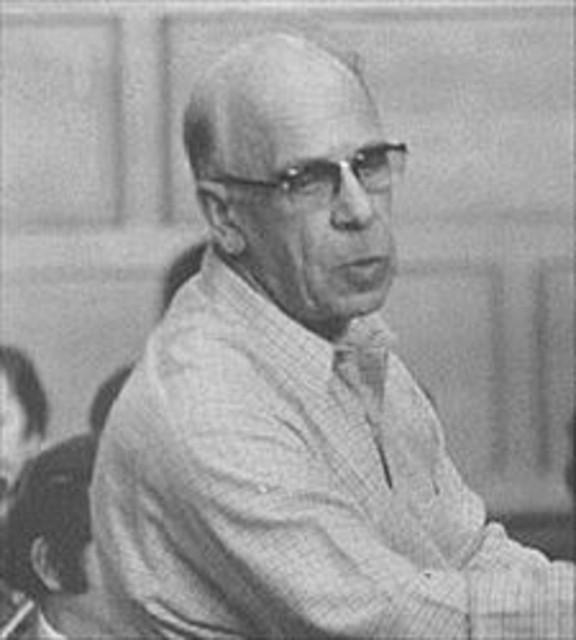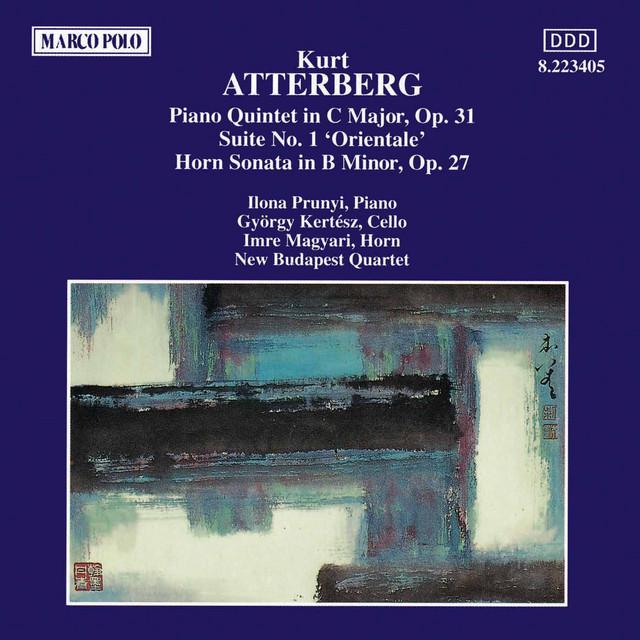
Alan Hovhaness

Jazz
Jazz Fusion
 Viberate Rank: 261373
 Viberate Rank: 261373
 Monthly ListenersFollowers
 Subscribers
 Followers
 Followers
 FansTop Spotify SongsTop YouTube VideosMonthly ListenersFeatured in Playlists
| Playlist | Followers | |
|---|---|---|
1 | phillysblunt | 127.21K |
2 |  Easy Listening Classical For Study, Work, Relaxing, Chillout, Anything But Serious Listening Ulysses' Classical | 99.24K |
3 | Johns Hopkins Psychedelic Therapy Playlist SoundMind Psychedelics | 70.21K |
4 |  FOCUS BOOST unCLASSIFIED | 44.18K |
5 |  NPR Classical NPR Music | 14.43K |
Audience| City | Monthly Listeners | |
|---|---|---|
1 | | 233 |
2 |  | 206 |
3 | | 170 |
4 | | 169 |
5 |  | 137 |
See full performance history, audience data, playlist activity, rankings, comparisons, and more in Viberate music analytics. Start with a free trial, then continue with a paid plan.
Alan Hovhaness’ Spotify BioAlan Hovhaness, one of the most prolific composers of the twentieth century, left behind a legacy of hundreds of works, including more than 60 symphonies, numerous choral works, ballets, and operas, and all manner of chamber music. Hovhaness, born of Scottish and Armenian descent in 1911, took an early interest in composition, and by the age of 13 had composed two operas. After studies at the New England Conservatory with Frederick Converse, Hovhaness made a favorable impression with his first acknowledged symphony, Exile, when it was performed by the BBC Symphony in London in 1939. The works of Hovhaness' early period both reflect the influence of Renaissance music and utilize the harmonies of the late nineteenth century. During the 1930s the composer developed an interest in Indian music, which became one of the most pervasive influences upon his own works from that time on. In 1942 he received a scholarship to the Berkshire Music Center at Tanglewood, where he attended composition… seminars led by Aaron Copland (assisted by Leonard Bernstein). The experience, unfortunately, was less than positive, since both Copland and Bernstein were highly critical of Hovhaness' music. The ridicule he experienced led Hovhaness to leave Tanglewood early. Discouraged, he destroyed many of his early works. Serendipitously, though, the composer's return to Boston was followed by a meeting with the Greek painter and psychic Herman DiGiovanno, who convinced him to study the music of his Armenian ancestry. Further immersion in Armenian church music led Hovhaness to the works of Komitas Vartabed, a priest and composer who died in 1936 and whom Hovhaness described as the "Armenian Bartók." Hovhaness' discovery of Armenian music had a direct effect upon his own works, which became more rhythmically and contrapuntally active and began to reflect the improvisatory nature of Armenian church melodies.
During the 1940s Hovhaness furthered his study of the Armenian culture, playing organ at an Armenian church and learning the Armenian language, and took a further interest in the Eastern philosophies. The growing success of his music in the 1950s led to several important grants and commissions; a grant from the National Institute of Arts and Letters in 1951 allowed him to move to New York. After composing Ardent Song (1954), a ballet score for Martha Graham, Hovhaness toured the Far East. Still shunned by the mainstream musical establishment of the time, he continued to receive recognition from without, including Guggenheim Fellowships in 1953, 1954, and 1958. A commission from the Houston Symphony, the Symphony No. 2 ("Mysterious Mountain"; 1955) provided Hovhaness his first popular success. The work was auspiciously premiered by Leopold Stokowski, and the redoubtable Fritz Reiner made a highly regarded recording of it with the Chicago Symphony.
After receiving a Fulbright Fellowship in 1959, Hovhaness again toured the East and was the first Western composer invited to participate in the music festival in Madras, India. He was also received warmly in Japan, where he made television appearances and conducted his music with the Tokyo Symphony. During a return to Asia in 1962 on a Rockefeller Grant, Hovhaness studied the ancient court music of Japan and Korea.
The aural result of the composer's immersion in Eastern culture is a musical language invested with a sense of mysticism and spirituality. Among his voluminous catalogue, Hovhaness' colorful orchestral works have maintained the greatest popularity among audiences; notable examples include the Symphony No. 17 ("Symphony for Metal Orchestra"; 1963); And God Created Great Whales (1970), which incorporates recordings of actual whale "songs," and the Symphony No. 50 ("Mount St. Helen's"; 1982).
Viberate is a music analytics platform built for A&Rs, artist managers, labels, booking agents, marketers, and artists.
It helps music professionals track artist growth, analyze audience data, monitor playlist activity, compare artists, follow song performance, and identify opportunities across the music market.
Public artist pages provide a free preview of selected artist data. Paid plans provide access to deeper analytics, historical data, charts, comparisons, playlist tools, exports, alerts, reports, and additional professional features.
Yes. Public Viberate artist pages provide selected artist analytics and music data for free.
Viberate also offers a 7-day free trial of the full platform. A credit card is required to start the trial. The trial includes access to the complete product so users can test deeper artist analytics, historical views, playlist insights, comparisons, charts, exports, alerts, and reporting features before choosing a paid plan.
Viberate provides artist analytics across streaming, playlists, social media, video, radio airplay, songs, and audience markets.
Users can analyze Spotify performance, Spotify and Apple Music playlists, YouTube activity, TikTok and Instagram growth, radio spins, song performance, audience locations, demographics, rankings, and overall artist momentum.
Artist profiles also connect to music charts, similar artists, and comparison tools, helping users benchmark performance and evaluate artists in context.
Viberate updates key artist and track data daily.
For followed artists and tracks, selected data is refreshed multiple times per day. This helps teams monitor playlist changes, streaming movement, audience growth, releases, and campaign performance with more current data.
Update frequency can vary depending on the metric and data source.
Yes. Viberate lets users compare up to five artists side by side across streaming, social media, audience, and engagement metrics.
Users can compare fanbase growth, audience demographics, locations, Spotify performance, social metrics, and other artist data over selected time periods.
Artist comparison can be used for A&R scouting, benchmarking, booking decisions, campaign planning, and evaluating artists with similar audiences or market positions.