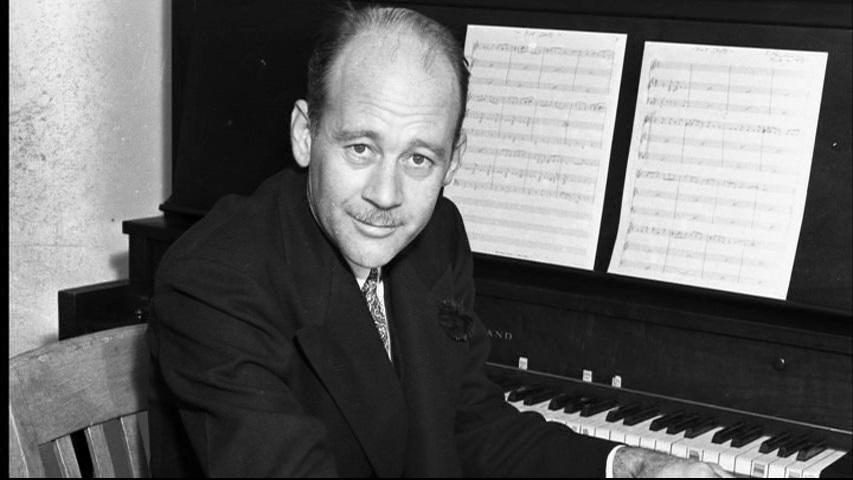
Al Hoffman

Pop
Mainstream Pop
Big band Jazz
 Viberate Rank: 180833
 Viberate Rank: 180833
 Monthly ListenersFollowers
 Subscribers
 Followers
 Followers
 FansTop Spotify Songs
| Track | 7-Day Streams | |
|---|---|---|
1 | 23.07K | |
2 | 18.97K | |
3 | 9.57K | |
4 | 9.02K | |
5 | 7.40K |
Top YouTube VideosMonthly ListenersFeatured in Playlists| Playlist | Followers | |
|---|---|---|
1 |  Disney Classical Spotify | 412.45K |
2 |  Movie Soundtracks & Cinematic Music (Classical & Instrumental) Tobias Schneider | 217.42K |
3 |  MoogTube Spotify | 132.70K |
4 |  1930's-1950's Swing & Jazz michaeldil | 126.87K |
5 |  old vintage music 📻📺🕰 natalie.G | 63.14K |
Audience| City | Monthly Listeners | |
|---|---|---|
1 |  | 1.74K |
2 |  | 1.73K |
3 | | 1.71K |
4 |  | 1.33K |
5 | | 1.33K |
See full performance history, audience data, playlist activity, rankings, comparisons, and more in Viberate music analytics. Start with a free trial, then continue with a paid plan.
Al Hoffman’s Spotify BioAmerican pop composer Al Hoffman wrote hit songs and scores for Broadway and Hollywood from the 1930s through the late '50s. Born in 1902 in Minsk, Russia, Hoffman emigrated to the U.S. with his family in 1908. They settled in Seattle, WA, where Hoffman grew up and eventually led a band. He moved to New York in 1928, got a job drumming in a nightclub, and began composing two years later. His first hit came quickly, with "I Don't Mind Walkin' in the Rain" (1930). He followed this up with a number of hits over the next few years, including "Heartaches" (1931), "Auf Wiedersehen, My Dear" (1932), and "I Saw Stars" (1934). Hoffman went to England in 1934 to write for the stage and cinema, staying until 1937. During this time, Hoffman worked with his chief collaborator since the early '30s, Al Goodhart, and with Maurice Sigler. Over the years, he also collaborated with Ed Nelson, Sammy Lerner, and Jerry Livingston. Hoffman also collaborated with Mack David on the score of Disney's… Cinderella, which includes such songs as "A Dream Is a Wish Your Heart Makes" and "Bibbidi-Bobbidi-Boo" (1949). Some of Hoffman's best-known songs include "I Apologize," (1931), "Fit As a Fiddle" (1932), "Black Coffee" (1935), "I'm in a Dancing Mood" (1936), "On the Bumpy Road to Love" (1938), "Chi-Baba, Chi-Baba" (1947), "Takes Two to Tango," (1953) and his final hit, 1959's"La Plume de Ma Tante." ~ Joslyn Layne
Viberate is a music analytics platform built for A&Rs, artist managers, labels, booking agents, marketers, and artists.
It helps music professionals track artist growth, analyze audience data, monitor playlist activity, compare artists, follow song performance, and identify opportunities across the music market.
Public artist pages provide a free preview of selected artist data. Paid plans provide access to deeper analytics, historical data, charts, comparisons, playlist tools, exports, alerts, reports, and additional professional features.
Yes. Public Viberate artist pages provide selected artist analytics and music data for free.
Viberate also offers a 7-day free trial of the full platform. A credit card is required to start the trial. The trial includes access to the complete product so users can test deeper artist analytics, historical views, playlist insights, comparisons, charts, exports, alerts, and reporting features before choosing a paid plan.
Viberate provides artist analytics across streaming, playlists, social media, video, radio airplay, songs, and audience markets.
Users can analyze Spotify performance, Spotify and Apple Music playlists, YouTube activity, TikTok and Instagram growth, radio spins, song performance, audience locations, demographics, rankings, and overall artist momentum.
Artist profiles also connect to music charts, similar artists, and comparison tools, helping users benchmark performance and evaluate artists in context.
Viberate updates key artist and track data daily.
For followed artists and tracks, selected data is refreshed multiple times per day. This helps teams monitor playlist changes, streaming movement, audience growth, releases, and campaign performance with more current data.
Update frequency can vary depending on the metric and data source.
Yes. Viberate lets users compare up to five artists side by side across streaming, social media, audience, and engagement metrics.
Users can compare fanbase growth, audience demographics, locations, Spotify performance, social metrics, and other artist data over selected time periods.
Artist comparison can be used for A&R scouting, benchmarking, booking decisions, campaign planning, and evaluating artists with similar audiences or market positions.