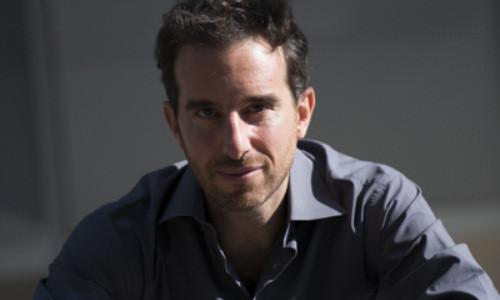
Aaron Goldberg

Jazz
Free Jazz
Smooth Jazz
 Viberate Rank: 174865
 Viberate Rank: 174865
 Monthly ListenersFollowers
 Subscribers
 Followers
 Followers
 FansTop Spotify Songs
| Track | 7-Day Streams | |
|---|---|---|
1 | 1.10K | |
2 | 1.05K | |
3 | 646 | |
4 | 642 | |
5 | 476 |
Top YouTube VideosMonthly ListenersFeatured in Playlists| Playlist | Followers | |
|---|---|---|
1 |  Jazzy Dinner Spotify | 417.94K |
2 |  Real Book - Jazz standards/classics Anders Garbom Bjørklund | 13.79K |
3 |  JAZZ FUSION FUNK AND SOUL Jazz Fusion Funk&Soul | 11.91K |
4 |  Jazz Cafe indiemusic | 9.18K |
5 | Cigar Lounge Jazz AGalán | 8.67K |
Audience| City | Monthly Listeners | |
|---|---|---|
1 | | 138 |
2 |  | 97 |
3 |  | 96 |
4 | | 82 |
5 | | 80 |
See full performance history, audience data, playlist activity, rankings, comparisons, and more in Viberate music analytics. Start with a free trial, then continue with a paid plan.
Aaron Goldberg’s Spotify BioA sophisticated jazz pianist, Aaron Goldberg has a harmonically advanced aesthetic palette and a bent toward thoughtful modern creative improvisation. A Harvard graduate, Goldberg initially came to prominence in the early 2000s as a member of saxophonist Joshua Redman's band. On his own, he has issued a handful of highly regarded trio and quartet dates, including 2006's Worlds and 2010's Home.
Born in Boston, Massachusetts in 1974, Goldberg started playing piano around age 12 and gained early experience studying in high school with such luminaries as Bob Sinicrope and Jerry Bergonzi. He initially honed his skills at the New School for Jazz and Contemporary Music before enrolling at Harvard. However, rather than focusing on a music degree, he instead pursued history and science studies, eventually graduating magna cum laude in 1996 from the university's Mind Brain Behavior Interfaculty Initiative program. While at Harvard, he continued to play music, often performing at the noted Boston… jazz spot Wally's, and even earning the International Association of Jazz Educators' Clifford Brown/Stan Getz Fellowship. After graduating, Goldberg shifted his focus back to music, leading his own groups, and joining saxophonist Redman's band. As a leader, he debuted with 1999's Turning Point, a warmly urbane session featuring Redman and saxophonist Mark Turner.
His sophomore album as leader, 2001's Unfolding, also featured fellow Redman bandmate bassist Reuben Rogers and drummer Eric Harland. Coming off the road with Redman in 2002, Goldberg settled in New York, where continued to find work with luminaries like Jimmy Greene, Wayne Escoffery, Kurt Rosenwinkel, and others. He also traveled, spending time in Brazil and touring South America with vocalist Madeleine Peyroux. He also became a member of the Jazz at Lincoln Center Orchestra. In 2006, he returned to his solo work with Worlds, which once again featured Rogers and Harland.
Around this time, Goldberg returned to school, enrolling at Tufts University where he graduated in 2010 with a Master's degree in Analytic Philosophy. After his graduation, he issued the quartet date Home with Mark Turner, followed a year later by Bienestan with Argentinian pianist Guillermo Klein. He also issued the trio session Yes! with bassist Omer Avital and drummer Ali Jackson, Jr. Also during this period, in response to the 2010 earthquake in Haiti, Goldberg led free workshops in Haiti, and was involved in the 2014 fundraiser for the Haitian Education and Leadership Program. He then returned to his trio with Rogers and Harland on 2015's The Now, which also included a guest spot by guitarist Rosenwinkel. In 2018, Goldberg debuted a new trio date, At the Edge of the World, featuring bassist Matt Penman and drummer Leon Parker. ~ Matt Collar, Rovi
Viberate is a music analytics platform built for A&Rs, artist managers, labels, booking agents, marketers, and artists.
It helps music professionals track artist growth, analyze audience data, monitor playlist activity, compare artists, follow song performance, and identify opportunities across the music market.
Public artist pages provide a free preview of selected artist data. Paid plans provide access to deeper analytics, historical data, charts, comparisons, playlist tools, exports, alerts, reports, and additional professional features.
Yes. Public Viberate artist pages provide selected artist analytics and music data for free.
Viberate also offers a 7-day free trial of the full platform. A credit card is required to start the trial. The trial includes access to the complete product so users can test deeper artist analytics, historical views, playlist insights, comparisons, charts, exports, alerts, and reporting features before choosing a paid plan.
Viberate provides artist analytics across streaming, playlists, social media, video, radio airplay, songs, and audience markets.
Users can analyze Spotify performance, Spotify and Apple Music playlists, YouTube activity, TikTok and Instagram growth, radio spins, song performance, audience locations, demographics, rankings, and overall artist momentum.
Artist profiles also connect to music charts, similar artists, and comparison tools, helping users benchmark performance and evaluate artists in context.
Viberate updates key artist and track data daily.
For followed artists and tracks, selected data is refreshed multiple times per day. This helps teams monitor playlist changes, streaming movement, audience growth, releases, and campaign performance with more current data.
Update frequency can vary depending on the metric and data source.
Yes. Viberate lets users compare up to five artists side by side across streaming, social media, audience, and engagement metrics.
Users can compare fanbase growth, audience demographics, locations, Spotify performance, social metrics, and other artist data over selected time periods.
Artist comparison can be used for A&R scouting, benchmarking, booking decisions, campaign planning, and evaluating artists with similar audiences or market positions.