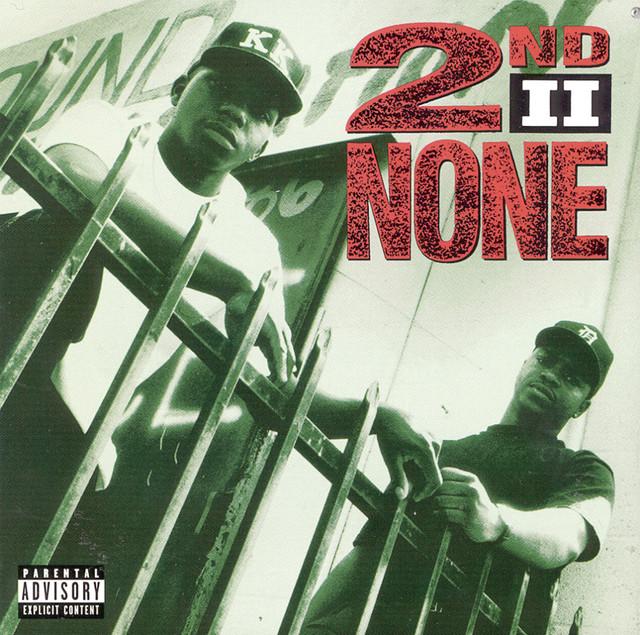
2nd II None

Hip Hop
Contemporary Hip Hop
 Viberate Rank: 63560
 Viberate Rank: 63560
 Monthly ListenersFollowers
 Subscribers
 Followers
 Followers
 FansTop Spotify Songs
| Track | 7-Day Streams | |
|---|---|---|
1 | 29.33K | |
2 | 12.85K | |
3 | 12.09K | |
4 | 10.62K | |
5 | 8.96K |
Top YouTube VideosMonthly ListenersFeatured in Playlists| Playlist | Followers | |
|---|---|---|
1 |  Old School Hip Hop Filtr Sweden | 779.25K |
2 |  G-funk - West Coast Oldschool Mix Krakus | 78.13K |
3 | BLACK SUMMER COOKOUT King Retro 1 | 67.01K |
4 |  The Sopranos Soundtrack - Full Playlist cullen_strang | 51.45K |
5 |  90's Rap Instrumentals Sepehr Aman | 50.23K |
Audience| City | Monthly Listeners | |
|---|---|---|
1 | | 6.99K |
2 | | 2.60K |
3 | | 2.07K |
4 | | 2.02K |
5 | | 1.81K |
See full performance history, audience data, playlist activity, rankings, comparisons, and more in Viberate music analytics. Start with a free trial, then continue with a paid plan.
2nd II None’s Spotify BioIn the early 1990’s the Compton, California duo 2nd II None burst onto the scene with their self-titled debut album. Produced by DJ Quik and Co-Produced by 2nd II None, the album introduced the rap world to KK and Gangsta D.
Cousins Dee & KK formed 2ND II NONE in Compton, California in 1990. The group signed as the first West Coast rap group to an East Coast based label (Profile Records).
Being called the “West Coast RUN DMC”, they were the first rap group to bring their unique style of music by fusing R&B hooks and melodic harmonies.
Following their debut album was “Classic 220” (1999) and “Compton Muzik” (2014) dedicated to their new and longtime fans!
Aside from their production albums “Didn’t Mean to Turn You On” was a single produced by 2nd II None along with DJ Quik that on landed #5 on the “Above The Rim” soundtrack.
This rap duo has been providing fans for years with soulful melodic vocals, club cranking beats, and slick lyrical content. From street slapper bass and original… production coupled with their knowledge of where the streets have taken music.
Dee and KK have once again shown their contribution to the current Hip-Hop/Rap scene that is so evident in today’s artist.
Viberate is a music analytics platform built for A&Rs, artist managers, labels, booking agents, marketers, and artists.
It helps music professionals track artist growth, analyze audience data, monitor playlist activity, compare artists, follow song performance, and identify opportunities across the music market.
Public artist pages provide a free preview of selected artist data. Paid plans provide access to deeper analytics, historical data, charts, comparisons, playlist tools, exports, alerts, reports, and additional professional features.
Yes. Public Viberate artist pages provide selected artist analytics and music data for free.
Viberate also offers a 7-day free trial of the full platform. A credit card is required to start the trial. The trial includes access to the complete product so users can test deeper artist analytics, historical views, playlist insights, comparisons, charts, exports, alerts, and reporting features before choosing a paid plan.
Viberate provides artist analytics across streaming, playlists, social media, video, radio airplay, songs, and audience markets.
Users can analyze Spotify performance, Spotify and Apple Music playlists, YouTube activity, TikTok and Instagram growth, radio spins, song performance, audience locations, demographics, rankings, and overall artist momentum.
Artist profiles also connect to music charts, similar artists, and comparison tools, helping users benchmark performance and evaluate artists in context.
Viberate updates key artist and track data daily.
For followed artists and tracks, selected data is refreshed multiple times per day. This helps teams monitor playlist changes, streaming movement, audience growth, releases, and campaign performance with more current data.
Update frequency can vary depending on the metric and data source.
Yes. Viberate lets users compare up to five artists side by side across streaming, social media, audience, and engagement metrics.
Users can compare fanbase growth, audience demographics, locations, Spotify performance, social metrics, and other artist data over selected time periods.
Artist comparison can be used for A&R scouting, benchmarking, booking decisions, campaign planning, and evaluating artists with similar audiences or market positions.