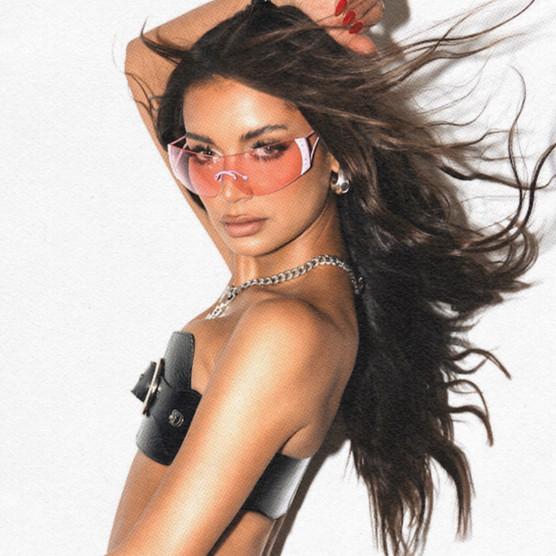
Wynter Gordon

Electronic
House
 Viberate Rank: 40624
 Viberate Rank: 40624
 Monthly ListenersFollowers
 Subscribers
 Followers
 Followers
 FansTop Spotify Songs
| Track | 7-Day Streams | |
|---|---|---|
1 | 385.72K | |
2 | 146.33K | |
3 | 11.31K | |
4 | 6.61K | |
5 | 6.06K |
Top YouTube VideosMonthly ListenersFeatured in Playlists| Playlist | Followers | |
|---|---|---|
1 |  Dance Classics Spotify | 1.82M |
2 |  clubbing like it's the 2000's kass !! | 982.94K |
3 |  2000s GIRLY BANGERZ 🎀 Niharika | 380.64K |
4 |  Sluttiest songs I could ever find aromikey | 330.35K |
5 |  AVICII - Essentials Avicii | 226.58K |
Audience| City | Monthly Listeners | |
|---|---|---|
1 |  | 29.73K |
2 | | 26.06K |
3 | | 18.09K |
4 |  | 14.79K |
5 | | 11.88K |
See full performance history, audience data, playlist activity, rankings, comparisons, and more in Viberate music analytics. Start with a free trial, then continue with a paid plan.
Wynter Gordon’s Spotify BioSince co-writing Mary J. Blige's "Gonna Breakthrough" (2005), Diana Gordon has had a winding career as a composer, producer, and vocalist, bounding as a recording artist between pop-oriented club tracks and bedroom slow jams, topping Billboard's Dance Club chart with "Dirty Talk" (2010), issuing the With the Music I Die EP (2011), and self-releasing the ballad-oriented Pure EP (2018). All the while, the artist alternately known as Wynter Gordon has been featured on tracks headlined by EDM producers such as David Guetta, Steve Aoki, and Laidback Luke, and has co-written songs for numerous artists, including Flo Rida (the Top Five pop hit "Sugar") and Beyoncé (three tracks off Lemonade).
Diana Gordon developed her talents for dancing, songwriting, and singing as a youngster in her native Queens. Shortly after attending LaGuardia High School of Music & Art and Performing Arts in Manhattan, she landed her first writing credit on Mary J. Blige's "Gonna Breakthrough," a central track on the… singer's multi-platinum 2005 album The Breakthrough. This led to an assortment of writing credits highlighted by Flo Rida's "Sugar," a number five pop hit in 2009. Gordon also stepped out from the background in 2009 to be featured on David Guetta's "Toyfriend." The following year, Gordon made her debut as a headlining artist for the Atlantic-distributed Big Beat label with "Dirty Talk," which topped Billboard's Dance Club Songs chart. By year's end, Big Beat compiled The First Dance, an EP-sized set that gathered previously released tracks, remixes, and new material. An EP of strictly new songs, With the Music I Die, followed in 2011.
During the next few years, Gordon continued to mix background and foreground output, writing for Ciara and Angel Haze, and writing and appearing on tracks by Steve Aoki ("Ladi Dadi"), Laidback Luke ("Speak Up"), and Major Lazer ("Keep Cool"). In 2015, a brief recording association with EMI's Harvest division yielded Five Needle, an EP of dramatic yet atmospheric pop. A pair of sonically denser, slightly left-of-center singles for 4AD were released in 2016, the same year Gordon's name appeared in the writing credits beneath three titles -- "Don't Hurt Yourself," "Sorry," and "Daddy Lessons" -- on Beyoncé's platinum Lemonade. Gordon returned as an independent artist in 2018 with Pure, a small batch of frank, contemporary ballads. ~ Andy Kellman, Rovi
Viberate is a music analytics platform built for A&Rs, artist managers, labels, booking agents, marketers, and artists.
It helps music professionals track artist growth, analyze audience data, monitor playlist activity, compare artists, follow song performance, and identify opportunities across the music market.
Public artist pages provide a free preview of selected artist data. Paid plans provide access to deeper analytics, historical data, charts, comparisons, playlist tools, exports, alerts, reports, and additional professional features.
Yes. Public Viberate artist pages provide selected artist analytics and music data for free.
Viberate also offers a 7-day free trial of the full platform. A credit card is required to start the trial. The trial includes access to the complete product so users can test deeper artist analytics, historical views, playlist insights, comparisons, charts, exports, alerts, and reporting features before choosing a paid plan.
Viberate provides artist analytics across streaming, playlists, social media, video, radio airplay, songs, and audience markets.
Users can analyze Spotify performance, Spotify and Apple Music playlists, YouTube activity, TikTok and Instagram growth, radio spins, song performance, audience locations, demographics, rankings, and overall artist momentum.
Artist profiles also connect to music charts, similar artists, and comparison tools, helping users benchmark performance and evaluate artists in context.
Viberate updates key artist and track data daily.
For followed artists and tracks, selected data is refreshed multiple times per day. This helps teams monitor playlist changes, streaming movement, audience growth, releases, and campaign performance with more current data.
Update frequency can vary depending on the metric and data source.
Yes. Viberate lets users compare up to five artists side by side across streaming, social media, audience, and engagement metrics.
Users can compare fanbase growth, audience demographics, locations, Spotify performance, social metrics, and other artist data over selected time periods.
Artist comparison can be used for A&R scouting, benchmarking, booking decisions, campaign planning, and evaluating artists with similar audiences or market positions.