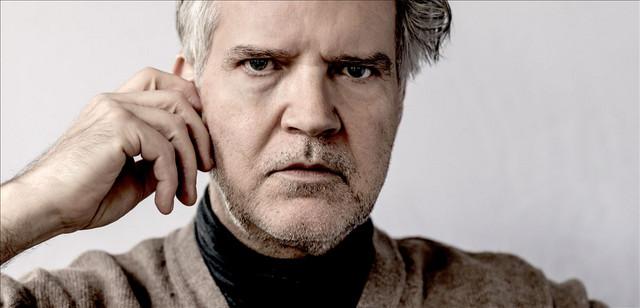
World Party

Rock
Alternative Rock
Folk Rock
Pop Rock
 Viberate Rank: 67929
 Viberate Rank: 67929
 Monthly ListenersFollowers
 Subscribers
 Followers
 Followers
 FansTop Spotify Songs
| Track | 7-Day Streams | |
|---|---|---|
1 | 24.78K | |
2 | 21.21K | |
3 | 11.61K | |
4 | 9.25K | |
5 | 7.50K |
Top YouTube Videos| Video | 7-Day Views | |
|---|---|---|
1 | 10.75K | |
2 | 4.17K | |
3 | 1.86K | |
4 | 1.61K | |
5 | 1.06K |
Monthly ListenersFeatured in Playlists| Playlist | Followers | |
|---|---|---|
1 | Classic Rock Greatest Hits Scott Pruden | 341.38K |
2 | 90's Grunge/Rock prevypicklebear | 328.23K |
3 |  Now 1 - 114 (1983 - 2023) Now That's What I Call Music 1 - 114 abundantmusic | 56.69K |
4 |  90s Rock Coffee Shop Riverine Music | 35.44K |
5 | 80's New Wave Pascal Amiaud | 31.90K |
Audience| City | Monthly Listeners | |
|---|---|---|
1 |  | 6.69K |
2 | | 6.12K |
3 | | 5.53K |
4 | | 4.52K |
5 | | 3.13K |
See full performance history, audience data, playlist activity, rankings, comparisons, and more in Viberate music analytics. Start with a free trial, then continue with a paid plan.
World Party’s Spotify BioWorld Party was the longtime musical project of Welsh-born musician and songwriter Karl Wallinger. A prodigiously talented multi-instrumentalist with a fondness for writing thoughtful, Beatlesque pop, Wallinger released five World Party albums, garnering critical acclaim and yielding a small clutch of hits without ever really lodging himself firmly into the mainstream. Before breaking through with 1986's "Ship of Fools," he served as a member of the Waterboys, contributing heavily to their 1985 album This Is the Sea. He then formed World Party as a studio outlet for his own material. Like Prince, whom he greatly admired, Wallinger played nearly every instrument on his debut album, a trend he maintained on each subsequent release with occasional help from a rotating cast of bandmates. 1990's Goodbye Jumbo, World Party's second album, is widely recognized as their artistic masterpiece and contains some of their best-known songs including "Put the Message in the Box" and "Way Down Now."… Three years later Bang! gave Wallinger his highest berth on the U.K. albums chart, reaching number two. The band's popularity faded in the latter part of the decade, though 1997's Egyptology produced Wallinger's only U.K. chart-topper. Ironically, it came at the hands of British pop star Robbie Williams, whose 1999 cover of "She's the One" became a global hit. Wallinger suffered a brain aneurysm after 2000's Dumbing Up and though he eventually recovered enough to resume touring, it proved to be the final World Party album released during his lifetime. The expansive 2012 box set Arkeology unearthed rarities and previously unheard songs from Wallinger's personal vault, and he continued to write and record until his death in March 2024.
Born in Prestatyn, Wales, Wallinger received musical training at the prestigious English schools Eton College and Charterhouse, though it was his love of '60s pop and rock acts like the Beatles, the Kinks, Bob Dylan, and the Beach Boys that most influenced his creative direction. He was part of a short-lived band, Quasimodo, which later evolved into the Alarm, after which he moved to London and worked as a clerk in music publishing. After playing in a handful of local bands and serving as musical director of a West End production of the Rocky Horror Picture Show, he joined the Waterboys. As a session musician, Wallinger had contributed parts to their first two albums, and bandleader Mike Scott asked him to become a full-fledged member for 1985's This Is the Sea. Although his skills were put to good use -- he co-produced several songs, played a number of different instruments, and co-wrote "Don't Bang the Drum" -- the Waterboys ultimately served Scott's vision and Wallinger struck out on his own after the album's release.
He signed with the Waterboys' label, Ensign Records, and created World Party essentially as a solo project. He set up his own studio in the Bedfordshire town of Woburn and recorded his debut album, Private Revolution, almost entirely on his own. Among its few guest musicians were fellow Waterboys Anthony Thistlewaite and Steve Wickham along with Sinéad O'Connor, whose own debut he had worked on. Rather than credit himself as the performer of all other instruments, Wallinger created pseudonyms like Millennium Mills and Rufus Dove which he listed in the album's liner notes. Private Revolution was released in March 1987 and performed surprisingly well, especially in the U.S. where its lead single, "Ship of Fools," was a Top 40 hit. Musically, World Party created an artful synthesis of classic psych-pop, folk, funk, and rock that stood out amid the late-'80s pop landscape. For his follow-up, Wallinger again holed up in a self-designed studio, playing the lion's share of the parts himself. Released in 1990, Goodbye Jumbo was a creative triumph of smart, engaging songwriting with ecological undertones that sat somewhere between Revolver-era Beatles, Bob Dylan's earthy poeticism, and hooky alt-pop. It reached number 36 on the U.K. charts, was nominated for a Grammy Award, and produced memorable, if minor hits in "Way Down Now" and "Put the Message in the Box."
After a 1991 EP, Thank You World, World Party was scheduled for a high-profile tour supporting Neil Young. Instead, Ensign's founder Nigel Grainge, pulled Wallinger off the tour and encouraged him to begin recording the band's next release. It took him two more years to complete World Party's third album, Bang!. Despite the lost momentum from canceled touring, Bang! ended up being the band's biggest success in the U.K., reaching number two on the pop charts and yielding the Top 20 single "Is It Like Today?." An appearance at Glastonbury Festival helped expand their reach and in 1994 Wallinger contributed a song, "When You Come Back to Me," to the soundtrack of the film Reality Bites. After another lengthy stretch during which Wallinger mourned the death of his mother, he returned in 1997 with Egyptology. By this point momentum around World Party had begun to dim and the album failed to generate any significant traction. One of its singles, "She's the One," did earn Wallinger an Ivor Novello award and ended up being a number one hit a few years later when Robbie Williams recorded a version of it. At the time, there was some controversy about Williams covering it, although former World Party member Guy Chambers had taken it to him. Recorded without Wallinger's knowledge, Williams' version (produced by Chambers) featured a similar arrangement and backing by World Party's touring rhythm section, which created some lingering animosity from Wallinger despite the song's massive success. When Wallinger suffered a brain aneurysm a few years later, royalties from "She's the One" helped sustain him and his family during his lengthy recovery period. Having lost his contract with Ensign, Wallinger released 2000's Dumbing Up independently. It reached a respectable 64 on the U.K. charts and some positive reviews, but when Wallinger suffered his aneurysm a year later, World Party went on hiatus for much of the decade.
Partially blinded and unable to speak, let alone play an instrument, Wallinger spent the next five years recuperating and relearning his craft. He made a return to the stage in 2006, appearing at major U.S. festivals like South by Southwest and Bonnaroo. In 2008, he was featured on Big Blue Ball, a collaborative project with Peter Gabriel. Despite having released no new music since 2000, Wallinger had many years' worth of unreleased World Party recordings in his vault and in 2012, a five-disc, 70-song anthology of rarities, demos, live recordings, and covers was released to much acclaim. To support the release Arkeology, a revived edition of World Party toured the U.S. and U.K., resulting in the 2015 concert album World Party Live!. After this, Wallinger largely disappeared from public view, living quietly in the seaside town of Hastings in East Sussex. He granted occasional interviews and in 2022 re-emerged to do some press for a 25th anniversary edition of Egyptology. Talking with New York music magazine The Big Takeover, he admitted he'd been recording new material for an intended World Party studio album and was close to finishing it. Karl Wallinger died at his home on March 10, 2024, at the age of 66. ~ Timothy Monger, Rovi
Viberate is a music analytics platform built for A&Rs, artist managers, labels, booking agents, marketers, and artists.
It helps music professionals track artist growth, analyze audience data, monitor playlist activity, compare artists, follow song performance, and identify opportunities across the music market.
Public artist pages provide a free preview of selected artist data. Paid plans provide access to deeper analytics, historical data, charts, comparisons, playlist tools, exports, alerts, reports, and additional professional features.
Yes. Public Viberate artist pages provide selected artist analytics and music data for free.
Viberate also offers a 7-day free trial of the full platform. A credit card is required to start the trial. The trial includes access to the complete product so users can test deeper artist analytics, historical views, playlist insights, comparisons, charts, exports, alerts, and reporting features before choosing a paid plan.
Viberate provides artist analytics across streaming, playlists, social media, video, radio airplay, songs, and audience markets.
Users can analyze Spotify performance, Spotify and Apple Music playlists, YouTube activity, TikTok and Instagram growth, radio spins, song performance, audience locations, demographics, rankings, and overall artist momentum.
Artist profiles also connect to music charts, similar artists, and comparison tools, helping users benchmark performance and evaluate artists in context.
Viberate updates key artist and track data daily.
For followed artists and tracks, selected data is refreshed multiple times per day. This helps teams monitor playlist changes, streaming movement, audience growth, releases, and campaign performance with more current data.
Update frequency can vary depending on the metric and data source.
Yes. Viberate lets users compare up to five artists side by side across streaming, social media, audience, and engagement metrics.
Users can compare fanbase growth, audience demographics, locations, Spotify performance, social metrics, and other artist data over selected time periods.
Artist comparison can be used for A&R scouting, benchmarking, booking decisions, campaign planning, and evaluating artists with similar audiences or market positions.