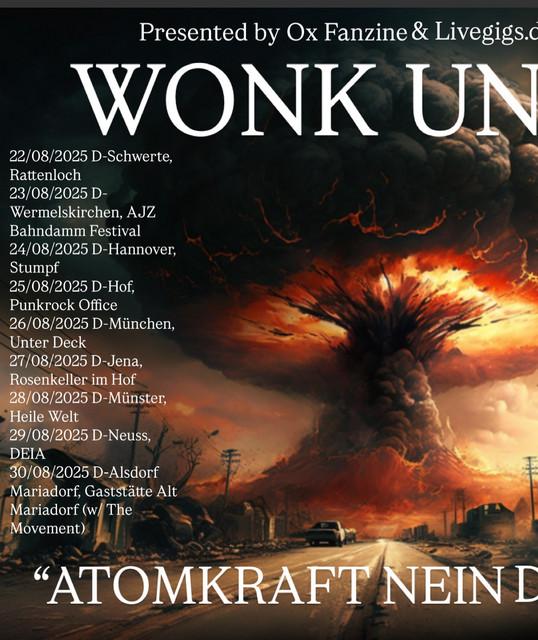
Wonk Unit

Punk
Punk Rock
Ska Punk
 Viberate Rank: 226446
 Viberate Rank: 226446
 Monthly ListenersFollowers
 Subscribers
 Followers
 Followers
 FansTop Spotify Songs
| Track | 7-Day Streams | |
|---|---|---|
1 | 223 | |
2 | 203 | |
3 | 190 | |
4 | 157 | |
5 | 137 |
Top YouTube VideosMonthly ListenersFeatured in Playlists| Playlist | Followers | |
|---|---|---|
1 |  The Sound of Everything The Sounds of Spotify | 53.82K |
2 |  PUNK ROCK sebastien.gautier | 8.46K |
3 |  Oi! Oi! Trojan Skinheads Fernando Cavalcante | 6.22K |
4 |  Fusion Festival 2023 holly_california | 5.19K |
5 |  Anti-Fascist Punk and Metal Damascus | 4.40K |
Audience| City | Monthly Listeners | |
|---|---|---|
1 | | 152 |
2 | | 82 |
3 |  | 55 |
4 | | 51 |
5 | | 48 |
See full performance history, audience data, playlist activity, rankings, comparisons, and more in Viberate music analytics. Start with a free trial, then continue with a paid plan.
Wonk Unit’s Spotify Bio“Wonk Unit are a band originally from Croydon, South London, known for their unique take on punk rock, their super proactive DIY ethos and cult like T shirt range.
The bands 9th studio album- “Good Good, Glad To Hear It”, was released in late 2024.
Curators of their own festival Wonkfest - the undisputed champions of the UK underground”.
The Wonk started life is 1992 when I formed a band called The Flying Medallions. We were young and very dumb. We courted chaos and controversy. Punk was very much dead in the UK at the time. We were super fresh and caught the eye of the mainstream media which championed our notoriety (similarly to Gallows and Slaves) until we crashed on tour in 1995. Sadly we lost our bass player Dougie Palompo.
I got sober in 1999
Wonk formed in around 2005 and we’ve been touring ever since. Ever evolving, with long term members Vez, Pwos, Max and Ryan.
Wonk Unit has always been about “me”. My songs are my diary. I make music for myself, exactly as I skateboard for myself… and draw pictures for myself. I never wanted to force Wonk on anyone as it was such a personal thing to me. My original ethos which still stands to this day is that I would never ask for a gig or review or record deal or endorsement. Wonk only go where we are wanted and appreciated. I never needed the approval of others.
Viberate is a music analytics platform built for A&Rs, artist managers, labels, booking agents, marketers, and artists.
It helps music professionals track artist growth, analyze audience data, monitor playlist activity, compare artists, follow song performance, and identify opportunities across the music market.
Public artist pages provide a free preview of selected artist data. Paid plans provide access to deeper analytics, historical data, charts, comparisons, playlist tools, exports, alerts, reports, and additional professional features.
Yes. Public Viberate artist pages provide selected artist analytics and music data for free.
Viberate also offers a 7-day free trial of the full platform. A credit card is required to start the trial. The trial includes access to the complete product so users can test deeper artist analytics, historical views, playlist insights, comparisons, charts, exports, alerts, and reporting features before choosing a paid plan.
Viberate provides artist analytics across streaming, playlists, social media, video, radio airplay, songs, and audience markets.
Users can analyze Spotify performance, Spotify and Apple Music playlists, YouTube activity, TikTok and Instagram growth, radio spins, song performance, audience locations, demographics, rankings, and overall artist momentum.
Artist profiles also connect to music charts, similar artists, and comparison tools, helping users benchmark performance and evaluate artists in context.
Viberate updates key artist and track data daily.
For followed artists and tracks, selected data is refreshed multiple times per day. This helps teams monitor playlist changes, streaming movement, audience growth, releases, and campaign performance with more current data.
Update frequency can vary depending on the metric and data source.
Yes. Viberate lets users compare up to five artists side by side across streaming, social media, audience, and engagement metrics.
Users can compare fanbase growth, audience demographics, locations, Spotify performance, social metrics, and other artist data over selected time periods.
Artist comparison can be used for A&R scouting, benchmarking, booking decisions, campaign planning, and evaluating artists with similar audiences or market positions.