Wayne Shorter

Jazz
Bebop
Jazz Fusion
 Viberate Rank: 25748
 Viberate Rank: 25748
 Monthly ListenersFollowers
 Subscribers
 Followers
 Followers
 FansTop Spotify Songs
| Track | 7-Day Streams | |
|---|---|---|
1 | 130.97K | |
2 | 130.97K | |
3 | 87.13K | |
4 | 54.81K | |
5 | 47.14K |
Top YouTube VideosMonthly ListenersFeatured in Playlists| Playlist | Followers | |
|---|---|---|
1 |  Jazz Classics Spotify | 5.08M |
2 |  Jazz Classics Blue Note Edition Spotify | 549.30K |
3 |  66 GREENE _BY.ALEXANDER | 395.13K |
4 |  Soft Jazz Spotify | 359.13K |
5 |  Jazz Noir Spotify | 349.57K |
Audience| City | Monthly Listeners | |
|---|---|---|
1 | | 13.45K |
2 | | 10.46K |
3 |  | 9.81K |
4 | | 9.12K |
5 | | 8.76K |
See full performance history, audience data, playlist activity, rankings, comparisons, and more in Viberate music analytics. Start with a free trial, then continue with a paid plan.
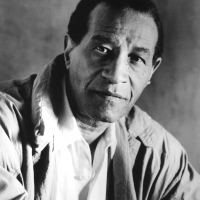
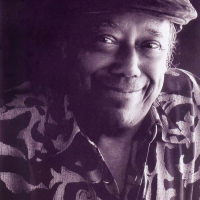
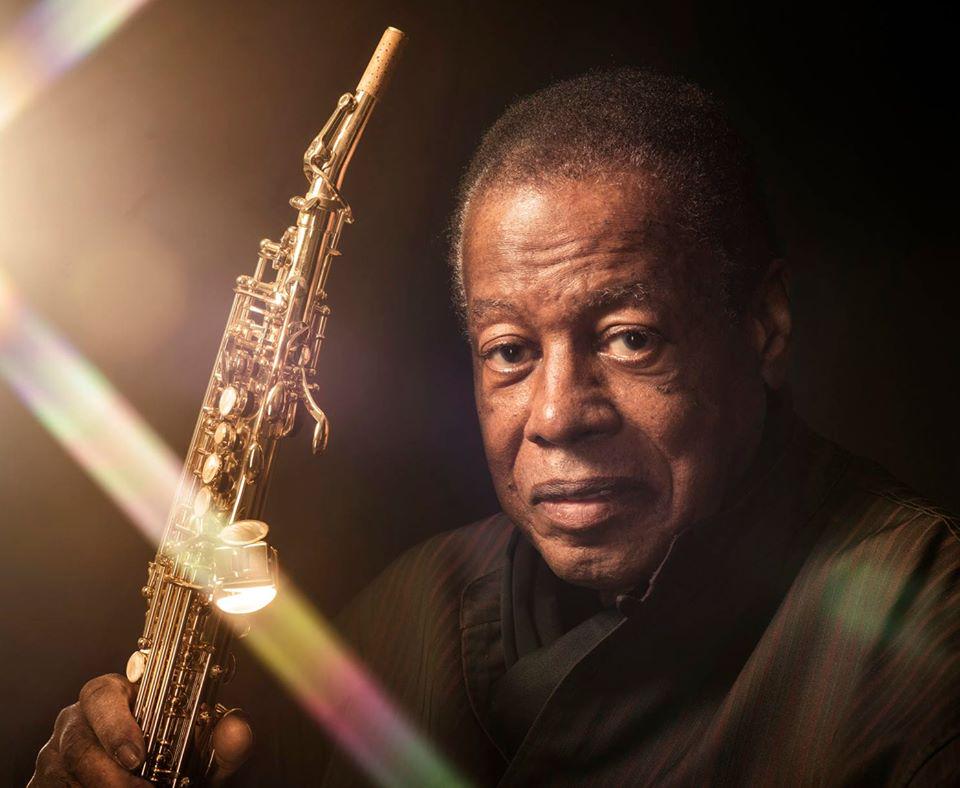
Wayne Shorter’s Spotify BioWayne Shorter was one of jazz's leading figures in the late 20th and early 21st centuries as both a composer and saxophonist. Though indebted to John Coltrane, with whom he practiced in the mid-'50s, Shorter developed his own voice and style on the tenor horn, retaining the tough tone quality and intensity and, in later years, adding elements of funk. On soprano, Shorter was almost another player entirely, his lovely tone attuned more to lyrical thoughts, his choice of notes more spare. As a composer, he wrote complex, long-limbed tunes, many of which are now standards. On his '60s albums for Blue Note, most notably Juju and Night Dreamer, the composer and the saxophone stylist meet. He co-founded Weather Report in 1970 and through 1986 released Grammy-winning albums. He issued jazz-funk recordings for Columbia and Verve in the late '80s and early '90s, including Joy Ryder and High Life. On 2002's Footprints Live!, and 2003's Alegria, Shorter showcased a new acoustic quartet dedicated… to performing his compositions. As he entered his eighties, Shorter focused on impressively complex projects, including 2018's Emanon, a graphic novel combined with four-part studio suite and 2021's opera based on Greek myths titled Iphigenia.
Shorter started playing the clarinet at 16 but switched to tenor sax before entering New York University in 1952. After graduating with a BME in 1956, he played with Horace Silver for a short time until he was drafted into the Army for two years. Once out of the service, he joined Maynard Ferguson's band, meeting Ferguson's pianist Joe Zawinul in the process. The following year (1959), Shorter joined Art Blakey's Jazz Messengers, where he remained until 1963, eventually becoming the band's music director. During the Blakey period, Shorter also made his debut on record as a leader, cutting several albums for Chicago's Vee-Jay label. After a few prior attempts to hire him away from Blakey, Miles Davis finally convinced Shorter to join his quintet in September 1964.
Staying with Davis until 1970, Shorter became one of the band's most prolific composer, contributing tunes like "E.S.P.," "Pinocchio," "Nefertiti," "Sanctuary," "Footprints," "Fall," and the signature description of Davis, "Prince of Darkness." While playing through Davis' transition from loose, post-bop acoustic jazz into electronic jazz-rock, Shorter also took up the soprano in late 1968, an instrument that turned out to be more suited to riding above the new electronic timbres than the tenor. As a prolific solo artist for Blue Note during this period, Shorter expanded his palette from hard bop almost into the atonal avant-garde, with fascinating excursions into jazz-rock territory toward the turn of the decade.
In November 1970, Shorter teamed up with old cohort Joe Zawinul and Miroslav Vitous to form Weather Report where, after a fierce start, Shorter's playing grew mellower and more consciously melodic in order to fit into Zawinul's concepts. By now he was playing mostly on soprano, though the tenor would re-emerge toward the end of the group's run. Shorter's solo career was mostly put on hold during the Weather Report days, though 1975's Native Dancer was an attractive side trip into Brazilian-American tropicalismo made in tandem with Milton Nascimento. Shorter also revisited the past in the late '70s by touring with Freddie Hubbard and ex-Davis sidemen Herbie Hancock, Ron Carter, and Tony Williams as V.S.O.P.
Shorter finally left Weather Report in 1985. Still committed to electronics and fusion, his recorded compositions from the period feature welcoming rhythms and harmonically complex arrangements. After three Columbia albums between 1986 and 1988 -- Atlantis, Phantom Navigator, and Joy Ryder -- and a tour with Santana (represented by the 2005 album Montreux 1988), he lapsed into silence, emerging again in 1992 with Wallace Roney and the V.S.O.P. rhythm section in the "A Tribute to Miles" band. In 1994, now on Verve, Shorter released High Life, an engaging electric collaboration with keyboardist Rachel Z.
He continued playing concerts with a wide range of groups and appeared on a number of recordings as a guest including the Rolling Stones' Bridges to Babylon in 1997 and Herbie Hancock's Gershwin's World in 1998. In 2001, he was back with Hancock for Future 2 Future and on Marcus Miller's M². Footprints Live! was released in 2002 under his own name with a new band that included pianist Danilo Pérez, bassist John Patitucci, and drummer Brian Blade, followed by Alegria in 2003 and Beyond the Sound Barrier in 2005.
Though absent from recording, Shorter continued to tour regularly with the same quartet after 2005. They re-emerged to record again in February of 2013 with a live outing from their 2011 tour. Without a Net, his first recording for Blue Note in 43 years, was issued in February of 2013 as a precursor to his 80th birthday. Just after that release, the Wayne Shorter Quartet performed four of the leader's compositions with the Orpheus Chamber Orchestra at Carnegie Hall in New York City. Shorter immediately brought the quartet and orchestra into the studio to record those same four pieces: "Pegasus," "Prometheus Unbound," "Lotus," and "The Three Marias," as a unified suite. The title of this four-composition orchestral suite is also Shorter’s title character for the graphic novel Emanon, or "no name" spelled backward. Each of the four movements has a corresponding theme in a graphic novel penned by Shorter and Monica Sly and illustrated by Randy DeBurke. It draws inspiration from the concept of a multiverse (where numerous universes co-exist simultaneously) and features a character named Emanon, an action-hero proxy of Shorter, a comic book aficionado since he was a boy. The story alludes to dystopian oppression and was clearly informed by the saxophonist's Buddhist studies. All told, the music -- performed by the quartet with and without the chamber orchestra -- was recorded live in London as well as in the studio, creating a triple album accompanied by the 84-page graphic novel. Emanon was issued in September of 2018, just after Shorter's 85th birthday. His next project proved just as ambitious, writing an opera based around the myth of Iphigenia, a Greek princess. Shorter co-created the work with librettist esperanza spalding and set designer Frank Gehry. The work merged jazz and classical themes and premiered in New York at the end of 2021. The following year Candid released Live at the Detroit Jazz Festival. Recorded at the 2017 event, it featured Shorter in a one-off quartet setting that included drummer Terri Lyne Carrington, bassist/vocalist esperanza spalding, and Argentine pianist Leo Genovese. It proved to be the last music issued during his lifetime, as he passed away in March of 2023 at the age of 89. ~ Richard S. Ginnell & Thom Jurek, Rovi
Viberate is a music analytics platform built for A&Rs, artist managers, labels, booking agents, marketers, and artists.
It helps music professionals track artist growth, analyze audience data, monitor playlist activity, compare artists, follow song performance, and identify opportunities across the music market.
Public artist pages provide a free preview of selected artist data. Paid plans provide access to deeper analytics, historical data, charts, comparisons, playlist tools, exports, alerts, reports, and additional professional features.
Yes. Public Viberate artist pages provide selected artist analytics and music data for free.
Viberate also offers a 7-day free trial of the full platform. A credit card is required to start the trial. The trial includes access to the complete product so users can test deeper artist analytics, historical views, playlist insights, comparisons, charts, exports, alerts, and reporting features before choosing a paid plan.
Viberate provides artist analytics across streaming, playlists, social media, video, radio airplay, songs, and audience markets.
Users can analyze Spotify performance, Spotify and Apple Music playlists, YouTube activity, TikTok and Instagram growth, radio spins, song performance, audience locations, demographics, rankings, and overall artist momentum.
Artist profiles also connect to music charts, similar artists, and comparison tools, helping users benchmark performance and evaluate artists in context.
Viberate updates key artist and track data daily.
For followed artists and tracks, selected data is refreshed multiple times per day. This helps teams monitor playlist changes, streaming movement, audience growth, releases, and campaign performance with more current data.
Update frequency can vary depending on the metric and data source.
Yes. Viberate lets users compare up to five artists side by side across streaming, social media, audience, and engagement metrics.
Users can compare fanbase growth, audience demographics, locations, Spotify performance, social metrics, and other artist data over selected time periods.
Artist comparison can be used for A&R scouting, benchmarking, booking decisions, campaign planning, and evaluating artists with similar audiences or market positions.