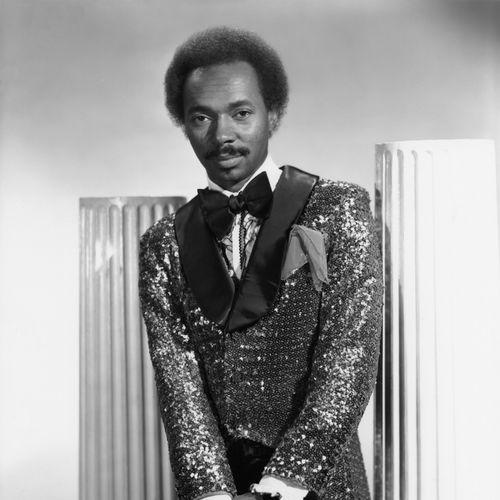
Van McCoy

R&B
Contemporary R&B
Disco
Funk
 Viberate Rank: 42752
 Viberate Rank: 42752
 Monthly ListenersFollowers
 Subscribers
 Followers
 Followers
 FansTop Spotify Songs
| Track | 7-Day Streams | |
|---|---|---|
1 | 272.36K | |
2 | 24.90K | |
3 | 19.36K | |
4 | 4.78K | |
5 | 4.62K |
Top YouTube VideosMonthly ListenersFeatured in Playlists| Playlist | Followers | |
|---|---|---|
1 |  Disco Forever Spotify | 1.62M |
2 |  DISCOLAND Spotify | 348.48K |
3 |  Golden Instrumentals Spotify | 347.19K |
4 |  70 80 90 Disco Music - Best Disco Hits 70's 80's & 90's (Playlist Updated in 2026) Redlist - Fresh Charts | 169.68K |
5 | Meme songs Vidar | 108.80K |
Audience| City | Monthly Listeners | |
|---|---|---|
1 |  | 24.21K |
2 |  | 8.69K |
3 |  | 8.10K |
4 |  | 7.08K |
5 | | 6.52K |
See full performance history, audience data, playlist activity, rankings, comparisons, and more in Viberate music analytics. Start with a free trial, then continue with a paid plan.
Van McCoy’s Spotify BioAlthough best known to the listening public at large for his lone headlining hit, the disco blockbuster "The Hustle," Van McCoy in fact enjoyed a long and remarkably prolific career behind the scenes as a songwriter and producer, piling up a series of soul hits prior to his premature death at the age of just 39. Born Van Allen Clinton McCoy on January 6, 1940, in Washington, D.C., as a child he sang with the Metropolitan Baptist Church choir, and by the age of 12 he was writing his own songs in addition to performing in local amateur shows alongside older brother, Norman Jr.
The McCoy siblings eventually partnered with high-school friends Freddy Smith and Paul Comedy in the doo wop combo the Starlighters. Serving as their lead vocalist, writer, and music director, Van masterminded the Starlighters' 1956 debut single, "The Birdland," a novelty dance record that generated enough local interest to earn them an invitation to tour the East Coast in support of drummer Vi Burnsides. As… military and marital obligations forced the group to dissolve during the months to follow, McCoy entered Howard University to study psychology, but dropped out after a year to pursue a full-time career in music, relocating to Philadelphia and forming his own label, Rockin' Records.
In 1959 Rockin' issued McCoy's debut solo single, "Hey Mr. DJ." While not a major hit, the record did earn the attention of Scepter Records owner Florence Greenberg, who hired him as a staff writer and A&R rep -- there he penned the 1962 hit "Stop the Music" for the Shirelles before signing on with producers Jerry Lieber and Mike Stoller as a writer with their Tiger and Daisy labels. Over the next several years McCoy penned a series of hits, among them Jackie Wilson's "I Get the Sweetest Feeling," Gladys Knight & the Pips' "Giving Up," Betty Everett's "Getting Mighty Crowded," Ruby & the Romantics' "When You're Young and in Love," and -- best of all -- Barbara Lewis' celestial "Baby, I'm Yours." With then-girlfriend Kendra Spotswood, he also wrote, produced, and performed a series of pseudonymous singles, including the Pacettes' "You Don't Know Baby," Jack & Jill's "Two of a Kind," and the Fantastic Vantastics' "Gee What a Boy." (Under the name Sandi Sheldon, Spotswood also recorded the McCoy-penned stomper "You're Gonna Make Me Love You," one of the crown jewels of Britain's Northern soul club scene.)
In 1966 McCoy signed to Columbia to record a solo LP, the Mitch Miller-produced Nighttime Is a Lonely Time; the following year he formed his own short-lived label, Vando, as well as his own production company, VMP (Van McCoy Productions, natch). Beginning in 1971, McCoy began a long and fruitful collaboration with fellow songwriter and producer Charles Kipps -- together they helmed a series of sessions, including David Ruffin's acclaimed 1975 Motown comeback, Who I Am, which yielded the smash "Walk Away from Love." McCoy also arranged several hits for Philly soul legends the Stylistics, but despite his success as a writer and producer, he still sought approval as a performer. In 1972 he issued a solo LP, Soul Improvisations (later retitled From Disco to Love), but it went nowhere.
Expectations were similarly low for 1975's Avco label effort Disco Baby -- McCoy authored "The Hustle" after hearing about the dance from New York City disc jockey David Todd, and the song, written in under an hour, was the last track recorded for the album. "The Hustle" went on to top the Billboard pop chart in July 1975, also earning a Grammy, although McCoy acknowledged he felt extreme discomfort in his new and narrow role as a disco hitmaker. A series of follow-up albums, among them The Disco Kid, 1976's The Real McCoy and Rhythms of the World, and 1979's Lonely Dancer, failed to recapture the massive popularity of "The Hustle," however, and he gradually receded back into the shadows, producing new talent including Faith, Hope & Charity. He died of a massive heart attack in Englewood, New Jersey, on July 6, 1979, exactly six months shy of his 40th birthday. ~ Jason Ankeny, Rovi
Viberate is a music analytics platform built for A&Rs, artist managers, labels, booking agents, marketers, and artists.
It helps music professionals track artist growth, analyze audience data, monitor playlist activity, compare artists, follow song performance, and identify opportunities across the music market.
Public artist pages provide a free preview of selected artist data. Paid plans provide access to deeper analytics, historical data, charts, comparisons, playlist tools, exports, alerts, reports, and additional professional features.
Yes. Public Viberate artist pages provide selected artist analytics and music data for free.
Viberate also offers a 7-day free trial of the full platform. A credit card is required to start the trial. The trial includes access to the complete product so users can test deeper artist analytics, historical views, playlist insights, comparisons, charts, exports, alerts, and reporting features before choosing a paid plan.
Viberate provides artist analytics across streaming, playlists, social media, video, radio airplay, songs, and audience markets.
Users can analyze Spotify performance, Spotify and Apple Music playlists, YouTube activity, TikTok and Instagram growth, radio spins, song performance, audience locations, demographics, rankings, and overall artist momentum.
Artist profiles also connect to music charts, similar artists, and comparison tools, helping users benchmark performance and evaluate artists in context.
Viberate updates key artist and track data daily.
For followed artists and tracks, selected data is refreshed multiple times per day. This helps teams monitor playlist changes, streaming movement, audience growth, releases, and campaign performance with more current data.
Update frequency can vary depending on the metric and data source.
Yes. Viberate lets users compare up to five artists side by side across streaming, social media, audience, and engagement metrics.
Users can compare fanbase growth, audience demographics, locations, Spotify performance, social metrics, and other artist data over selected time periods.
Artist comparison can be used for A&R scouting, benchmarking, booking decisions, campaign planning, and evaluating artists with similar audiences or market positions.